


Two officials from the US embassy suffered gunshot wounds early on Tuesday during an altercation at a strip club in Venezuela’s crime-ridden capital, police and US Department of State officials said. Their injuries were not considered life-threatening.
The circumstances of the shooting were unclear, with conflicting reports over whether it happened inside or outside the Antonella 2012 nightclub.
Police said the two US officials were shot following a brawl inside the club, which is in the basement of a shopping center in the upper-middle-class Chacao neighborhood of Caracas. A woman who works at the club said the two men got into a fight with each other.
The club’s Twitter account features racy photographs of nude or scantily clad women pole dancing, posing inside cages or reclining on beds. The text under one photograph invites visitors to come and watch the club’s “sexy show.”
“Apparently, it was a fight originating in a nightspot where these people were attacked, and shots were fired at them and they suffered gunshot wounds,” police spokesman Douglas Rico told TV channel Globovision at the health clinic where the victims were taken.
He said one was shot in the leg and abdomen, and the other was shot in the abdomen.
A police official identified one of the victims as military attache Roberto Ezequiel Rosas. She said he was shot in the right leg during an argument outside the night club in Chacao, which is east of the city center.
The official, who spoke on condition of anonymity because she was not authorized to release the information publicly, said she had no information on suspects.
Deisy Ron, who identified herself as the club’s artistic director, said that she was not at work when the shooting happened, but that employees she supervises told her that the men got into an argument and started throwing punches inside the club.
“They were fighting with each other,” she said. “One of them pulled out a gun and shot the other in the stomach and the leg.”
Ron said she did not know how the other man was injured or how he managed to take a firearm into the club, which has metal detectors at the entrance.
In Washington, US Department of State spokesman William Ostick confirmed that “two members of the US embassy in Caracas were injured during an incident early this morning.”
“Medical staff inform us that their injuries do not appear to be life-threatening,” Ostick said. “Embassy security and health unit personnel are at the hospital, and have been in touch with the two individuals and their families.”
Patrick Ventrell, another US Department of State spokesman, told reporters that the incident happened in “some sort of social spot, or somewhere outside of the embassy grounds.”
“I am not sure if it was a restaurant or a nightclub, or what the actual establishment was, but that is why we are in touch with embassy personnel,” he said.
A reporter who went to the scene saw no obvious signs of a shooting, though plain-clothes police officers were investigating the area outside the club.
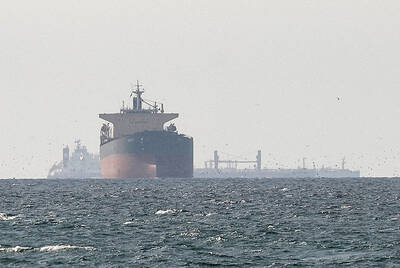
A ship that appears to be taking on the identity of a scrapped gas carrier exited the Strait of Hormuz on Friday, showing how strategies to get through the waterway are evolving as the Middle East war progresses. The vessel identifying as liquefied natural gas (LNG) carrier Jamal left the Strait on Friday morning, ship-tracking data show. However, the same tanker was also recorded as having beached at an Indian demolition yard in October last year, where it is being broken up, according to market participants and port agent’s reports. The ship claiming to be Jamal is likely a zombie vessel that
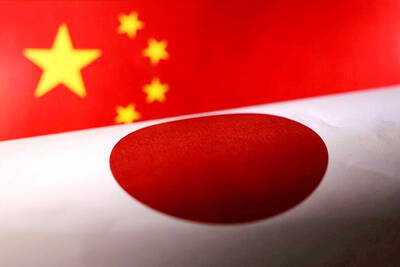
Japan is to downgrade its description of ties with China from “one of its most important” in an annual diplomatic report, according to a draft reviewed by Reuters, as relations with Beijing worsen. This year’s Diplomatic Bluebook, which Japanese Prime Minister Sanae Takaichi’s government is expected to approve next month, would instead describe China as an important neighbor and the relationship as “strategic” and “mutually beneficial.” The draft cites a series of confrontations with Beijing over the past year, including export controls on rare earths, radar lock-ons targeting Japanese military aircraft and increased pressure around Taiwan. The shift in tone underscores a deterioration

LAW CONSTRAINTS: The US has been pressing allies to send warships to open the Strait, but Tokyo’s military actions are limited under its postwar pacifist constitution Japan could consider deploying its military for minesweeping in the Strait of Hormuz if a ceasefire is reached in the war on Iran, Japanese Minister of Foreign Affairs Toshimitsu Motegi said yesterday. “If there were to be a complete ceasefire, hypothetically speaking, then things like minesweeping could come up,” Motegi said. “This is purely hypothetical, but if a ceasefire were established and naval mines were creating an obstacle, then I think that would be something to consider.” Japan’s military actions are limited under its postwar pacifist constitution, but 2015 security legislation allows Tokyo to use its Self-Defense Forces overseas if an attack,

German Chancellor Friedrich Merz’s conservative Christian Democratic Union (CDU) yesterday faced a regional election battle in Rhineland-Palatinate, now held by the center-left Social Democratic Party (SPD). Merz’s CDU has enjoyed a narrow poll lead over the SPD — their coalition partners at the national level — who have ruled the mid-sized state for 35 years. Polling third is the far-right Alternative for Germany (AfD), which spells a greater threat to the two centrist parties in several state elections in September in the country’s ex-communist east. The picturesque state of Rhineland-Palatinate, bordering France, Belgium and Luxembourg and with a population of about 4 million,


 RSS
RSS