


Iran has informed the UN nuclear agency that it plans to use more modern uranium enrichment centrifuges at its Natanz plant, according to a document made available yesterday.
Such a step could enable Iran to refine uranium faster than it can at the moment and increase concerns in Western states and Israel about the goals of Tehran’s nuclear program, which they fear has military aims. Iran says its work is peaceful.
It would also underline Iran’s defiance in the face of international demands to suspend all enrichment activities, enshrined in a series of UN Security Council resolutions, and may further complicate diplomacy to resolve the dispute.
A diplomat who declined to be identified, said Iran had informed the International Atomic Energy Agency (IAEA), the Vienna-based UN nuclear watchdog, of the plan in a letter dated Jan. 23.
The letter said that Iran would use the new centrifuges — a model called IR2m — at a unit in the Natanz plant where Iran is enriching uranium to a fissile concentration of up to 5 percent, according to an IAEA communication to member states.
“The Secretariat of the Agency received a letter from the Atomic Energy Organization of Iran (AEOI) dated 23 January 2013 informing the Agency that ‘centrifuge machines type IR2m will be used in Unit A-22’ at the Fuel Enrichment Plant (FEP) at Natanz,” the IAEA communication said.
Iran says it refines uranium to power a planned network of nuclear power stations. However, the West fears that the material, if enriched much further to 90 percent, could be used for weapons. Iran says its nuclear program has only peaceful goals.
The Islamic republic has for years been trying to develop more centrifuges that are more efficient than the breakdown-prone 1970s IR-1 models it now uses for production.
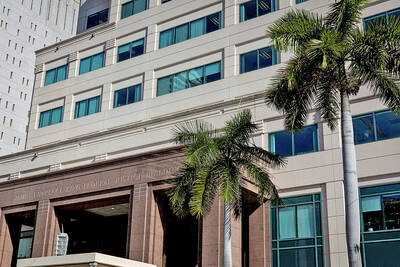
‘GROSS NEGLIGENCE?’ Despite a spleen typically being significantly smaller than a liver, the surgeon said he believed Bryan’s spleen was ‘double the size of what is normal’ A Florida surgeon who is facing criminal charges after allegedly removing a patient’s liver instead of his spleen has said he is “forever traumatized” by that person’s death. In a deposition from November last year that was recently obtained by NBC, 44-year-old Thomas Shaknovsky described the death of 70-year-old William Bryan as an “incredibly unfortunate event that I regret deeply.” Bryan died after the botched surgery; and last month, a grand jury in Tallahassee indicted Shaknovsky on a charge of manslaughter. “I’m forever traumatized by it and hurt by it,” Shaknovsky added, also saying that wrong-site surgeries can happen “during

Kouri Richins, a Utah mother who published a children’s book about grief after the death of her husband is to serve a life sentence for his murder without the possibility of parole, a judge ruled on Wednesday. Richins was convicted in March of aggravated murder for lacing a cocktail given to her husband, Eric Richins, with five times the lethal dose of fentanyl at their home near Park City in 2022. A jury also found her guilty of four other felonies, including insurance fraud, forgery and attempted murder for trying to poison her husband weeks earlier on Feb. 14, 2022, with a

Former Chinese ministers of national defense Wei Fenghe(魏鳳和) and Li Shangfu (李尚福) were both sentenced to death with a two-year reprieve over graft charges, state news agency Xinhua reported on Thursday, underscoring the severity of the purge in the military. The armed forces have been one of the main targets of a broad corruption crackdown ordered by Chinese President Xi Jinping (習近平) after coming to power in 2012. The purges reached the elite Rocket Force, which oversees nuclear weapons as well as conventional missiles, in 2023. Earlier this year they escalated further, resulting in the removal of the top general in
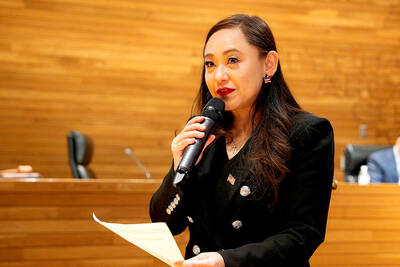
‘PERSONAL MISTAKES’: Eileen Wang has agreed to plead guilty to the felony, which comes with a maximum sentence of 10 years in federal prison A southern California mayor has agreed to plead guilty to acting as an illegal agent for the Chinese government and has resigned from her city position, officials said on Monday. Eileen Wang (王愛琳), mayor of Arcadia, was charged last month with one count of acting in the US as an illegal agent of a foreign government. She was accused of doing the bidding of Chinese officials, such as sharing articles favorable to Beijing, without prior notification to the US government as required by law. The 58-year-old was elected in November 2022 to a five-person city council, from which the mayor is selected


 RSS
RSS