


Congratulations to Isobel Cohen, 33, who has just graduated from Cambridge University with first-class honors in English — taking her exams 28 hours after having a baby. She sat papers on practical criticism and Shakespeare, and the Greek Tragedies in a hospital dressing gown and slippers.
Now that the results are in and baby Beatrice is six weeks old, it is just slightly annoying that Cohen is back-pedaling from her achievement with the standard cliches about “mumnesia.”
“I wonder how I held it together and got through them because now I’m into full-blown ‘nappy brain,’” she said
“While my concentration and memory were not as good as they might have been, I could still do things I needed to do and retain enough information to write decent essays,” she said.
Experts disagree about how childbirth affects intellectual ability. A 2010 study by the US National Institute of Mental Health found that new moms’ brains “bulk up as they cope with the new demands babies bring.”
They scanned the brains of 19 mothers and a comparison of images taken two to four weeks before birth and three to four months after, showed a significant increase in brain growth.
On the other hand, higher levels of estrogen and progesterone in pregnancy are thought to have a negative effect on the parts of the brain governing spatial memory.
What about the benign idiocy we think of as “preg head?” That is most likely down to sleep deprivation, which would not have kicked at the time Cohen sat her papers.
The most interesting part of this story? That her achievement has been reported as an extraordinary mental feat. When what she did physically was a million times more impressive.
“I was sitting in a hospital room in my gown, attached to a catheter. It was painful,” she said.
First in English? No sweat. Sitting on a chair for three hours? Give this person a medal.
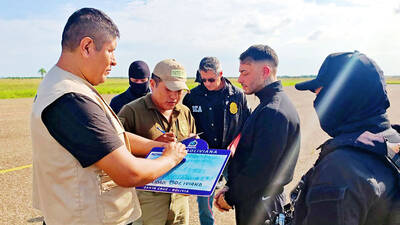
KINGPIN: Marset allegedly laundered the proceeds of his drug enterprise by purchasing and sponsoring professional soccer teams and even put himself in the starting lineups Notorious Latin American narco trafficker Sebastian Marset, who eluded police for years, was handed over to US authorities after his arrest on Friday in Bolivia. Marset, a Uruguayan national who was on the US most-wanted list, was passed to agents of the US Drug Enforcement Administration at Santa Cruz airport in Bolivia, then put on a US airplane, Bolivian state television showed. “The arrest and deportation were carried out pursuant to a court order issued by the US justice system,” Bolivian Minister of Government Marco Antonio Oviedo told reporters. The alleged kingpin was arrested in an upscale neighborhood of Santa

ACTIONABLE ADVICE: The majority of chatbots tested provided guidance on weapons, tactics and target selections, with Perplexity and Meta AI deemed to be the least safe From school shootings to synagogue bombings, leading artificial intelligence (AI) chatbots helped researchers plot violent attacks, according to a study published on Wednesday that highlighted the technology’s potential for real-world harm. Researchers from the nonprofit watchdog Center for Countering Digital Hate and CNN posed as 13-year-old boys in the US and Ireland to test 10 chatbots, including ChatGPT, Google Gemini, Perplexity, Deepseek and Meta AI. Eight of the chatbots assisted the make-believe attackers in more than half the responses, providing advice on “locations to target” and “weapons to use” in an attack, the study said. The chatbots had become a “powerful accelerant for
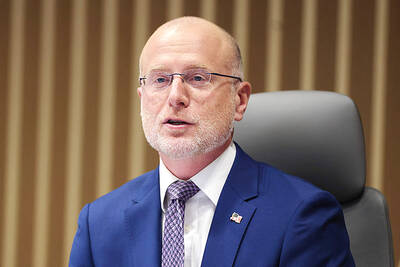
FAKE NEWS? ‘When the government demands the press become a state mouthpiece under the threat of punishment, something has gone very wrong,’ a civic group said The top US broadcast regulator on Saturday threatened media outlets over negative coverage of the Middle East war, after US President Donald Trump slammed critical headlines from the “Fake News Media.” The US president since his first term has derided mainstream media as “fake news” and has sued major outlets over what he sees as unfair coverage. Brendan Carr, head of the US Federal Communications Commission — which oversees the nation’s radio, television and Internet media — said broadcasters risked losing their licenses over news coverage. “The law is clear. Broadcasters must operate in the public interest, and they will
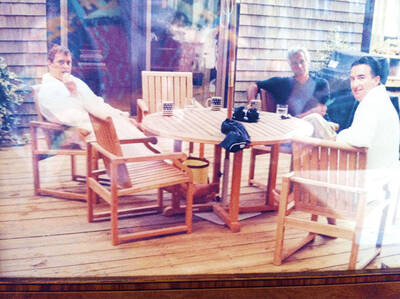
SCANDAL: Other images discovered earlier show Andrew bent over a female and lying across the laps of a number of women, while Mandelson is pictured in his underpants A photograph of former British prince Andrew and veteran politician Peter Mandelson sitting in bathrobes alongside late sex offender Jeffrey Epstein was unearthed on Friday in previously published documents. The image is believed to be the first known photograph of the two men with Epstein. They are currently engulfed in scandal in the UK over their ties to their mutual friend. The undated photograph, first reported by ITV News, shows King Charles III’s disgraced brother and former British ambassador to the US sitting barefoot outside on a wooden deck. They appear to have mugs with a US flag on them


 RSS
RSS