

Kuwaitis cast their ballots yesterday in a snap vote to elect the fourth parliament in less than six years, with unofficial polls showing the Islamist-led opposition in the lead.
The vote in the wealthy Gulf state, which follows a campaign marred by violence, seeks to end political disputes that have hurt the country for years.
Female voters, dressed in clothes ranging from black traditional abayas to casual Western-style jeans, lined up in short queues in voting stations set up for women, as lines of men formed at separate polling booths.
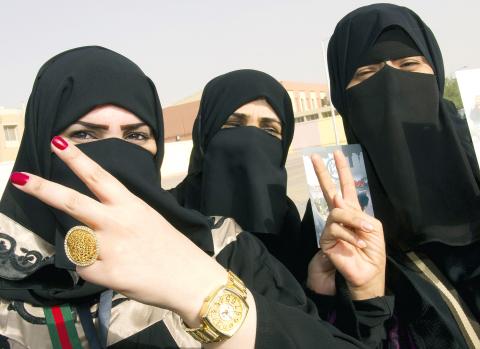
Photo: Reuters
Women voters make up 54 percent of the electorate and 23 women are among 286 candidates running for the 50-seat legislative body.
Pollsters and analysts expected the 400,000 electorate to deliver a resounding victory for the Islamist-led opposition, which has campaigned vehemently for fundamental reforms and against corruption.
The snap poll is taking place after Emir Sheikh Sabah al-Ahmad Al-Sabah dissolved parliament following unprecedented protests led by youths inspired by the Arab Spring.
The protests led to the resignation of the previous government and former prime minister Sheikh Nasser Mohammad al-Ahmad Al-Sabah who was replaced by another senior royal, in a move unprecedented in the oil-rich emirate.
The elections are being held against a backdrop of heightened sectarian and tribal tensions, which this week erupted into violence.
Some voters expressed concern that the vote, which comes after one of the fiercest campaigns since Kuwait introduced democracy in 1962, would not help return stability.
“Psychologically we are not comfortable because of the bad situation in the country. We are very frustrated and worried about what is happening in Kuwait,” said one woman, Umm Saud, after casting her vote at Jabriya, 15km south of Kuwait City.
“I am not optimistic this election will resolve our problems, but I pray that I am wrong,” she said.
Fatima Akbar, a former school teacher, said she was “hopeful with caution” that the election would help stabilize the country.
“We are worried about the conflicts in Kuwait, especially sectarian tension” between the Sunni majority and Shiite minority, she said.
Sectarian tensions between Sunnis and Shiites — who make up 30 percent of Kuwaitis — have intensified in past months, mainly over regional issues such as Bahrain, Iran and Syria.
On Monday, tribesmen burned the election tent of a pro-government candidate for remarks deemed derogatory to a Bedouin tribe. They also stormed offices of a local TV station for hosting another pro-government candidate.
About 30 international and 300 local observers have been allowed by the government to monitor the election for the first time.
Polling opened at 8am and were to close 12 hours later, with the first results expected early today as ballots are still counted manually.
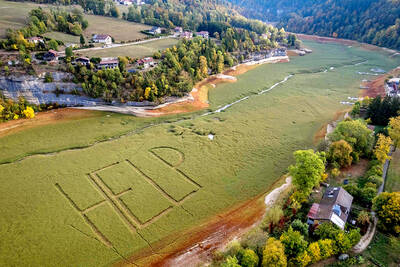
The picturesque Lac des Brenets between France and Switzerland has dried up after a record-breaking hot summer, leaving locals crying out for help to save the lake. Indeed, the words “HELP” and “SOS” have been scratched out in the weeds now flourishing on the exposed lake bed. The drought has ruined pleasure boat tourism, while some question whether the lake will ever return to enduring full health. “It’s absolutely heartbreaking,” said historian David Favre, who lives in Les Brenets. “As children, we used to spend all our summers swimming at the beach, having fun by the water, diving, jumping in and sometimes even

STRAIN ON TIES: The police arrested a 20-year-old man who matched the description of a suspect caught on CCTV leaving a hotel in Naha with the victim’s belongings A US Marine stationed on Japan’s southern island of Okinawa was arrested on suspicion of the murder of a Japanese woman, police said yesterday. The suspect “killed the 39-year-old woman at a hotel in Naha and stole her wallet on Saturday,” a local police spokesman said. US Ambassador George Glass posted on social media that he had spoken with Japan’s foreign ministry and Okinawa’s governor to offer “our sincere condolences and pledging full cooperation as the investigation continues.” Japanese Prime Minister Sanae Takaichi called the crime “exceptionally brutal and vicious” on X. The government has urged the US “to provide maximum cooperation

WARNING: Some analysts have expressed concern over what kind of investors the citizenship scheme would attract, saying it could bring in people of dubious origin Argentine President Javier Milei’s government on Friday said the country would offer citizenship to foreigners who invest at least US$350,000 in the country. Latin America’s third-largest economy lagged far behind Brazil and Mexico in the foreign direct investment stakes last year, according to the Organisation for Economic Co-operation and Development (OECD). Milei, a free-market radical, has slashed public spending, deregulated the economy and dismantled trade barriers in a bid to make Argentina more competitive and boost the Treasury’s dwindling dollar reserves. However, investors are still waiting for Argentina’s roller-coaster economy to “prove that what it’s doing will actually be sustainable over time,” economist
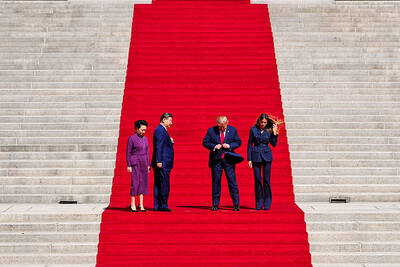
China’s influence in Latin America is now viewed more positively than that of the US, a major poll conducted in 17 Latin American countries showed on Friday. China overtook the US in terms of influence for the first time since the annual Latinobarometro survey began in 1995. It showed 57 percent of people in Latin America considering the US to be a positive influence, down from 60 percent in 2020. Meanwhile, China was considered a positive influence by 65 percent of respondents, a jump from 48 percent six years ago. Costa Rica and the Dominican Republic were the only countries in the region where


 RSS
RSS