

A Philippine man convicted on drug trafficking charges was executed in China yesterday despite an appeal for clemency from Philippine President Benigno Aquino III on humanitarian grounds, Philippine officials said.
Hours before he was put to death, the 35-year-old man, who was not identified, was allowed to meet briefly with his two siblings and two cousins who traveled to Guangxi Province in China, Philippine Vice President Jejomar Binay said.
The man was then led to a courtroom where the sentence was read and whisked away to the death chamber, located in Liuzhou, about two hours away from the prison, where he was given a lethal injection, he said.
“The subject was very calm, but his family was crying,” Binay said. “At 12:30[pm] our countryman was executed.”
The man was arrested in 2008 at Guilin International Airport while trying to smuggle 1.5kg of heroin from Malaysia. Smuggling more than 0.05kg of heroin or other drugs is punishable by death in China.
Although China went ahead with the execution despite Aquino’s appeal for clemency, government officials have said they respect China’s judicial system and that the execution would not hurt bilateral relations.
Overlapping territorial claims over potentially gas-rich islands in the South China Sea have strained ties between the Philippines and China.
China is the world’s biggest executioner, according to Amnesty International. The Philippines and Cambodia are Southeast Asia’s only nations to have abolished the death penalty.
In March, China executed three Filipino workers also convicted of smuggling heroin, despite last-minute appeals and political concessions by Philippine leaders. The Philippine government said it could prove that a drug syndicate had taken advantage of the accused.
The head of the Philippine Drug Enforcement Agency, Jose Gutierrez Jr, said earlier that authorities were hunting for the recruiter of the executed drug mule, who is suspected to be a member of an African drug trafficking syndicate. He said the man convicted in China had previously engaged in drug trafficking and was paid US$4,000 to US$6,000 for every smuggling operation.
On the streets, reaction was mixed.
“On the one hand, if he really did it and is deserving of that punishment, then this is all right,” construction worker Edwin Cruzado said. “But if a person is innocent, that is very sad.”
He said that poverty was no excuse for a crime.
“But their punishment in China is a bit harsh,” Cruzado added.
The plight of millions of Philippine citizens living overseas, most of them contractual workers, is an emotional issue in the country.
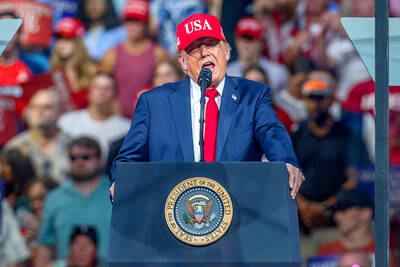
US President Donald Trump on Wednesday threatened to take action against the EU if it moves forward with European Commission President Ursula von der Leyen’s proposal to make Canada the bloc’s first associate member. “If they do that, if I think it’s at all a hostile act; I will put very serious tariffs or stop trading with Europe on many things,” Trump told reporters en route to an event in North Carolina, calling the proposal “laughable.” “If it’s a good intention, that’s fine. If it’s a bad intention, we’ll put very heavy tariffs on Europe,” he said. Von der Leyen made the proposal
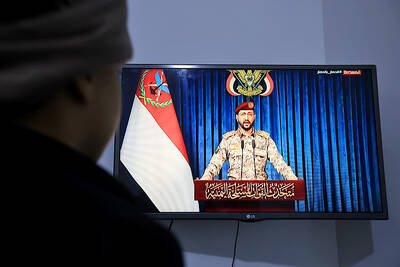
ON THE MOVE: Trump unexpectedly cut short a trip to return to the White House, while the State Department warned Americans to avoid travel to the Middle East The US on Saturday warned that hostilities between Saudi Arabia and Iran-backed Houthis could “escalate rapidly” after a missile attack targeted Riyadh for the first time since the Yemen conflict resumed. US President Donald Trump on Saturday cut short a weekend at Camp David, a secluded presidential complex in rural Maryland, to return unexpectedly to the White House. The White House gave no explanation for the early return, which comes as a new threshold was crossed in the conflict between Saudi Arabia and the Houthis, who control a large part of Yemen and are fighting government forces backed by a coalition led

World leaders gather in New York this week for the UN General Assembly, bracing for US President Donald Trump’s return to the rostrum for a second year running, with talks centering on the widening conflicts in the Middle East and Ukraine and the risks of artificial intelligence (AI). Nearly 130 heads of state meet with the post-World War II order under strain and with the UN itself struggling to remain relevant and weathering attacks from Trump, who has slashed the US’ contributions and withdrawn from dozens of UN bodies. Chinese President Xi Jinping (習近平), who last addressed the diplomatic jamboree via video
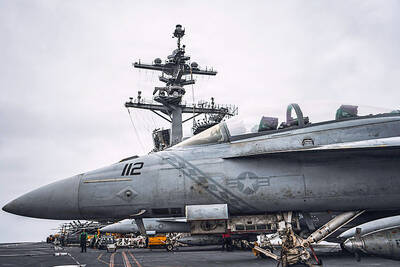
The US military came close to boarding a Chinese vessel in the Middle East earlier this year based on a flawed intelligence report prepared with the help of artificial intelligence (AI), CNN said on Friday. US intelligence indicated the ship was carrying nuclear weapons-related components, leading US forces to prepare to intercept it, the broadcaster reported, citing four anonymous sources familiar with the incident. However, the operation was called off after officials determined that an AI chatbot used by an analyst had misidentified the material the ship was carrying. The report was “entirely false,” but “almost started a war,” CNN quoted one source


 RSS
RSS