


Muammar Qaddafi, who dominated Libya with merciless single--mindedness for 42 years, was a liar, a murderer and a cheat, but in one respect, at least, he stayed true to his word. When the Libyan uprising began in February and led swiftly to NATO’s military intervention, Qaddafi vowed to fight to the death.
He would not give himself up to his pursuers like former Iraqi president Saddam Hussein, Qaddafi declared in radio addresses, nor would he flee, like Tunisia’s ousted president, Zine El Abidine Ben Ali, the first “victim” of the Arab Spring. There would be no surrender, no private jet into pampered exile.
On Thursday, amid the ruins of his home town of Sirte, the insurgent fighters of the National Transitional Council (NTC), backed by NATO bombers, took him at his word. Qaddafi had pledged a last stand, so he stood and fought. And he was, it transpired as the smoke cleared, no invincible behemoth, but ordinary flesh and blood after all. He died painfully, beaten with a pistol according to some reports, then shot at close range. But die he did.
No longer feared or fearsome, no longer the brash, bragging villain, no more the showman-turned-monster — just another slain tyrant hitting the dust with a thud.
And after the waiting, killing and tears, the wheel of history turned inexorably, and all who watched knew it would never turn back. The Arab Spring had claimed another infamous scalp. The risky Western intervention had worked and Libya was liberated at last.
Jubilation across Libya will be matched by relief among Western governments. Now they will congratulate themselves that Libya has been “saved for the West” and may be molded to Western political and free-market paradigms. Their confidence may be misplaced.
“We hope he can be captured or killed soon so that you don’t have to fear him any more,” US Secretary of State Hillary Rodham Clinton said on Tuesday. “The most important thing now is to make sure that Qaddafi and his regime are finally prevented from disrupting the new Libya.”
US State officials quickly explained that Clinton’s words did not mean that US policy had switched in favor of deliberately eliminating Qaddafi. Washington wanted him brought to justice, they said.
However, there is no disguising the fact that, for governments including those in London and Washington, Qaddafi’s sudden, final departure must be vastly preferable to the prospect of a prolonged desert guerrilla war, costly NATO engagement, continuing instability affecting Libya and neighboring states, a lengthy, high-profile trial, wrangling over the jurisdiction of the international criminal court or any of the other possible scenarios that might have played out should he have lived on.
However, the larger point of interest for Libyans and a watching Arab world — driven home by videos and photographs apparently showing Qaddafi’s bloodied body — is that the dictator is dead and that Libyans are finally free to move on.
What direction they will go is the next big question. The answer will not be quick in coming, in no small part because of Qaddafi’s poisonous legacy.
Qaddafi leaves behind a country with no proven governmental institutions or political parties, little or no independent civil service and civil society, no tradition of civil rights, free speech or free media, a one-track economy almost wholly dependent on oil export revenues and a system of national administration based on the fickle favor of the “Brother Leader,” family ties, patronage and corruption.
Its army broken, its borders defiled, its sovereignty outraged, Libya’s future direction is, as of this moment, more a matter of fond hope than settled policy. Democracy in Libya is an idea. It has as yet no roots and no substantive presence. Islamism, of various shades, and tribalism are, on the other hand, vibrant forces that could now feed on the power vacuum.
The post-Qaddafi road ahead for Libya is fraught by any estimate. Tens of thousands may have died in the war; the numbers could take years to verify. Many more again have been wounded, both fighters and civilians caught up in the violence. Already these maimed survivors are attacking the NTC for its failure to bring them speedy relief.
Much of the country’s infrastructure is damaged or in need of repair, including vital oil installations on whose services Libya’s short-term salvation rests. Heavily armed militias, manned by young men with no obvious allegiance to anything other than their own idea of freedom, dominate in Tripoli and other cities.
Already there are reports of violent score-settling, revenge killings, human rights abuses and the mistreatment of detainees. With luck, it will all settle down. Without luck, some analysts foresee a mini-Iraq in the making, a new miasma of civil war, fragmentation and sectarian conflict.
Much depends now on the NTC’s ability to get a grip, first and foremost, on security — and then move quickly to form a transitional government, but despite its recognition by the great powers, the council’s authority is open to question and challenge. Some fear Islamists hold too great a sway. Its leaders seem divided and unconvinced by their own success. Prominent figures such as the acting prime minister, Mahmud Jibril, are eager to throw in the towel and leave the job of nation--building to hardier souls.
Aware of the size of the challenge, Clinton and British Foreign Secretary William Hague have been at pains offer helpful advice.
In a reference to the mistakes made in Iraq, Clinton said: “From long experience, one factor we know has to happen ... is unifying the various militias into a single military ... Getting a national army under civilian command is essential.”
However, only Libyans can decide what happens next. The euphoria of the day obscures the fact that hatred of Qaddafi, while he lived, united most of them in a single cause.
Democracy-building provides a less certain glue.
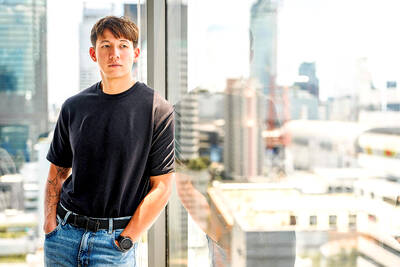
SPEAKING OUT: After Siranudh Scott’s allegations surfaced, celebrities and public figures took to social media to share their own experiences of sexual misconduct and abuse A high-profile alleged sexual abuse case within a wealthy Thai beer brewing family has prompted a wave of painful accounts from survivors of unconnected abuse in the conservative nation. Siranudh Scott, a member of the billionaire Thai family that founded the ubiquitous Singha beer brand, posted an emotional video this month accusing his elder brother Sunit of repeatedly abusing him when he was a teenager. Sunit, who is in his 30s, later denied the allegations in a video posted online, but Singha parent Boonrawd dismissed him from his executive role with the company on Tuesday last week. “I felt I needed to speak

SEEKING ORDER: Rodrigo Paz said that ‘anyone who wants to destroy the nation will have to deal with this president and the full force of the constitution’ Bolivian President Rodrigo Paz on Wednesday said that the nation was at a “breaking point” after nearly a month of protests that have caused shortages of food, fuel and medicine. Paz, who took office six months ago amid the worst economic crisis there in four decades, is battling a groundswell of fury over his policies. The political capital, La Paz, has been besieged by low-income workers and members of the indigenous majority calling for his resignation. “The country needs order and is reaching breaking point,” the 58-year-old said at a public event in La Paz, renewing his appeal for dialogue. On Tuesday, the Bolivian

‘CROSSING THE LINE’: China’s embassy in Seoul criticized US Forces Korea Commander General Xavier Brunson, asking if his ‘hostile’ remarks were authorized by Washington South Korea and the US are in talks over recent public remarks by the commander of US Forces Korea, Seoul’s presidential office said yesterday, after the comments drew sharp criticism from China. In a recent podcast interview, US Forces Korea Commander General Xavier Brunson described South Korea as “the dagger in the heart of Asia” from China’s east coast, prompting the Chinese embassy in Seoul to say that he had “truly crossed the line.” The interview came amid growing speculation that Washington might seek to expand the role of US Forces Korea in countering the growing regional influence of China, a key
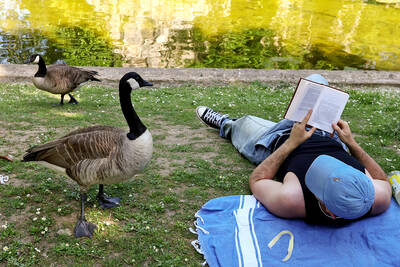
Forecasters in Europe yesterday warned of exceptional heat as record temperatures driven by a “heat dome” push temperatures well above seasonal norms across the continent. The surge follows a record-breaking Monday, with France logging its hottest day in the month of May on record, its weather agency said, and the UK also posting unprecedented highs. A so-called “heat dome” of warm air from northern Africa trapped under a high-pressure system over western Europe is behind the high temperatures not usually seen until high summer. Restrictions on outdoor work were imposed in parts of Italy, beaches in southwest France filled earlier than usual and


 RSS
RSS