


Investigators following up on a nuclear sting in Eastern Europe suspect that a crime syndicate was trying to sell weapons-grade uranium to buyers in North Africa.
Officials in Moldova, a former Soviet republic, said 1kg of highly enriched uranium remains in criminal hands and was likely in another country.
Though that is a fraction of what is needed for a bomb, the investigation has provided fresh evidence of a black market in nuclear material likely taken from poorly secured stockpiles from the former Soviet Union.
US authorities have been aiding the Moldovans in the international search for a Russian believed to be the ringleader of the smuggling operation. They also are searching for a North African man who they believe attempted to buy the uranium in Moldova before fleeing the country.
Neither suspect has been publicly identified. The North Africa link, though, has worried officials because terrorist groups such as al-Qaeda in the Islamic Maghreb operate in the region. The concern is raised in a report prepared by the staff of Senator Richard Lugar, the ranking Republican on the Senate Foreign Relations Committee.
“Should the existence of a legitimate buyer (or middleman) from a region with a history of terror cells be confirmed, then the case would be substantially more alarming than other recent fissile material interdictions, where official agents were the sole potential buyer,” said the report, which was obtained ahead of its release yesterday.
The Associated Press has learned details of the investigation from the report and from US, UN and Moldovan officials. Some of the officials spoke on condition of anonymity because of the sensitivity of the investigation.
Moldovan investigators, who had been trained by US specialists, set up a sting in June after learning of the ring operating out of Moldova’s separatist Trans--Dniester region. Undercover police bought the small quantity, pre-empting the North African buyer.
They arrested six people and seized 4.4g of uranium that had been offered as a sample at a price of 420,000 euros (US$600,000). The sellers claimed to have 9kg more as well as a quantity of plutonium, according to Lugar’s report. The group wanted 23 million euros for the larger quantity of uranium, which would have been about a third of the material necessary to build a crude nuclear weapon.
It is not known whether the group had access to that much uranium. However, Moldovan prosecutors, who have interrogated the arrested suspects extensively, say they believe that the group still has at least a smaller quantity.
According to US and UN officials, the sample of uranium oxide was traced to specific Russian enrichment facilities and was matched later with at least one earlier seizure of uranium. Nuclear forensic experts can analyze chemical traits of uranium and other radioactive material that can provide a kind of nuclear fingerprint that can be traced to known stocks.
According to Olli Heinonen, a former investigator at the International Atomic Energy Agency, a small quantity of uranium oxide enriched to bomb-grade level could have come from Russian civilian nuclear stocks used in research reactors. However, if the smugglers indeed have the larger quantity they were offering, it would signal that criminals had gained access to military stocks.
Moldovan authorities believe the uranium was transited through Trans-Dniester, which is known to be a haven for smugglers.
The offer of plutonium, if legitimate, also was particularly troubling, because less plutonium is needed to make a nuclear bomb.
The investigation widened following the arrests when Moldovan authorities searched the office of one of the detained men, a lawyer in the country’s capital, Chisinau.
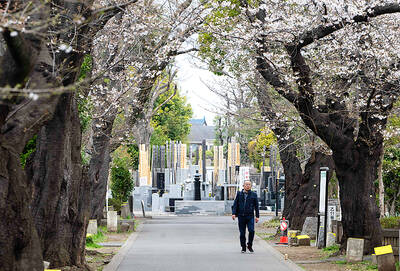
ROCKY RELATIONS: The figures on residents come as Chinese tourist numbers drop following Beijing’s warnings to avoid traveling to Japan The number of Chinese residents in Japan has continued to rise, even as ties between the two countries have become increasingly fractious, data released on Friday showed. As of the end of December last year, the number of Chinese residents had increased by 6.5 percent from the previous year to 930,428. Chinese people accounted for 22.6 percent of all foreign residents in Japan, making them by far the largest group, Japanese Ministry of Justice data showed. Beijing has criticized Tokyo in increasingly strident terms since Japanese Prime Minister Sanae Takaichi last year suggested that a military conflict around Taiwan could
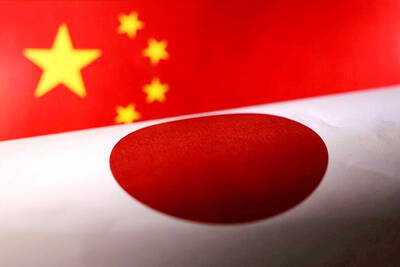
Japan is to downgrade its description of ties with China from “one of its most important” in an annual diplomatic report, according to a draft reviewed by Reuters, as relations with Beijing worsen. This year’s Diplomatic Bluebook, which Japanese Prime Minister Sanae Takaichi’s government is expected to approve next month, would instead describe China as an important neighbor and the relationship as “strategic” and “mutually beneficial.” The draft cites a series of confrontations with Beijing over the past year, including export controls on rare earths, radar lock-ons targeting Japanese military aircraft and increased pressure around Taiwan. The shift in tone underscores a deterioration
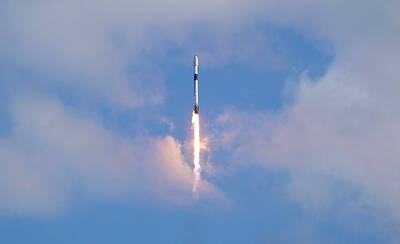
A retired US colonel behind a privately financed rocket launch site in the Dominican Republic sees the project as a response to China’s dominance of the space race in Latin America. Florida-based Launch on Demand is slated to begin building a US$600 million facility in a remote region near the border with Haiti late this year. The project is designed to meet surging demand for the heavy-lift rockets needed to put clusters of satellites into orbit. It is also an answer to China’s growing presence in the region, said CEO Burton Catledge, a former commander of the US Air Force’s 45th Operations
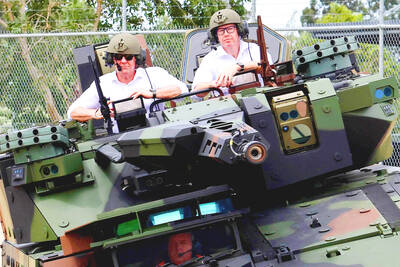
Germany is considering Australia’s Ghost Bat robot fighter as it looks to select a combat drone to modernize its air force, German Minister of Defense Boris Pistorius said yesterday. Germany has said it wants to field hundreds of uncrewed fighter jets by 2029, and would make a decision soon as it considers a range of German, European and US projects developing so-called “collaborative combat aircraft.” Australia has said it will integrate the Ghost Bat, jointly developed by Boeing Australia and the Royal Australian Air Force, into its military after a successful weapons test last year. After inspecting the Ghost Bat in Queensland yesterday,


 RSS
RSS