


Japan announced the first signs that contamination from its tsunami-crippled nuclear complex has seeped into the food chain, saying that radiation levels in spinach and milk from farms near the facility exceeded government safety limits.
Japanese officials said that the small amounts of radiation — with traces also found in tap water in Tokyo — posed no immediate health threat and said the situation at the Fukushima Dai-ichi nuclear power plant, while still unpredictable, appeared to be coming under control after near-constant dousing of water to prevent spent fuel rods from burning up.
Emergency teams using an unmanned vehicle to spray water targeting the most at-risk of the plant’s six reactors launched a new round yesterday — aimed at the plant’s Unit 4 — while preparing to switch power back on for the first time since the March 11 earthquake and tsunami knocked out the plant’s crucial cooling systems.
However, there was no guarantee the cooling systems would still work, even when the power was restored, officials said.
Japan has been struggling with an overwhelming chain of disasters prompted by the magnitude 9.0 quake. The quake spawned a tsunami that ravaged Japan’s northeastern coast, killing more than 7,700 people and knocking out cooling systems at the plant, prompting overheated reactors and fuel to leak radiation.
More than 11,600 people are still missing and more than 452,000 are living in shelters.
The Japanese government’s top spokesman, Chief Cabinet Secretary Yukio Edano, said at a news conference on Saturday that tainted milk and spinach were collected from several farms ranging from between 30km and 120km away from the reactors.
After the announcements, Japanese officials immediately tried to calm an already-jittery public, saying that the amounts detected were so small that people would have to consume unimaginable amounts to endanger their health.
“Can you imagine eating one kilogram of spinach every day for one year?” Japanese Secretary of Health Minister Yoko Komiyama asked.
Edano said someone drinking the tainted milk for a year would consume as much radiation as in a CT scan; for the spinach, it would be one-fifth of a CT scan.
Minuscule amounts of radioactive iodine were also found in tap water on Friday in Tokyo and elsewhere in Japan — although experts said none of those tests showed any health risks. The Health Ministry also said that radioactive iodine slightly above government safety limits was found in drinking water at one point on Thursday in a sample from Fukushima Prefecture, the site of the nuclear plant, but later tests showed the level had fallen again.
Six workers trying to bring the Fukushima Dai-ichi plant back under control were exposed to more than 100 millisieverts of radiation — Japan’s normal limit for those involved in emergency operations, according to Tokyo Electric Power Co, which operates the complex. The government raised that limit to 250 millisieverts on Tuesday as the crisis escalated.
An expert in the US also said the risk from the radiation levels in food appeared limited and urged calm.
“The most troubling thing to me is the fear that’s out of proportion to the risk,” said Henry Duval Royal, a radiologist at Washington University Medical School.
The areas where the spinach and milk were sampled are rich farm country also known for melons, rice and peaches, so the contamination could affect food supplies for large parts of Japan.
More tests were being done on other foods, Edano said, and if they show further contamination, then food shipments from the area would be halted.
Farmers worried that the crisis would crush demand, even for crops unaffected by the crisis.
“There will probably be -damaging rumors,” said a tearful Shizuko Kohata, 60, a farmer who was evacuated from a town near the nuclear plant.
She was staying at a sports arena just north of Tokyo.
“I grow things and I’m worried about whether I can make it in the future,” she said
Iodine levels in the spinach exceeded safety limits by three to seven times, a food safety official said. Tests on the milk done on Wednesday detected small amounts of iodine-131 and cesium-137.
The Health Ministry said iodine levels slightly above the safety limit were discovered on Thursday in drinking water samples from Fukushima Prefecture. On Friday, levels were about half that benchmark; by Saturday, they had fallen further.
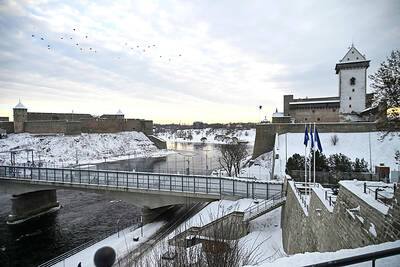
Two medieval fortresses face each other across the Narva River separating Estonia from Russia on Europe’s eastern edge. Once a symbol of cooperation, the “Friendship Bridge” connecting the two snow-covered banks has been reinforced with rows of razor wire and “dragon’s teeth” anti-tank obstacles on the Estonian side. “The name is kind of ironic,” regional border chief Eerik Purgel said. Some fear the border town of more than 50,0000 people — a mixture of Estonians, Russians and people left stateless after the fall of the Soviet Union — could be Russian President Vladimir Putin’s next target. On the Estonian side of the bridge,

Jeremiah Kithinji had never touched a computer before he finished high school. A decade later, he is teaching robotics, and even took a team of rural Kenyans to the World Robotics Olympiad in Singapore. In a classroom in Laikipia County — a sparsely populated grasslands region of northern Kenya known for its rhinos and cheetahs — pupils are busy snapping together wheels, motors and sensors to assemble a robot. Guiding them is Kithinji, 27, who runs a string of robotics clubs in the area that have taken some of his pupils far beyond the rural landscapes outside. In November, he took a team
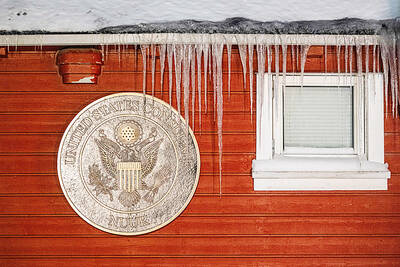
SHOW OF SUPPORT: The move showed that aggression toward Greenland is a question for Europe and Canada, and the consequences are global, not just Danish, experts said Canada and France, which adamantly oppose US President Donald Trump’s wish to control Greenland, were to open consulates in the Danish autonomous territory’s capital yesterday, in a strong show of support for the local government. Since returning to the White House last year, Trump has repeatedly insisted that Washington needs to control the strategic, mineral-rich Arctic island for security reasons. Trump last month backed off his threats to seize Greenland after saying he had struck a “framework” deal with NATO chief Mark Rutte to ensure greater US influence. A US-Denmark-Greenland working group has been established to discuss ways to meet Washington’s security concerns
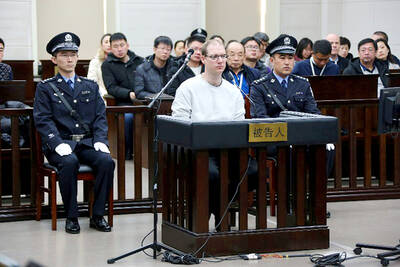
DIPLOMATIC THAW: The Canadian prime minister’s China visit and improved Beijing-Ottawa ties raised lawyer Zhang Dongshuo’s hopes for a positive outcome in the retrial China has overturned the death sentence of Canadian Robert Schellenberg, a Canadian official said on Friday, in a possible sign of a diplomatic thaw as Canadian Prime Minister Mark Carney seeks to boost trade ties with Beijing. Schellenberg’s lawyer, Zhang Dongshuo (張東碩), yesterday confirmed China’s Supreme People’s Court struck down the sentence. Schellenberg was detained on drug charges in 2014 before China-Canada ties nosedived following the 2018 arrest in Vancouver of Huawei chief financial officer Meng Wanzhou (孟晚舟). That arrest infuriated Beijing, which detained two Canadians — Michael Spavor and Michael Kovrig — on espionage charges that Ottawa condemned as retaliatory. In January


 RSS
RSS