


Near an olive grove on the outskirts of Tunisia’s seaside capital, men stack walls of bricks on muddy earth, and fasten roofs of tin and plastic against the wind-blown rain.
They are a few of the Mediterranean country’s many poor who have become squatters since an uprising toppled the president — making use of post-revolution confusion to build on public land and move into vacant or half-completed buildings.
“[Former Tunisian president Zine El-Abidine] Ben Ali’s regime stole everything. They had no heart and ignored us poor,” said one of the men, who identified himself only as Khaled, 57. “Now we are here for all to see and we hope the new government will help us.”
The caretaker government has warned the growing number of squatters they could be prosecuted, though there has been little police presence in this once-popular tourist destination since Ben Ali was ousted last month.
North Africa’s smallest nation descended into turmoil last month after the suicide of a poor vegetable seller sparked a wave of demonstrations that led Ben Ali to flee to Saudi Arabia and encouraged a similar revolution in Egypt.
Protests have also sprung up elsewhere in the Arab world, including Libya, Yemen and Bahrain.
“We are worried the police will come, but we hope they will help us, instead of taking all that we have,” said a woman at the encampment in Tunis’ Mnihla neighborhood, who asked not to be named.
She said she had sold most of her possessions for the bricks and cement for her shelter.
“I have five children and I want to keep them off the streets,” she said. “We are Tunisian, this is our country. Where do they think we should go?”
Ben Ali took power more than 13 years ago and, despite presenting an image of stability to the outside world, was seen by Tunisians as an oppressive ruler who raided public funds, and allowed poverty and unemployment to fester.
Official figures put the unemployment rate at 14 percent, though experts believe it is much higher and could worsen if the new -instability crimps economic growth.
In the Sidi Amor district of Tunis, a low-lying area of ramshackle homes, sparse cafes and butchers’ shops displaying sides of beef and cows’ heads on meathooks, squatters have started moving into unfinished apartment buildings.
Funded by a low-cost government housing program called 26-26, the buildings stand windowless and unconnected to water and electricity, the access road blocked by a pile of sand.
Dozens of other public plots and vacant buildings are also being occupied across the country, according to state media — a trend that prompted a warning from the Interior Ministry, a body deeply feared during Ben Ali’s rule.
“The Interior Minister calls on all who have carried out these acts to leave the homes they have taken illegally and to halt all unauthorized building,” it said in a communique. “We cannot permit anyone to use the revolution as a reason to break the law. The law, above all.”
The construction in Mnihla continues. A woman calling herself only ‘Mother of Rashid’ for fear of prosecution, tended a small plot of onions near her brick hut.
“The people around here are sympathetic to us because they know this is the fault of the Ben Ali regime,” she said.
“The people in these houses give us water,” she said, pointing to a middle-class neighborhood 100m away.

PHISHING: The con might appear convincing, as the scam e-mails can coincide with genuine messages from Apple saying you have run out of storage For a while you have been getting messages from Apple saying “your iCloud storage is full.” They say you have exceeded your storage plan, so documents are no longer being backed up, and photos you take are not being uploaded. You have been resisting Apple’s efforts to get you to pay a minimum of £0.99 (US$1.33) a month for more storage, but it seems that you cannot keep putting off the inevitable: You have received an e-mail which says your iCloud account has been blocked, and your photos and videos would be deleted very soon. To keep them you need
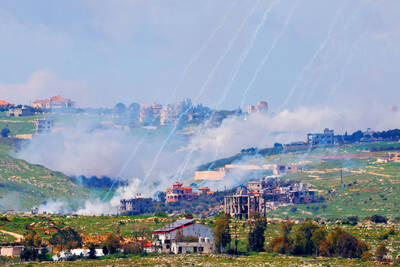
The Israeli military has demolished entire villages as part of its invasion of south Lebanon, rigging homes with explosives and razing them to the ground in massive remote detonations. The Guardian reviewed three videos posted by the Israeli military and on social media, which showed Israel carrying out mass detonations in the villages of Taybeh, Naqoura and Deir Seryan along the Israel-Lebanon border. Lebanese media has reported more mass detonations in other border villages, but satellite imagery was not readily available to verify these claims. The demolitions came after Israeli Minister of Defense Israel Katz called for the destruction of

A US YouTuber who caused outrage for filming himself kissing a statue commemorating Korean wartime sex slaves has been sentenced to six months in prison, a court in Seoul said yesterday. Johnny Somali, 25, gained notoriety several years ago for recording himself doing a series of provocative stunts in South Korea and Japan, and streaming them on platforms such as YouTube and Twitch. South Korean authorities indicted Somali — whose real name is Ramsey Khalid Ismael — in 2024 on public order violations and obstruction of business, and banned him from leaving the country. “The court has sentenced him to six months in
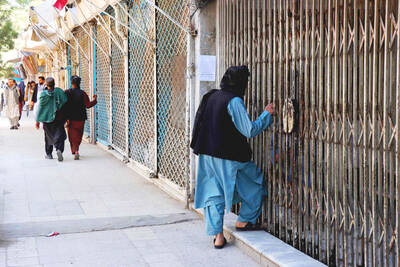
The death toll from a shooting in western Afghanistan rose to 11 on Saturday, after gunmen targeted civilians at a picnic spot in Herat, the provincial authority said. Bullet marks were visible on a wall of the Sayed Mohammad Agha Shia shrine, while bloodstains marked a blanket abandoned at the scene. “Eleven people have been recorded dead and eight others wounded from Friday’s incident, with the condition of two of the wounded reported as critical,” Herat’s information office said in a statement. The update raises a toll of seven killed provided on Friday by the Afghan Ministry of Interior Affairs


 RSS
RSS