


Filep Karma has served five years behind bars on a 15-year treason sentence for raising a separatist flag in Indonesia’s easternmost Papua Province. He says he’s endured beatings and verbal abuse by guards and now prison authorities are denying him medical treatment for a potentially life-threatening prostate ailment.
Speaking to reporters by mobile phone from his cell in Abepura prison, he said doctors have repeatedly advised him to be evacuated for surgery, but “I’m still waiting. I badly need treatment ... They don’t have the equipment they need here.”
The government, however, said yesterday they were taking care of the former civil servant and he had authorization to be treated outside the prison — it was just a question of timing.
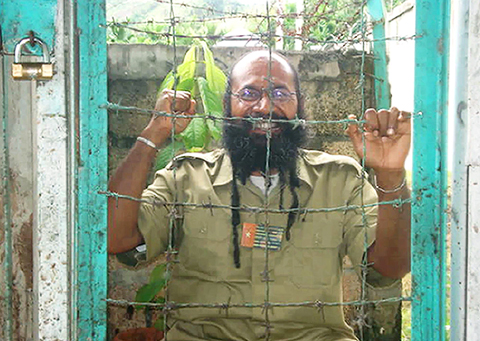
PHOTO: AFP
“We haven’t violated his rights in any way,” Candran Listiyono, spokesman for the Directorate General of Prisons in the capital, Jakarta, told reporters. “He has food, water, a room and the right to go to a hospital, so there’s no problem.”
Listiyono also said there were no reports of ill-treatment of other inmates.
Karma disagreed and described brutal attacks by guards on others jailed for taking part in anti-government rallies, the worst of which left his friend, Ferdinand Pakage, blind in the right eye.
Pakage is serving 15 years for killing a government official during a protest, a crime he says he didn’t commit.
Papua and the neighboring Maluku Islands just to their west, both have small separatist movements.
Indonesia, the world’s most populous Muslim nation, has made tremendous strides toward democratization since emerging from decades of dictatorship in 1998. Citizens today can vote directly for the president and the country has been lauded for sweeping reforms that have freed the media and vastly improved human rights.
However, the government is highly sensitive to the separatists’ struggles in the far eastern regions of the vast archipelago. They restrict visits by human rights workers and journalists and pro-independent activists have been given lengthy prison terms for peacefully expressing their views, organizing rallies or for simply raising banned flags.
Human Rights Watch and Amnesty International say there are up to 100 prisoners of conscience in the two remote regions.
Karma, the father of two teenage daughters, is one of the best known.
He led hundreds of students through the streets of Abepura in 2004 chanting “freedom” before joining a ceremony to raise the Morning Star flag, a symbol of the banned Free Papua Movement. When authorities tried to break up the demonstration, clashes broke out between protesters and police.
Karma was arrested, convicted and, in 2005, sentenced to 15 years in prison for treason.
Rights groups have said he started complaining to friends about his prostate in August last year, but medics at the prison clinic said he just needed to drink more water and rest. Since then, he has been examined by doctors from Jakarta and elsewhere, who have repeatedly warned that he needed surgery.
“Karma’s been sick for much of the last year and we have been seeking to get him access to healthcare services in Jakarta,” Josef Roy Benedict with London-based Amnesty International said on Tuesday.

VAGUE: The criteria of the amnesty remain unclear, but it would cover political violence from 1999 to today, and those convicted of murder or drug trafficking would not qualify Venezuelan Acting President Delcy Rodriguez on Friday announced an amnesty bill that could lead to the release of hundreds of prisoners, including opposition leaders, journalists and human rights activists detained for political reasons. The measure had long been sought by the US-backed opposition. It is the latest concession Rodriguez has made since taking the reins of the country on Jan. 3 after the brazen seizure of then-Venezuelan president Nicolas Maduro. Rodriguez told a gathering of justices, magistrates, ministers, military brass and other government leaders that the ruling party-controlled Venezuelan National Assembly would take up the bill with urgency. Rodriguez also announced the shutdown
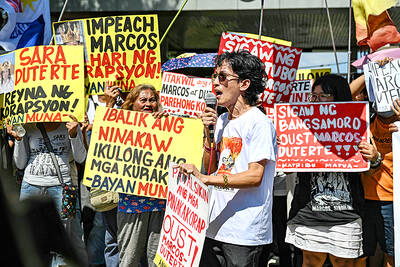
Civil society leaders and members of a left-wing coalition yesterday filed impeachment complaints against Philippine Vice President Sara Duterte, restarting a process sidelined by the Supreme Court last year. Both cases accuse Duterte of misusing public funds during her term as education secretary, while one revives allegations that she threatened to assassinate former ally Philippine President Ferdinand Marcos Jr. The filings come on the same day that a committee in the House of Representatives was to begin hearings into impeachment complaints against Marcos, accused of corruption tied to a spiraling scandal over bogus flood control projects. Under the constitution, an impeachment by the
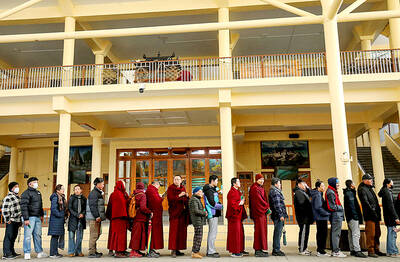
Exiled Tibetans began a unique global election yesterday for a government representing a homeland many have never seen, as part of a democratic exercise voters say carries great weight. From red-robed Buddhist monks in the snowy Himalayas, to political exiles in megacities across South Asia, to refugees in Australia, Europe and North America, voting takes place in 27 countries — but not China. “Elections ... show that the struggle for Tibet’s freedom and independence continues from generation to generation,” said candidate Gyaltsen Chokye, 33, who is based in the Indian hill-town of Dharamsala, headquarters of the government-in-exile, the Central Tibetan Administration (CTA). It

A Virginia man having an affair with the family’s Brazilian au pair on Monday was found guilty of murdering his wife and another man that prosecutors say was lured to the house as a fall guy. Brendan Banfield, a former Internal Revenue Service law enforcement officer, told police he came across Joseph Ryan attacking his wife, Christine Banfield, with a knife on the morning of Feb. 24, 2023. He shot Ryan and then Juliana Magalhaes, the au pair, shot him, too, but officials argued in court that the story was too good to be true, telling jurors that Brendan Banfield set


 RSS
RSS