


Clinical trials of a vaccine designed to protect healthy women against breast cancer could begin within the next two years.
The jab is still under development, but its effectiveness has impressed doctors who tested it on animals prone to the disease.
If the vaccine works on human patients, researchers say doctors could offer it to women before they reach their mid-40s, when the risk of developing breast cancer starts to rise steeply.
“We think it will provide substantial protection,” said Vincent Tuohy, an immunologist at the Cleveland Clinic in Ohio. “Our view is that breast cancer is a completely preventable disease.”
Effective cancer vaccines have proved notoriously difficult to make, not least because tumor cells are strikingly similar to healthy tissues.
A poorly designed cancer vaccine could easily turn the immune system against other parts of the body and cause more harm than good, while another problem is that many cancers weaken the immune system as they grow.
Tuohy’s vaccine makes the immune system attack a particular protein found in most breast cancer cells and the mammary tissues of breastfeeding women. As such, it would only be given to women who are not going to breastfeed in the future.
“The frequency of women who breastfeed in their early 40s and above is very low, so we are looking at vaccinating women against the disease from this stage of life onward,” Tuohy said.
Details of the vaccine were reported in the Nature Medicine journal.
The causes of breast cancer are not fully understood, but hormonal changes, genetic factors, a family history of the condition, smoking and drinking alcohol are all known to affect the risk of developing the disease.
Obesity and hormone replacement therapy increase a woman’s chances of developing breast cancer, while bearing children reduces the risk.
Tuohy’s team tested the vaccine on mice bred to be prone to breast cancer. Usually, such mice develop large breast tumors within 10 months of being born.
The researchers injected six mice with a vaccine made from the target protein, alpha-lactalbumin, and a chemical called an adjuvant, which boosts the immune system response to the vaccine.
Six other mice were given a sham vaccine. All the mice were two months old and clear of cancer when they had their jabs.
After 10 months, all the mice that received the sham vaccine had developed serious breast tumors. None of the mice given the real vaccine showed any signs of tumors in their breast tissue.
“Over the duration of the study, it was completely effective,” Tuohy said.
The vaccine was far less effective when administered to mice that already had breast cancer.
Previous studies show half to 70 percent of human breast cancer cells carry the alpha-lactalbumin protein the vaccine targets — figures that suggest the jab would not destroy all of a patient’s breast cancer cells, but the Cleveland Clinic group suspect far more cancer cells produce the protein temporarily as they grow. If they are right, the vaccine could be more effective than expected. Researchers hope to begin human trials within two years, Tuohy said.
“This research could have important implications for how we might prevent breast cancer in the future,” said Caitlin Palframan, policy manager at Breakthrough Breast Cancer.

Polish presidential candidates offered different visions of Poland and its relations with Ukraine in a televised debate ahead of next week’s run-off, which remains on a knife-edge. During a head-to-head debate lasting two hours, centrist Warsaw Mayor Rafal Trzaskowski, from Polish Prime Minister Donald Tusk’s governing pro-European coalition, faced the Eurosceptic historian Karol Nawrocki, backed by the right-wing populist Law and Justice party (PiS). The two candidates, who qualified for the second round after coming in the top two places in the first vote on Sunday last week, clashed over Poland’s relations with Ukraine, EU policy and the track records of their
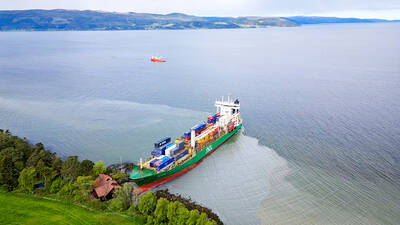
UNSCHEDULED VISIT: ‘It’s a very bulky new neighbor, but it will soon go away,’ said Johan Helberg of the 135m container ship that run aground near his house A man in Norway awoke early on Thursday to discover a huge container ship had run aground a stone’s throw from his fjord-side house — and he had slept through the commotion. For an as-yet unknown reason, the 135m NCL Salten sailed up onto shore just meters from Johan Helberg’s house in a fjord near Trondheim in central Norway. Helberg only discovered the unexpected visitor when a panicked neighbor who had rung his doorbell repeatedly to no avail gave up and called him on the phone. “The doorbell rang at a time of day when I don’t like to open,” Helberg told television

‘A THREAT’: Guyanese President Irfan Ali called on Venezuela to follow international court rulings over the region, whose border Guyana says was ratified back in 1899 Misael Zapara said he would vote in Venezuela’s first elections yesterday for the territory of Essequibo, despite living more than 100km away from the oil-rich Guyana-administered region. Both countries lay claim to Essequibo, which makes up two-thirds of Guyana’s territory and is home to 125,000 of its 800,000 citizens. Guyana has administered the region for decades. The centuries-old dispute has intensified since ExxonMobil discovered massive offshore oil deposits a decade ago, giving Guyana the largest crude oil reserves per capita in the world. Venezuela would elect a governor, eight National Assembly deputies and regional councilors in a newly created constituency for the 160,000
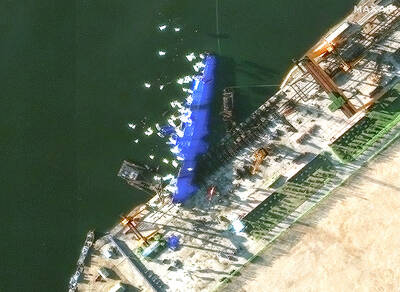
North Korea has detained another official over last week’s failed launch of a warship, which damaged the naval destroyer, state media reported yesterday. Pyongyang announced “a serious accident” at Wednesday last week’s launch ceremony, which crushed sections of the bottom of the new destroyer. North Korean leader Kim Jong-un called the mishap a “criminal act caused by absolute carelessness.” Ri Hyong-son, vice department director of the Munitions Industry Department of the Party Central Committee, was summoned and detained on Sunday, the Korean Central News Agency (KCNA) reported. He was “greatly responsible for the occurrence of the serious accident,” it said. Ri is the fourth person


 RSS
RSS