


Red Cross clinics in some parts of Mexico are refusing to treat people wounded by gunshots after finding themselves caught in the drug war, with cartel hitmen intercepting ambulances to seize patients and even killing a Red Cross worker this week.
Miguel Angel Valdez, director of operations for the Red Cross in the Gulf coast city of Tampico, said he implemented the policy after gunmen this week forced an ambulance over at gunpoint just two blocks from a Red Cross clinic and dragged off a man wounded in a gunbattle.
“We have made the decision at the [local] Red Cross not to accept patients from prisons or wounded in armed clashes, because that puts the safety of our personnel at risk,” he said.
In drug-plagued Sinaloa state on the Pacific coast, police started escorting ambulances and guarding Red Cross clinics after a Red Cross dispatcher was killed on Sunday in crossfire by assailants who followed a wounded man to a clinic to finish him off.
Maria Genoveva Rogers is believed to be the first Red Cross worker killed since Mexican President Felipe Calderon launched his drug war in 2006.
Hundreds of emergency personnel, medical technicians and ambulance crews took to the streets in the Sinaloa capital of Culiacan, some holding a banner that read “Service Suspended ... We Demand Safety” as ambulances accompanying the march blared their sirens.
“We are just calling on everyone to respect the symbol of the Red Cross, but there has been a loss of values,” said the state’s Red Cross director, Arnoldo Montano. “It is like people have forgotten what the Red Cross is.”
Culiacan’s Red Cross clinics closed for two days following Rogers’ death. And in the violent city of Ciudad Juarez, across the border from El Paso, Texas, doctors and other personnel at two government-run clinics stayed off the job on Tuesday to protest gunmen barging into emergency rooms to either rescue wounded comrades or execute rivals.
Gangs have also targeted doctors for extortion.
“We are one of the sectors that has been most affected by the situation of violence,” said Dr Leticia Chavarria Villa, president of the Medical-Civic Committee, a nonprofit group founded in the wake of the wave of violence that has swept the city.
Some doctors now refuse to admit patients at private clinics after 6pm, or they see only people who have been referred to them by their other patients, she said.
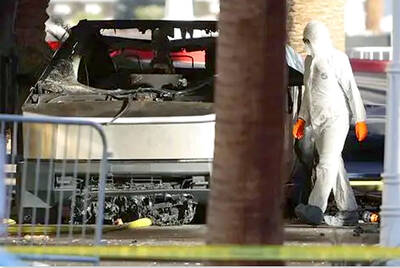
ACTIONABLE ADVICE: The majority of chatbots tested provided guidance on weapons, tactics and target selections, with Perplexity and Meta AI deemed to be the least safe From school shootings to synagogue bombings, leading artificial intelligence (AI) chatbots helped researchers plot violent attacks, according to a study published on Wednesday that highlighted the technology’s potential for real-world harm. Researchers from the nonprofit watchdog Center for Countering Digital Hate and CNN posed as 13-year-old boys in the US and Ireland to test 10 chatbots, including ChatGPT, Google Gemini, Perplexity, Deepseek and Meta AI. Eight of the chatbots assisted the make-believe attackers in more than half the responses, providing advice on “locations to target” and “weapons to use” in an attack, the study said. The chatbots had become a “powerful accelerant for

Australians were downloading virtual private networks (VPNs) in droves, while one of the world’s largest porn distributors said it was blocking users from its platforms as the country yesterday rolled out sweeping online age restriction. Australia in December became the first country to impose a nationwide ban on teenagers using social media. A separate law now requires artificial intelligence (AI)-powered chatbot services to keep certain content — including pornography, extreme violence and self-harm and eating disorder material — from minors or face fines of up to A$49.5 million (US$34.6 million). The country also joined Britain, France and dozens of US states requiring
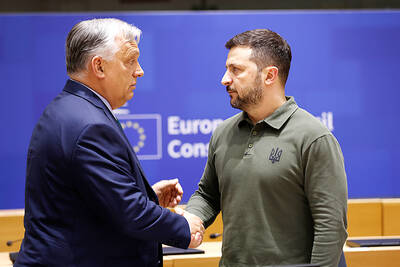
Hungarian authorities temporarily detained seven Ukrainian citizens and seized two armored cars carrying tens of millions of euros in cash across Hungary on suspicion of money laundering, officials said on Friday. The Ukrainians were released on Friday, following their detention on Thursday, but Hungarian officials held onto the cash, prompting Ukraine to accuse Hungary’s Russia-friendly government of illegally seizing the money. “We will not tolerate this state banditism,” Ukrainian Minister of Foreign Affairs Andrii Sybiha said. The seven detained Ukrainians were employees of the Ukrainian state-owned Oschadbank, who were traveling in the two armored cars that were carrying the money between Austria and
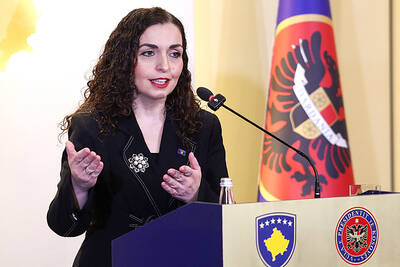
Kosovar President Vjosa Osmani on Friday after dissolving the Kosovar parliament said a snap election should be held as soon as possible to avoid another prolonged political crisis in the Balkan country at a time of global turmoil. Osmani said it is important for Kosovo to wrap up the upcoming election process and form functional institutions for political stability as the war rages in the Middle East. “Precisely because the geopolitical situation is that complex, it is important to finish this electoral process which is coming up,” she said. “It is very hard now to imagine what will happen next.” Kosovo, which declared


 RSS
RSS