


Afghanistan postponed parliamentary polls for four months yesterday, days ahead of crunch international talks on the war-torn nation in London, saying it was not safe to go ahead amid a spiralling Taliban insurgency.
The announcement, five months after the presidential election descended into a ballot-stuffing farce, will deepen global concern that graft and logistical problems are undermining democracy in one of the world’s poorest and most corrupt nations.
The ballot, originally planned for May 22, will be delayed until Sept. 18, senior election commissioner Fazil Ahmad Manawi told reporters in Kabul.
The Independent Election Commission made the decision because of a “lack of budget, security and uncertainty and logistical challenges,” the official said.
Afghanistan has relied on foreign funding for elections since 2001, when a US-led invasion overthrew the Taliban regime and moves towards democracy began.
The commission had previously said it was short of around US$120 million to hold the ballot for the Wolosi Jirga, Afghanistan’s lower house of parliament.
But the UN has said it would need to see evidence of significant reform — including replacing senior IEC officials — before agreeing to release money to stage the election.
Afghan President Hamid Karzai was sworn into office for a second five-year term in November following a controversial election steeped in fraud, mostly in his favor, and marred by low voter turnout and Taliban violence.
Most cases of fraud during the August presidential elections were reported in areas rife with Taliban and other Islamist militants battling the government, and where Afghan security forces had little or no control.
Militants launched dozens of attacks, killing and maiming dozens, in an attempt to disrupt a ballot they called “an American process.”
Karzai’s administration had earlier called for the ballot to be held on time, pledging to fund the process if the international community failed to provide the budget.
His office was not immediately available for comment.
Manawi said low-ranking workers had been dismissed from the commission or moved to different jobs but added that “if you mean the leadership and commissioners, this the responsibility of the president”.
“The president has to decide,” he said.
Afghanistan held its first direct parliamentary election in September 2005. Under the Constitution the next poll was due to be held no later than 30 days before the end of the legislative cycle, which ends on June 22.
Manawi did not comment on what will happen to the current parliament after this date, saying the US-backed Karzai government was responsible for the decision.
Fighting corruption is one of the key topics due to be discussed at a key international conference on Afghanistan in London on Thursday, along with the security situation, good governance and reconciliation with Taliban fighters.
Karzai has promised to eradicate corruption, which infects every aspect of Afghan public life, as a condition laid down by his Western backers whose soldiers are fighting the Taliban to keep him in power.
But the Afghan government has yet to put together a comprehensive anti-corruption plan, diplomats and a government official said last week.
The London conference was called by British Prime Minister Gordon Brown after Karzai had already announced plans to hold an anti-corruption conference in Kabul early this year.
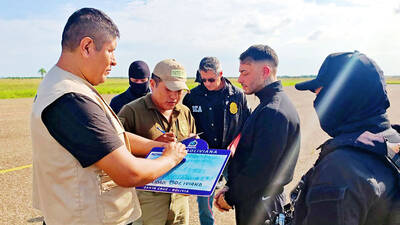
KINGPIN: Marset allegedly laundered the proceeds of his drug enterprise by purchasing and sponsoring professional soccer teams and even put himself in the starting lineups Notorious Latin American narco trafficker Sebastian Marset, who eluded police for years, was handed over to US authorities after his arrest on Friday in Bolivia. Marset, a Uruguayan national who was on the US most-wanted list, was passed to agents of the US Drug Enforcement Administration at Santa Cruz airport in Bolivia, then put on a US airplane, Bolivian state television showed. “The arrest and deportation were carried out pursuant to a court order issued by the US justice system,” Bolivian Minister of Government Marco Antonio Oviedo told reporters. The alleged kingpin was arrested in an upscale neighborhood of Santa
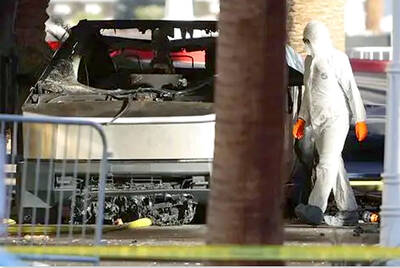
ACTIONABLE ADVICE: The majority of chatbots tested provided guidance on weapons, tactics and target selections, with Perplexity and Meta AI deemed to be the least safe From school shootings to synagogue bombings, leading artificial intelligence (AI) chatbots helped researchers plot violent attacks, according to a study published on Wednesday that highlighted the technology’s potential for real-world harm. Researchers from the nonprofit watchdog Center for Countering Digital Hate and CNN posed as 13-year-old boys in the US and Ireland to test 10 chatbots, including ChatGPT, Google Gemini, Perplexity, Deepseek and Meta AI. Eight of the chatbots assisted the make-believe attackers in more than half the responses, providing advice on “locations to target” and “weapons to use” in an attack, the study said. The chatbots had become a “powerful accelerant for
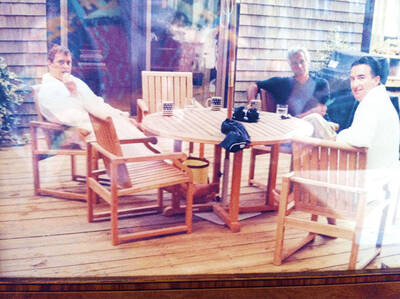
SCANDAL: Other images discovered earlier show Andrew bent over a female and lying across the laps of a number of women, while Mandelson is pictured in his underpants A photograph of former British prince Andrew and veteran politician Peter Mandelson sitting in bathrobes alongside late sex offender Jeffrey Epstein was unearthed on Friday in previously published documents. The image is believed to be the first known photograph of the two men with Epstein. They are currently engulfed in scandal in the UK over their ties to their mutual friend. The undated photograph, first reported by ITV News, shows King Charles III’s disgraced brother and former British ambassador to the US sitting barefoot outside on a wooden deck. They appear to have mugs with a US flag on them
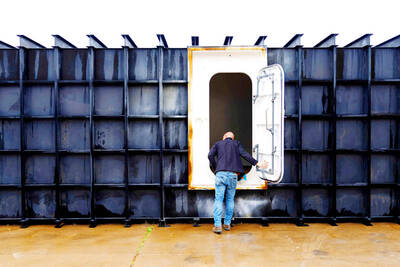
Since the war in the Middle East began nearly two weeks ago, the telephone at Ron Hubbard’s bomb shelter company in Texas has not stopped ringing. Foreign and US clients are rushing to buy his bunkers, seeking refuge in case of air raids, nuclear fallout or apocalypse. With the US and Israel pounding Iran, and Tehran retaliating with strikes across the region, Hubbard has seen demand for his product soar, mostly from Gulf nation customers in Bahrain, Qatar, Kuwait and the United Arab Emirates. “You can imagine how many people are thinking: ‘I wish I had a bomb shelter,’” Hubbard, 63, said in


 RSS
RSS