


Polish police said yesterday they had recovered the Nazi German “Arbeit macht frei” sign stolen from the former Auschwitz death camp, but said five arrested suspects had no neo-Nazi links.
Andrzej Rokita, commander in the southern Polish city of Krakow, told reporters: “From the information we have, none of the five belong to a neo-Nazi group nor hold such ideas.”
The five suspects, aged 20 to 39 and with previous criminal records for theft or violence, faced up to 10 years in prison if convicted, police said.
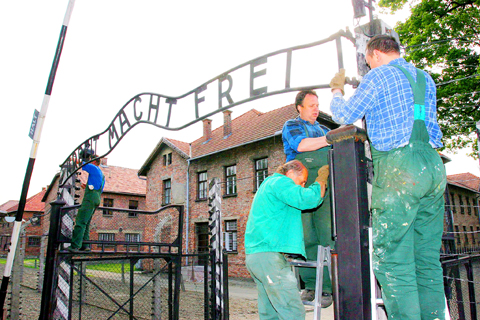
PHOTO: EPA
Police arrested the men shortly before midnight on Sunday.
Rokita declined to elaborate on the motive for the theft, which sent shockwaves around the world when it was discovered on Friday morning at the site of the former death camp in the southern Polish city of Oscwiecim.
“They certainly did it for money, but we still need to establish if it was done on someone’s orders or for themselves,” he said.
On Friday, police had suggested that the theft of the 5m metal sign from the camp gate, which appeared highly professional, could have been carried out on behalf of a collector.
The sign, which means “work will set you free” in German, came to symbolize the horror of the camp, in Nazi-occupied Poland.
This was where 1.1 million mainly Jewish prisoners died during World War II — some from overwork and starvation, but mostly in the gas chambers.
Rokita said two suspects were arrested in a vehicle near Gdynia on Poland’s Baltic coast and the three others in a home near Wloclawek in the center of the country.
“The sign had been cut into three pieces at the site of the theft, to make it easier to transport. It had been hidden in a copse near the home of one of the thieves,” he said.
A police source said the suspects had confessed and had themselves indicated to officers where the sign was buried.
The Auschwitz-Birkenau Museum and other institutions had offered a reward of nearly 30,000 euros (US$45,000) for information leading to the recovery of the sign and the arrest of the thieves.
“It’s an enormous relief. We are extremely grateful to the police who have done fantastic work,” museum spokesman Pawel Sawicki said upon learning of its recovery. “This symbol, probably one of the most important of the past century, can be put back in its place.”
Rokita said that apart from being cut into three, the sign was otherwise undamaged.
He said it would be returned to Auschwitz “as soon as possible, and in any case before the 65th anniversary of its liberation” next month.
The camp was freed by Soviet troops on Jan. 27, 1945.
On Friday, museum staff had put up a metal copy over the entrance of the camp, visited by more than a million people last year.
Auschwitz was one of a network of camps set up by Nazi Germany for the extermination of 6 million Jews and others considered undesirable by Adolf Hitler’s regime.
Museum director Piotr Cywinski admitted the museum had had to make do with a rudimentary surveillance system, since much of its limited budget has been channeled into urgent renovation work.
“The surveillance was concentrated on the archives and exhibited objects, because no sane person could have imagined such an act,” he said.
The museum, which relies on Polish state funding, launched an international appeal this year for 120 million euros for vital preservation work. Germany last week pledged to provide half the sum.
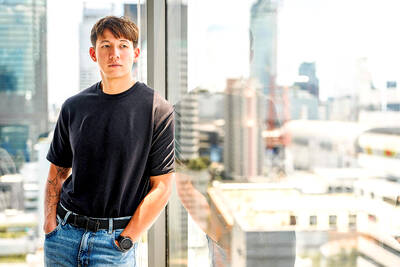
SPEAKING OUT: After Siranudh Scott’s allegations surfaced, celebrities and public figures took to social media to share their own experiences of sexual misconduct and abuse A high-profile alleged sexual abuse case within a wealthy Thai beer brewing family has prompted a wave of painful accounts from survivors of unconnected abuse in the conservative nation. Siranudh Scott, a member of the billionaire Thai family that founded the ubiquitous Singha beer brand, posted an emotional video this month accusing his elder brother Sunit of repeatedly abusing him when he was a teenager. Sunit, who is in his 30s, later denied the allegations in a video posted online, but Singha parent Boonrawd dismissed him from his executive role with the company on Tuesday last week. “I felt I needed to speak

SEEKING ORDER: Rodrigo Paz said that ‘anyone who wants to destroy the nation will have to deal with this president and the full force of the constitution’ Bolivian President Rodrigo Paz on Wednesday said that the nation was at a “breaking point” after nearly a month of protests that have caused shortages of food, fuel and medicine. Paz, who took office six months ago amid the worst economic crisis there in four decades, is battling a groundswell of fury over his policies. The political capital, La Paz, has been besieged by low-income workers and members of the indigenous majority calling for his resignation. “The country needs order and is reaching breaking point,” the 58-year-old said at a public event in La Paz, renewing his appeal for dialogue. On Tuesday, the Bolivian
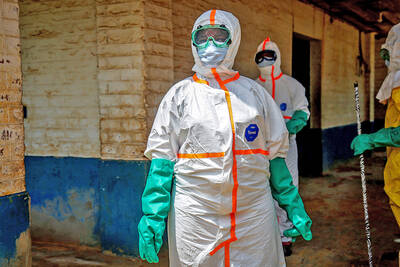
COMMUNITY CONFLICT: Concerns about disease spread from corpses has run up against friends and families’ desire to bury their dead as infection spreads in the area Angry residents of a town at the epicenter of the Ebola outbreak in the Democratic Republic of the Congo (DR Congo) attacked and burned a tent that was part of a health center where people are being treated for the virus, the staff there said Saturday. It was the second such attack in the region in a week. No one was hurt in the attack, according to reports but as patients ran out to escape the fire, 18 people with suspected Ebola infections fled the facility and are unaccounted for, a hospital director said. Angry residents arrived at the clinic in the
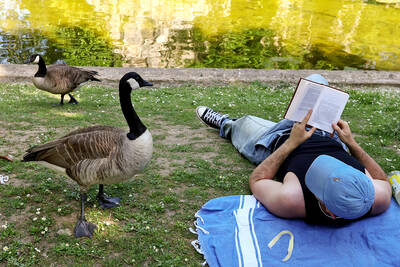
Forecasters in Europe yesterday warned of exceptional heat as record temperatures driven by a “heat dome” push temperatures well above seasonal norms across the continent. The surge follows a record-breaking Monday, with France logging its hottest day in the month of May on record, its weather agency said, and the UK also posting unprecedented highs. A so-called “heat dome” of warm air from northern Africa trapped under a high-pressure system over western Europe is behind the high temperatures not usually seen until high summer. Restrictions on outdoor work were imposed in parts of Italy, beaches in southwest France filled earlier than usual and


 RSS
RSS