


Scores of civilians died in last week’s NATO air strike on Taliban insurgents in northern Afghanistan, a prominent domestic rights group said yesterday in a first independent estimate of the death toll.
Afghanistan Rights Monitor (ARM), a non-governmental group funded by domestic rights campaigners, said in a report based on more than a dozen interviews with local residents that between 60 and 70 civilians died in the strike in the Char Dara district of Kunduz Province on Friday.
“Preliminary reports received by ... ARM indicated [that between ] 60 [and] 70 non-combatants died,” said the Kabul-based group.
“Even if all the victims were supporters of the Taliban the fact that most of them were unarmed and were not engaged in any combat activity does not warrant their mass killing,” it said.
The Friday incident was the first in which Western forces were accused of killing large numbers of civilians since US Army General Stanley McChrystal took command of foreign forces in June announcing protecting Afghans was the centerpiece of a new strategy.
NATO has yet to finish its investigation into the incident, but acknowledged some civilians may have been killed.
ARM said in a statement that more than a dozen armed men also died in the incident when a US F-15 fighter jet called in by German troops struck two hijacked fuel trucks.
Afghan officials say scores of people were killed, including civilians, but the government has not offered any estimates. The NATO strike was condemned by several European officials at a meeting of European foreign ministers in Stockholm.
Provincial authorities have given conflicting figures. A lawmaker from Kunduz on Sunday put civilian deaths at 65.
The International Committee of the Red Cross has said it is difficult to estimate the exact death toll because many bodies were believed to have been incinerated.
German Defence Minister Franz Josef Jung defended his troops on Sunday for calling in the air strike and warned against hasty judgments over the most deadly operation involving German forces since World War II.
“The air strike was absolutely necessary,” Jung told the Bild am Sonntag newspaper. “I can’t comprehend how some can so quickly criticize the military action without knowing what the situation was or the background information.”
“Based on the information I got, only Taliban terrorists were killed in the strike,” he said.
The Taliban have become increasingly active in Kunduz, a region bordering Tajikistan which has been traditionally calm — a worrying sign for US-led troops trying to turn the tide in their war against an increasingly aggressive insurgency.
Meanwhile, a Swedish charity accused US troops yesterday of storming through a hospital in central Afghanistan, breaking down doors and tying up staff in a search for militants. The US military said it was investigating.
The Swedish Committee for Afghanistan said the US Army’s 10th Mountain Division entered the charity’s hospital without permission to look for insurgents in Wardak Province, southwest of Kabul, according to the charity’s country director, Anders Fange.
“This is simply not acceptable,” he said.
The US troops came to the hospital looking for Taliban insurgents late at night on Wednesday, Fange said. He said they kicked in doors, tied up four hospital employees and two family members of patients, and forced patients out of beds during their search.
When they left two hours later, the unit ordered hospital staff to inform coalition forces if any wounded militants were admitted, and the military would decide if they could be treated, Fange said.
The staff refused, he said.
“That would put our staff at risk and make the hospital a target,” he said.
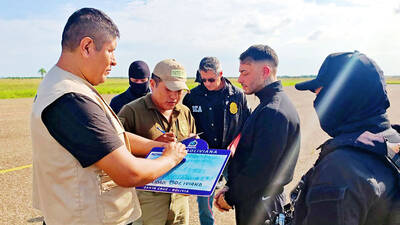
KINGPIN: Marset allegedly laundered the proceeds of his drug enterprise by purchasing and sponsoring professional soccer teams and even put himself in the starting lineups Notorious Latin American narco trafficker Sebastian Marset, who eluded police for years, was handed over to US authorities after his arrest on Friday in Bolivia. Marset, a Uruguayan national who was on the US most-wanted list, was passed to agents of the US Drug Enforcement Administration at Santa Cruz airport in Bolivia, then put on a US airplane, Bolivian state television showed. “The arrest and deportation were carried out pursuant to a court order issued by the US justice system,” Bolivian Minister of Government Marco Antonio Oviedo told reporters. The alleged kingpin was arrested in an upscale neighborhood of Santa
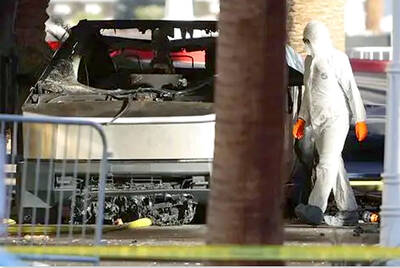
ACTIONABLE ADVICE: The majority of chatbots tested provided guidance on weapons, tactics and target selections, with Perplexity and Meta AI deemed to be the least safe From school shootings to synagogue bombings, leading artificial intelligence (AI) chatbots helped researchers plot violent attacks, according to a study published on Wednesday that highlighted the technology’s potential for real-world harm. Researchers from the nonprofit watchdog Center for Countering Digital Hate and CNN posed as 13-year-old boys in the US and Ireland to test 10 chatbots, including ChatGPT, Google Gemini, Perplexity, Deepseek and Meta AI. Eight of the chatbots assisted the make-believe attackers in more than half the responses, providing advice on “locations to target” and “weapons to use” in an attack, the study said. The chatbots had become a “powerful accelerant for
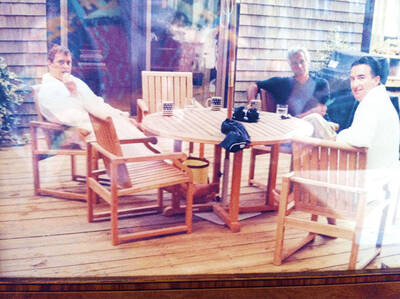
SCANDAL: Other images discovered earlier show Andrew bent over a female and lying across the laps of a number of women, while Mandelson is pictured in his underpants A photograph of former British prince Andrew and veteran politician Peter Mandelson sitting in bathrobes alongside late sex offender Jeffrey Epstein was unearthed on Friday in previously published documents. The image is believed to be the first known photograph of the two men with Epstein. They are currently engulfed in scandal in the UK over their ties to their mutual friend. The undated photograph, first reported by ITV News, shows King Charles III’s disgraced brother and former British ambassador to the US sitting barefoot outside on a wooden deck. They appear to have mugs with a US flag on them
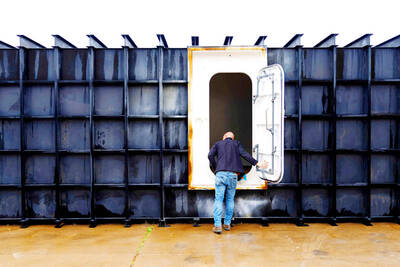
Since the war in the Middle East began nearly two weeks ago, the telephone at Ron Hubbard’s bomb shelter company in Texas has not stopped ringing. Foreign and US clients are rushing to buy his bunkers, seeking refuge in case of air raids, nuclear fallout or apocalypse. With the US and Israel pounding Iran, and Tehran retaliating with strikes across the region, Hubbard has seen demand for his product soar, mostly from Gulf nation customers in Bahrain, Qatar, Kuwait and the United Arab Emirates. “You can imagine how many people are thinking: ‘I wish I had a bomb shelter,’” Hubbard, 63, said in


 RSS
RSS