


Japan began its first jury trial yesterday following legal reforms that aim to bring the judicial process closer to the people amid concerns about allowing jurors to hand down the death penalty.
In the first trial to employ six “lay judges,” a 72-year-old man is accused of stabbing to death a 66-year-old female South Korean neighbor.
The jurors, who were randomly selected from the pool of eligible voters, will be asked to decide not only the verdict but, if the man is convicted, also the sentence in the scheduled four-day case at the Tokyo District Court.
However, as a safeguard, at least one of three professional judges presiding over the trial must agree with the citizen-judges’ majority decisions.
A law passed in May paved the way for the reform, which seeks to give the public a greater role in a judicial process that has often been criticized as remote, complicated and out of touch with the public’s sense of justice.
The change, however, has sparked fierce criticism from some legal experts who argue that randomly selected citizens are not fit to make informed judgments in serious crime cases or decisions about a convict’s life and death.
Japan imposes the death penalty, but usually only for multiple murders. Last week three convicts were executed in Japanese prisons.
Critics also charge that prosecutors will be tempted to use graphic crime scene images as evidence to sway impressionable jurors.
Recent polls have shown that many members of the public are reluctant to be called up as jurors, which has now become a civic duty enforced with fines of up to ¥100,000 (US$1,000) for failure to show up.
Lay judges are also committed to a lifetime of secrecy on their closed-door deliberations, a vow of silence enforced by penalties of up to six months in prison or a ¥500,000 fine for violators.
Before the start of the murder trial, defense lawyer Shunji Date pledged to avoid legalistic jargon and “use language as simple as possible.”

An American scientist convicted of lying to US authorities about payments from China while he was at Harvard University has rebuilt his research lab in Shenzhen, China, to pursue technology the Chinese government has identified as a national priority: embedding electronics into the human brain. Charles Lieber, 67, is among the world’s leading researchers in brain-computer interfaces. The technology has shown promise in treating conditions such as amyotrophic lateral sclerosis and restoring movement in paralyzed people. It also has potential military applications: Scientists at the Chinese People’s Liberation Army have investigated brain interfaces as a way to engineer super soldiers by boosting
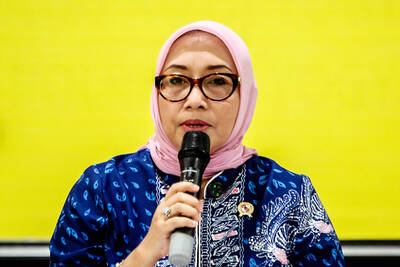
Indonesian police have arrested 13 people after shocking images of alleged abuse against small children at a daycare center went viral, sparking outrage across the nation, officials said on Monday. Police on Friday last week raided Little Aresha, a daycare center in Yogyakarta on Java island, following a report from a former employee. CCTV footage circulating on social media showed children, most younger than two, lying on the floor wearing only diapers, their hands and feet bound with rags. The police have confirmed that the footage is authentic. Police said they also found 20 children crammed into a room just 3m by 3m. “So

About 240 Indians claiming descent from a Biblical tribe landed at Tel Aviv airport on Thursday as part of a government operation to relocate them to Israel. The newcomers passed under a balloon arch in blue and white, the colors of the Israeli flag, as dozens of well-wishers welcomed them with a traditional Jewish song. They were the first “bnei Menashe” (“sons of Manasseh”) to arrive in Israel since the government in November last year announced funding for the immigration of about 6,000 members of the community from the states of Manipur and Mizoram in northeast India. The community claims to descend from
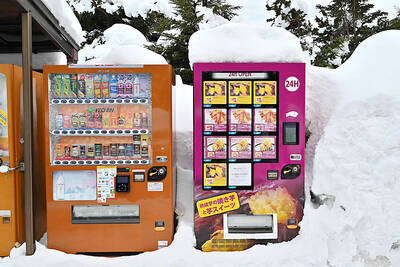
From post offices and parks to stations and even the summit of Mount Fuji, Japan’s vending machines are ubiquitous, but with the rapid pace of inflation cooling demand for their drinks, operators are being forced to rethink the business. Last month beverage giant DyDo Group Holdings announced it would remove about 20,000 vending machines — about 7 percent of their stock nationwide — by January next year, to “reconstruct a profitable network.” Pokka Sapporo Food & Beverage, based in Nagoya, also said last month it would sell its 40,000-machine operation to Osaka-based Lifedrink Co. “The strength of the vending machine


 RSS
RSS