


Police fired rubber bullets and arrested 28 people for allegedly setting fire to government property during a violent protest against power outages in northern India as it reels under a heat wave, an official said yesterday.
Three people were injured as police sought to disperse protesters who set fire to a state-owned utility’s electricity transformer and a truck on Tuesday in Gorakhpur town, Uttar Pradesh state, police spokesman Surendra Srivastava said.
He said 11 people were arrested in Gorakhpur for blocking roads and disrupting traffic to express complaints that homes have been getting power for only three hours a day.
Another eight people were arrested in Mahoba, another town in the state, for allegedly beating up government workers at a power supply center, Srivastava said. Other arrests were made in the state capital, Lucknow, and three other towns.
Those arrested were charged with rioting and attacking government workers, punishable by up to three years in prison.
Uttar Pradesh, home to 180 million people, is India’s most populous state and one of the poorest. Its inadequate energy infrastructure has been unable to cope with high demand as temperatures have peaked above 40˚C in recent days.
The power shortages have left people without air conditioning or fans — and, in some cases, water, as electric pumps failed.
Angry protesters set some government buildings on fire in Amethi, a town represented in Parliament by Rahul Gandhi, the son of the ruling Congress party chief Sonia Gandhi.
Monsoon rains have been delayed by three weeks or more in northern India, disrupting power generation as water levels drop.
“The Uttar Pradesh state gets 5,400 megawatts of electricity against its requirement of 6,200 megawatts. The paucity of 800 megawatts is leading to frequent power cuts,” said Shailendra Dubey, an executive engineer with the Uttar Pradesh Power Corporation Ltd.
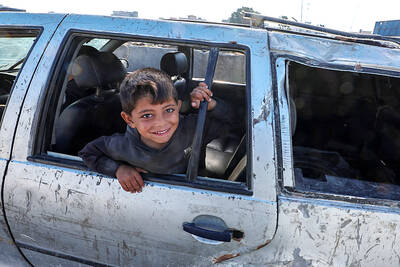
Gaza is rapidly running out of its limited fuel supply and stocks of food staples might become tight, officials said, after Israel blocked the entry of fuel and goods into the war-shattered territory, citing fighting with Iran. The Israeli military closed all Gaza border crossings on Saturday after announcing airstrikes on Iran carried out jointly with the US. Israeli authorities late on Monday night said that they would reopen the Kerem Shalom crossing from Israel to Gaza yesterday, for “gradual entry of humanitarian aid” into the strip, without saying how much. Israeli authorities previously said the crossings could not be operated safely during
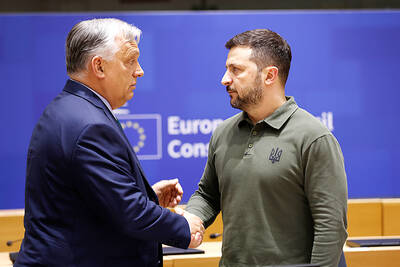
Hungarian authorities temporarily detained seven Ukrainian citizens and seized two armored cars carrying tens of millions of euros in cash across Hungary on suspicion of money laundering, officials said on Friday. The Ukrainians were released on Friday, following their detention on Thursday, but Hungarian officials held onto the cash, prompting Ukraine to accuse Hungary’s Russia-friendly government of illegally seizing the money. “We will not tolerate this state banditism,” Ukrainian Minister of Foreign Affairs Andrii Sybiha said. The seven detained Ukrainians were employees of the Ukrainian state-owned Oschadbank, who were traveling in the two armored cars that were carrying the money between Austria and

Kosovar President Vjosa Osmani on Friday after dissolving the Kosovar parliament said a snap election should be held as soon as possible to avoid another prolonged political crisis in the Balkan country at a time of global turmoil. Osmani said it is important for Kosovo to wrap up the upcoming election process and form functional institutions for political stability as the war rages in the Middle East. “Precisely because the geopolitical situation is that complex, it is important to finish this electoral process which is coming up,” she said. “It is very hard now to imagine what will happen next.” Kosovo, which declared
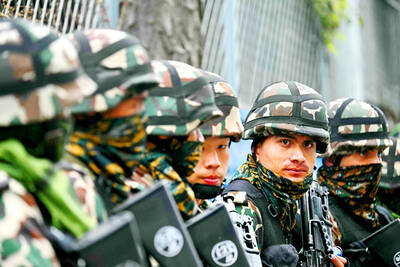
Counting was under way in Nepal yesterday, after a high-stakes parliamentary election to reshape the country’s leadership following protests last year that toppled the government. Key figures vying for power include former Nepalese prime minister K. P. Sharma Oli, rapper-turned-mayor Balendra Shah, who is bidding for the youth vote, and newly elected Nepali Congress party leader Gagan Thapa. In Kathmandu’s tea shops and city squares, people were glued to their phones, checking results as early trends flashed up — suggesting Shah’s centrist Rastriya Swatantra Party (RSP) was ahead. Nepalese Election Commission spokesman Prakash Nyupane said the counting was ongoing “in a peaceful manner”


 RSS
RSS