


North Korea ratcheted up its threats to sever ties with South Korea, vowing yesterday to ban crossings at their shared border starting next month over what it calls Seoul’s confrontational stance.
The North’s military will “restrict and cut off all the overland passage” across the frontier beginning Dec. 1, the official Korean Central News Agency (KCNA) said.
The report did not say how long the ban would remain in place. Prohibiting passage through the Demilitarized Zone would primarily affect South Korean firms operating factories in an inter-Korean business complex in Kaesong and would halt tours to the ancient city, which receives about 200 South Korean visitors daily.
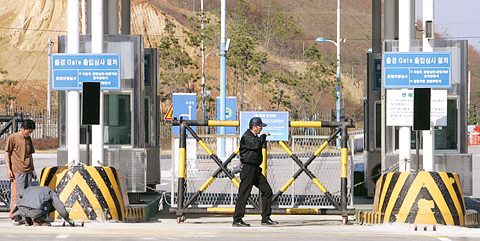
PHOTO: AP
Another joint project in the North — tours to one of the region’s most famous sites, Diamond Mountain — has been stalled since the fatal shooting of a South Korean tourist in July.
South Korean Unification Ministry spokesman Kim Ho-nyeon expressed regret over the North’s decision. He said the threat would hurt reconciliation efforts.
“North Korea’s move is aimed at pressuring South Korea to shift its policy toward the North,” said Qiao Yuzhi, a North Korea expert at Peking University who is visiting Seoul.
He said the North is likely to only enforce the ban temporarily.
South Korean tour operator Hyundai Asan Corp said it has not received any notification from the North about halting its year-old program offering tours of Kaesong. More than 100,000 tourists, mostly South Koreans, have visited the city, which served as the capital of the ancient Koryo Dynasty that ruled Korea from 918 to 1392.
Kaesong is home to more than 80 South Korean factories that employ about 35,000 North Korean workers. Currently, about 1,600 South Koreans also live and work there, Hyundai Asan and the Unification Ministry said.
“There is no sign of tensions here, and our factory is working normally,” Kang Mi-wha, a South Korean manager at footwear maker Samduk Stafild, said by telephone from Kaesong.
The North has stepped up the rhetoric against the South in recent weeks, warning that it will attack the South and reduce it to “debris” if Seoul continues what it says are confrontational activities against it.
Last month, the North warned that it would expel South Koreans from Kaesong if propaganda leaflets critical of Pyongyang keep floating across the border. The two Koreas agreed in 2004 to stop decades of propaganda warfare, but South Korea says it cannot stop activists from sending leaflets into North Korea by balloon.
Inter-Korean relations “are at the crucial crossroads of existence and total severance,” KCNA said yesterday.
Seoul denies taking a hard-line stance toward the North.
A week ago, North Korean Lieutenant General Kim Yong-chol inspected the Kaesong complex and asked South Korean workers how long it would take for them to pull out, the Seoul government said.
Kim, the chief North Korean delegate to military talks with the South, informed his South Korean counterpart yesterday of the decision to restrict border travel, KCNA said. The North also said that it has agreed to let nuclear inspectors visit its main atomic complex and interview scientists — but refuses to let them take samples as part of any verification checklist.
The Foreign Ministry statement provides the first details from Pyongyang about last month’s negotiations with Assistant US Secretary of State Christopher Hill.
Hill went to Pyongyang early last month in a bid to rescue a disarmament-for-aid deal stalled over how to verify the North’s claims about its nuclear program.
Washington had requested soil samples, but North Korea says sampling was never part of the deal.
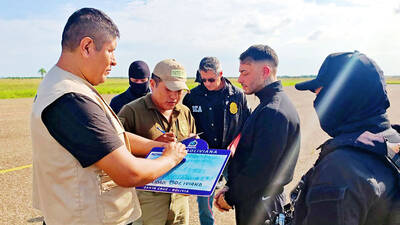
KINGPIN: Marset allegedly laundered the proceeds of his drug enterprise by purchasing and sponsoring professional soccer teams and even put himself in the starting lineups Notorious Latin American narco trafficker Sebastian Marset, who eluded police for years, was handed over to US authorities after his arrest on Friday in Bolivia. Marset, a Uruguayan national who was on the US most-wanted list, was passed to agents of the US Drug Enforcement Administration at Santa Cruz airport in Bolivia, then put on a US airplane, Bolivian state television showed. “The arrest and deportation were carried out pursuant to a court order issued by the US justice system,” Bolivian Minister of Government Marco Antonio Oviedo told reporters. The alleged kingpin was arrested in an upscale neighborhood of Santa
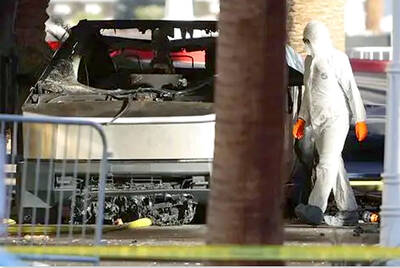
ACTIONABLE ADVICE: The majority of chatbots tested provided guidance on weapons, tactics and target selections, with Perplexity and Meta AI deemed to be the least safe From school shootings to synagogue bombings, leading artificial intelligence (AI) chatbots helped researchers plot violent attacks, according to a study published on Wednesday that highlighted the technology’s potential for real-world harm. Researchers from the nonprofit watchdog Center for Countering Digital Hate and CNN posed as 13-year-old boys in the US and Ireland to test 10 chatbots, including ChatGPT, Google Gemini, Perplexity, Deepseek and Meta AI. Eight of the chatbots assisted the make-believe attackers in more than half the responses, providing advice on “locations to target” and “weapons to use” in an attack, the study said. The chatbots had become a “powerful accelerant for
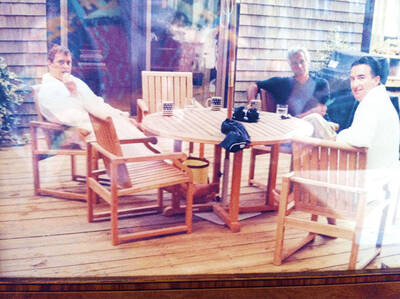
SCANDAL: Other images discovered earlier show Andrew bent over a female and lying across the laps of a number of women, while Mandelson is pictured in his underpants A photograph of former British prince Andrew and veteran politician Peter Mandelson sitting in bathrobes alongside late sex offender Jeffrey Epstein was unearthed on Friday in previously published documents. The image is believed to be the first known photograph of the two men with Epstein. They are currently engulfed in scandal in the UK over their ties to their mutual friend. The undated photograph, first reported by ITV News, shows King Charles III’s disgraced brother and former British ambassador to the US sitting barefoot outside on a wooden deck. They appear to have mugs with a US flag on them
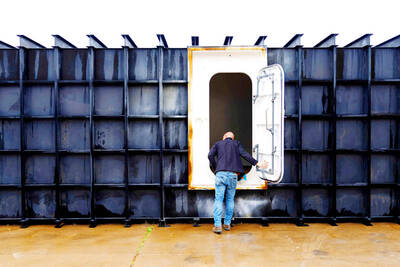
Since the war in the Middle East began nearly two weeks ago, the telephone at Ron Hubbard’s bomb shelter company in Texas has not stopped ringing. Foreign and US clients are rushing to buy his bunkers, seeking refuge in case of air raids, nuclear fallout or apocalypse. With the US and Israel pounding Iran, and Tehran retaliating with strikes across the region, Hubbard has seen demand for his product soar, mostly from Gulf nation customers in Bahrain, Qatar, Kuwait and the United Arab Emirates. “You can imagine how many people are thinking: ‘I wish I had a bomb shelter,’” Hubbard, 63, said in


 RSS
RSS