


Pakistan named a new chief for its main intelligence service, a change sure to be closely scrutinized by US officials who have questioned the powerful spy agency’s loyalties in the “war on terror.”
The appointment of Lieutenant-General Ahmed Shujaa Pasha as head of Inter-Services Intelligence (ISI) was among several changes in what appeared to be a major shake-up of the military leadership.
In his most recent capacity as director-general of military operations, Pasha oversaw military offensives against insurgents in the nuclear-armed nation’s restive northwest.
The region is reportedly home to Taliban and al-Qaeda militants involved in attacks on US and NATO forces in Afghanistan as well as rising strikes within Pakistan.
The statement late on Monday gave no more details about Pasha, but Pakistani defense analyst Talat Masood described him as “highly professional.”
Pasha replaces Lieutenant-General Nadeem Taj, who was in the position about a year after being appointed by former Pakistani president Pervez Musharraf.
Musharraf, a former army chief and US ally, was forced to quit the presidency in August amid threats of impeachment by the fledgling civilian government.
The statement listed several new postings that are expected to take effect in several weeks.
Masood said that the changes appeared to be an effort by General Ashfaq Parvez Kayani, who succeeded Musharraf as army chief and once headed the ISI himself, to consolidate his control over the military.
US intelligence agencies suspect rogue elements in the ISI have been giving Taliban militants sensitive information to aid them in their growing insurgency in Afghanistan.
India and Afghanistan — and reportedly the US — also suspect the agency of involvement in the July 7 bombing outside India’s Embassy in Kabul that killed more than 60 people. Pakistan denies the allegations.
Pakistani intelligence helped create the Taliban militia, many of whose leaders and recruits studied at religious schools in Pakistan.
The army statement said Taj has been appointed Corps Commander for Gujranwala.
Major Murad Khan, an army spokesman, said yesterday that Major-General Javed Iqbal would succeed Pasha as director-general of military operations. He declined to provide any details about Iqbal.
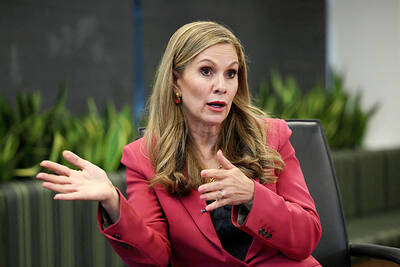
Australians were downloading virtual private networks (VPNs) in droves, while one of the world’s largest porn distributors said it was blocking users from its platforms as the country yesterday rolled out sweeping online age restriction. Australia in December became the first country to impose a nationwide ban on teenagers using social media. A separate law now requires artificial intelligence (AI)-powered chatbot services to keep certain content — including pornography, extreme violence and self-harm and eating disorder material — from minors or face fines of up to A$49.5 million (US$34.6 million). The country also joined Britain, France and dozens of US states requiring
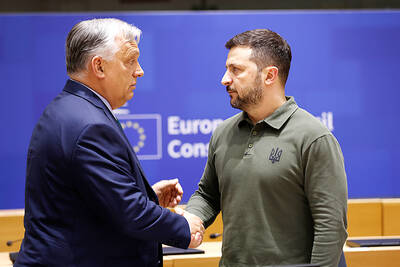
Hungarian authorities temporarily detained seven Ukrainian citizens and seized two armored cars carrying tens of millions of euros in cash across Hungary on suspicion of money laundering, officials said on Friday. The Ukrainians were released on Friday, following their detention on Thursday, but Hungarian officials held onto the cash, prompting Ukraine to accuse Hungary’s Russia-friendly government of illegally seizing the money. “We will not tolerate this state banditism,” Ukrainian Minister of Foreign Affairs Andrii Sybiha said. The seven detained Ukrainians were employees of the Ukrainian state-owned Oschadbank, who were traveling in the two armored cars that were carrying the money between Austria and
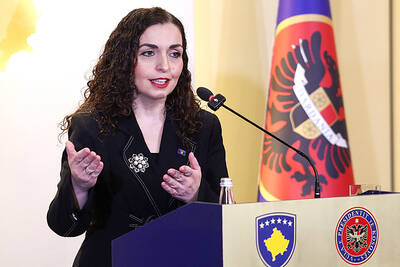
Kosovar President Vjosa Osmani on Friday after dissolving the Kosovar parliament said a snap election should be held as soon as possible to avoid another prolonged political crisis in the Balkan country at a time of global turmoil. Osmani said it is important for Kosovo to wrap up the upcoming election process and form functional institutions for political stability as the war rages in the Middle East. “Precisely because the geopolitical situation is that complex, it is important to finish this electoral process which is coming up,” she said. “It is very hard now to imagine what will happen next.” Kosovo, which declared

MORE BANS: Australia last year required sites to remove accounts held by under-16s, with a few countries pushing for similar action at an EU level and India considering its own ban Indonesia on Friday said it would ban social media access for children under 16, citing threats from online pornography, cyberbullying, online fraud and Internet addiction. “Accounts belonging to children under 16 on high-risk platforms will start to be deactivated, beginning with YouTube, TikTok, Facebook, Instagram, Threads, X, Bigo Live and Roblox,” Indonesian Minister of Communications and Digital Meutya Hafid said. “The government is stepping in so that parents no longer have to fight alone against the giants of the algorithm. Implementation will begin on March 28, 2026,” she said. The social media ban would be introduced in stages “until all platforms fulfill their


 RSS
RSS