


A US government agency has dropped plans for a study of a controversial treatment for autism that critics had called an unethical experiment on children.
The National Institute of Mental Health (NIMH) said in a statement on Wednesday that the study of the treatment — called chelation — has been abandoned.
The agency decided the money would be better used testing other therapies for autism.
“There will be parents who are disappointed,” said Richard Nakamura, the scientific director of the NIMH. “We recognize that for children there is a fine line for the risk-benefit ratio. You have to be pretty certain of the overall safety of the procedure.”
The agency was not confident enough in the procedure’s safety, Nakamura said.
The study had been on hold because of safety concerns after another study last year linked a drug used in the treatment to lasting brain problems in rats.
Chelation removes heavy metals from the body and is used to treat lead poisoning. Its use as an autism treatment is based on the fringe theory that mercury in vaccines triggers autism — a theory never proved and rejected by mainstream science.
Mercury hasn’t been in childhood vaccines since 2001, except for certain flu shots.
But many parents of autistic children are believers in the treatment and the NIMH agreed to test it.
The researchers had proposed recruiting 120 autistic children ages four to 10 and giving half a chelation drug and the other half a dummy pill. The 12-week test would measure before-and-after blood mercury levels and autism symptoms.
The study outline said that failing to find a difference between the two groups would counteract “anecdotal reports and widespread belief” that chelation works.
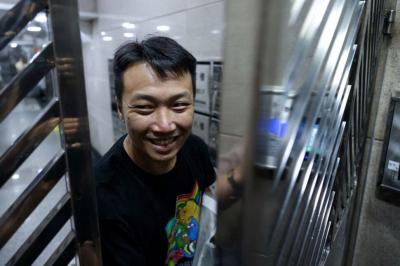
Four people jailed in the landmark Hong Kong national security trial of "47 democrats" accused of conspiracy to commit subversion were freed today after more than four years behind bars, the second group to be released in a month. Among those freed was long-time political and LGBTQ activist Jimmy Sham (岑子杰), who also led one of Hong Kong’s largest pro-democracy groups, the Civil Human Rights Front, which disbanded in 2021. "Let me spend some time with my family," Sham said after arriving at his home in the Kowloon district of Jordan. "I don’t know how to plan ahead because, to me, it feels
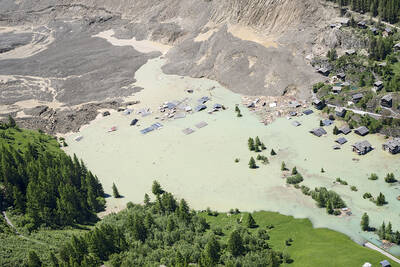
The collapse of the Swiss Birch glacier serves as a chilling warning of the escalating dangers faced by communities worldwide living under the shadow of fragile ice, particularly in Asia, experts said. Footage of the collapse on Wednesday showed a huge cloud of ice and rubble hurtling down the mountainside into the hamlet of Blatten. Swiss Development Cooperation disaster risk reduction adviser Ali Neumann said that while the role of climate change in the case of Blatten “still needs to be investigated,” the wider impacts were clear on the cryosphere — the part of the world covered by frozen water. “Climate change and

Poland is set to hold a presidential runoff election today between two candidates offering starkly different visions for the country’s future. The winner would succeed Polish President Andrzej Duda, a conservative who is finishing his second and final term. The outcome would determine whether Poland embraces a nationalist populist trajectory or pivots more fully toward liberal, pro-European policies. An exit poll by Ipsos would be released when polls close today at 9pm local time, with a margin of error of plus or minus 2 percentage points. Final results are expected tomorrow. Whoever wins can be expected to either help or hinder the
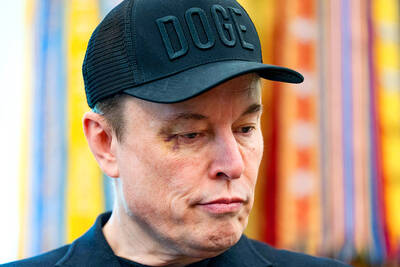
DENIAL: Musk said that the ‘New York Times was lying their ass off,’ after it reported he used so much drugs that he developed bladder problems Elon Musk on Saturday denied a report that he used ketamine and other drugs extensively last year on the US presidential campaign trail. The New York Times on Friday reported that the billionaire adviser to US President Donald Trump used so much ketamine, a powerful anesthetic, that he developed bladder problems. The newspaper said the world’s richest person also took ecstasy and mushrooms, and traveled with a pill box last year, adding that it was not known whether Musk also took drugs while heading the so-called US Department of Government Efficiency (DOGE) after Trump took power in January. In a


 RSS
RSS