


Canada’s prime minister and his main rival offered new images of themselves yesterday as a family man and an avid outdoorsman respectively as they try to win votes in their election campaign.
The portrayals of Conservative Prime Minister Stephen Harper and Liberal leader Stephane Dion are said to be key to swinging voters to their respective camps in an election that has so far been sparse on policies.
Under these terms, Harper, shown in advertisements as a concerned father, soft-spoken and wearing knitted sweaters, meant to modify perceptions that he is a stern leader with cold blue eyes, is ahead in the latest polls that track who Canadians would want as their prime minister.
Dion, a former professor who trails his own party’s popularity, was shown as an avid outdoorsman, skiing, fishing, and hiking — rugged interests steeped in Canadian lore — as well as walking his dog with his wife and daughter.
The Liberal ads hope to counter Conservatives’ efforts to characterize Dion as less macho and less decisive than Harper.
Both makeovers, however, were said to be far removed from the actual personalities of both men.
Midday, the image war heated up with the Conservatives yanking an ad showing a puffin pooping on Dion’s shoulder in front of a blackboard, which Harper conceded was in “extremely poor taste and totally inappropriate.”
“We have different ways of attacking the Liberals without doing that,” he said, offering a public apology to Dion.
In the ad, a bird is flying by as an announcer says Dion is not a leader and not worth the risk. The offending fly-by deposit was later edited out, but not before it was aired on national TV networks.
The gaff eclipsed Harper’s announcement during a campaign stop in Manitoba on his plan to cut excise taxes on diesel fuel by half, if his party is returned to power.
Dion said the ad says more about Harper than it says about him. Previously, Dion had accused Harper of “piling lies upon lies” by suggesting the Liberals would hike consumption taxes and revoke child care benefits offered by the Conservatives.
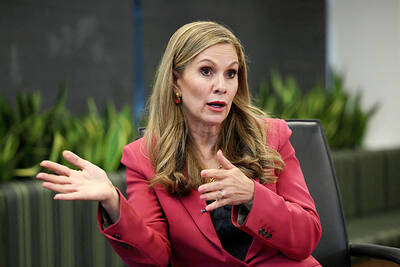
Australians were downloading virtual private networks (VPNs) in droves, while one of the world’s largest porn distributors said it was blocking users from its platforms as the country yesterday rolled out sweeping online age restriction. Australia in December became the first country to impose a nationwide ban on teenagers using social media. A separate law now requires artificial intelligence (AI)-powered chatbot services to keep certain content — including pornography, extreme violence and self-harm and eating disorder material — from minors or face fines of up to A$49.5 million (US$34.6 million). The country also joined Britain, France and dozens of US states requiring
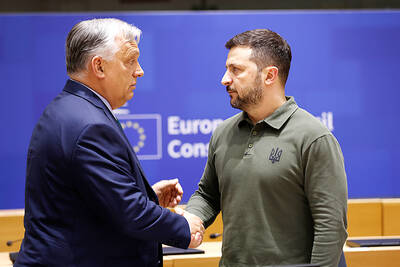
Hungarian authorities temporarily detained seven Ukrainian citizens and seized two armored cars carrying tens of millions of euros in cash across Hungary on suspicion of money laundering, officials said on Friday. The Ukrainians were released on Friday, following their detention on Thursday, but Hungarian officials held onto the cash, prompting Ukraine to accuse Hungary’s Russia-friendly government of illegally seizing the money. “We will not tolerate this state banditism,” Ukrainian Minister of Foreign Affairs Andrii Sybiha said. The seven detained Ukrainians were employees of the Ukrainian state-owned Oschadbank, who were traveling in the two armored cars that were carrying the money between Austria and
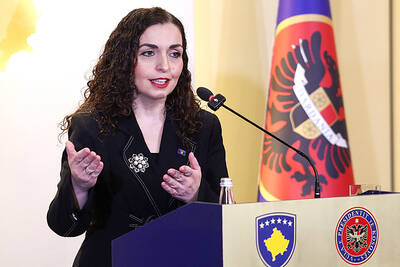
Kosovar President Vjosa Osmani on Friday after dissolving the Kosovar parliament said a snap election should be held as soon as possible to avoid another prolonged political crisis in the Balkan country at a time of global turmoil. Osmani said it is important for Kosovo to wrap up the upcoming election process and form functional institutions for political stability as the war rages in the Middle East. “Precisely because the geopolitical situation is that complex, it is important to finish this electoral process which is coming up,” she said. “It is very hard now to imagine what will happen next.” Kosovo, which declared

MORE BANS: Australia last year required sites to remove accounts held by under-16s, with a few countries pushing for similar action at an EU level and India considering its own ban Indonesia on Friday said it would ban social media access for children under 16, citing threats from online pornography, cyberbullying, online fraud and Internet addiction. “Accounts belonging to children under 16 on high-risk platforms will start to be deactivated, beginning with YouTube, TikTok, Facebook, Instagram, Threads, X, Bigo Live and Roblox,” Indonesian Minister of Communications and Digital Meutya Hafid said. “The government is stepping in so that parents no longer have to fight alone against the giants of the algorithm. Implementation will begin on March 28, 2026,” she said. The social media ban would be introduced in stages “until all platforms fulfill their


 RSS
RSS