


US Vice President Dick Cheney arrived in Italy on Friday on the last stop of a four-nation tour aimed at bolstering Western support for former Soviet republics in the wake of Russia’s five-day war with Georgia.
Cheney was to address the Ambrosetti conference on security and intelligence in Lake Como yesterday, after pledging Washington’s “deep and abiding interest” in Ukraine, Georgia and Azerbaijan and slamming Russia’s military actions last month over the rebel region of South Ossetia.
The US vice president also expressed support for Georgia and Ukraine becoming eventual members of NATO. He was expected to press that message to leaders at the conference, and in one-on-one talks with Spanish, Turkish and Italian leaders.
During his trip, Cheney urged the expansion of energy routes that would take oil and gas to Europe and bypass oil giant Russia, vowed continued US support for ally Georgia and called on Ukraine’s leaders to unite in the face of Russian “threats.”
He also restated US support for Ukraine’s bid to join NATO and warned Russia against attempting to block Ukraine’s entry to the military alliance.
An administration official told reporters following Cheney’s talks in Kiev that Russia’s conflict with Georgia may have altered views among US allies in the region, but that the administration of President George W. Bush would invest “an awful lot of energy” in pushing for Georgian and Ukrainian entry in NATO during its final months in office.
“People have been shaken by events in Georgia,” the official said on condition of anonymity. “It has created a new situation. I think there are some indications that some of the allies are looking with a fresh set of eyes, looking at the new circumstances.”
“There’s a lot of diplomatic work, consultations that have to be done,” the official said.
Russia has objected to the 26-member NATO military alliance, which Moscow sees as a Cold War relic, and said it was time for a new inclusive security system including Russia.
EU members decided at a summit this week in Brussels to freeze talks on a strategic partnership accord with Moscow after Russia’s military surge into Georgia and recognition of Georgian rebel regions South Ossetia and Abkhazia as independent states.
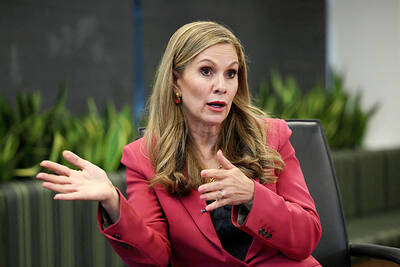
Australians were downloading virtual private networks (VPNs) in droves, while one of the world’s largest porn distributors said it was blocking users from its platforms as the country yesterday rolled out sweeping online age restriction. Australia in December became the first country to impose a nationwide ban on teenagers using social media. A separate law now requires artificial intelligence (AI)-powered chatbot services to keep certain content — including pornography, extreme violence and self-harm and eating disorder material — from minors or face fines of up to A$49.5 million (US$34.6 million). The country also joined Britain, France and dozens of US states requiring
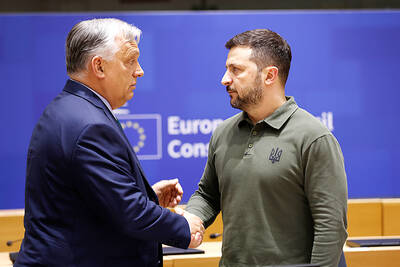
Hungarian authorities temporarily detained seven Ukrainian citizens and seized two armored cars carrying tens of millions of euros in cash across Hungary on suspicion of money laundering, officials said on Friday. The Ukrainians were released on Friday, following their detention on Thursday, but Hungarian officials held onto the cash, prompting Ukraine to accuse Hungary’s Russia-friendly government of illegally seizing the money. “We will not tolerate this state banditism,” Ukrainian Minister of Foreign Affairs Andrii Sybiha said. The seven detained Ukrainians were employees of the Ukrainian state-owned Oschadbank, who were traveling in the two armored cars that were carrying the money between Austria and
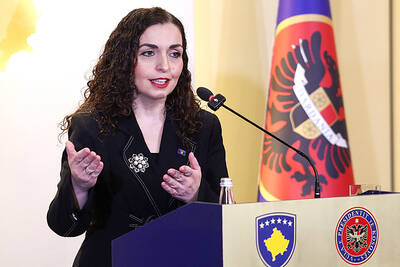
Kosovar President Vjosa Osmani on Friday after dissolving the Kosovar parliament said a snap election should be held as soon as possible to avoid another prolonged political crisis in the Balkan country at a time of global turmoil. Osmani said it is important for Kosovo to wrap up the upcoming election process and form functional institutions for political stability as the war rages in the Middle East. “Precisely because the geopolitical situation is that complex, it is important to finish this electoral process which is coming up,” she said. “It is very hard now to imagine what will happen next.” Kosovo, which declared

MORE BANS: Australia last year required sites to remove accounts held by under-16s, with a few countries pushing for similar action at an EU level and India considering its own ban Indonesia on Friday said it would ban social media access for children under 16, citing threats from online pornography, cyberbullying, online fraud and Internet addiction. “Accounts belonging to children under 16 on high-risk platforms will start to be deactivated, beginning with YouTube, TikTok, Facebook, Instagram, Threads, X, Bigo Live and Roblox,” Indonesian Minister of Communications and Digital Meutya Hafid said. “The government is stepping in so that parents no longer have to fight alone against the giants of the algorithm. Implementation will begin on March 28, 2026,” she said. The social media ban would be introduced in stages “until all platforms fulfill their


 RSS
RSS