


The once powerful US lobbyist at the heart of a corruption scandal that upended Washington politics was sentenced to four years in prison on Thursday by a judge who said the case had shattered public confidence in government.
Jack Abramoff, who fought back tears as he declared himself a broken man, appeared crestfallen as the judge handed down a sentence longer than prosecutors had sought.
Over the past three years, Abramoff has come to symbolize corruption and the secret deals cut between lobbyists and politicians in back rooms or on golf courses or private jets. The scandal shook Washington Avenue from the White House to Congress and contributed to the Republicans’ loss of both legislative houses in 2006.
Democrats jumped on scandals involving Abramoff, members of Congress and Bush administration officials to charge there was a climate of corruption in the US capital and their tactic paid off at the ballot box when voters turned against the Republicans.
“I come before you as a broken man. I’m not the same man who happily and arrogantly engaged in a lifestyle of political and business corruption,” Abramoff said.
“My name is the butt of a joke, the source of a laugh and the title of a scandal,” he later added.
Already two years into a prison term in Florida, Abramoff, 49, will have spent about six years in prison by the time he is released — far longer than he and his attorneys expected for a man who became the key FBI witness in his own corruption case.
With Abramoff’s help, the Justice Department has won corruption convictions against former US representative Boy Ney, former deputy interior secretary J. Steven Griles and several top congressional aides.
Because of that cooperation, prosecutors were reserved in their comments. Rather than regaling the court with a summary of the misdeeds and the seriousness of the corruption, the Department of Justice said little in court but urged leniency.
US District Judge Ellen Segal Huvelle could have sent Abramoff to prison for 11 years but showed leniency because of his work with the FBI. She rejected, however, proposals to reduce the sentence even further by giving Abramoff credit for the time he has already spent in prison on a fraudulent casino deal.
Abramoff could appeal the sentence because Justice Department infighting is partly responsible for the lengthy prison term.
Prosecutors in Washington had hoped to combine the casino case and the corruption case in one plea deal. But Florida prosecutors refused to give up their piece, as did Washington prosecutors, so the deal was split in two.
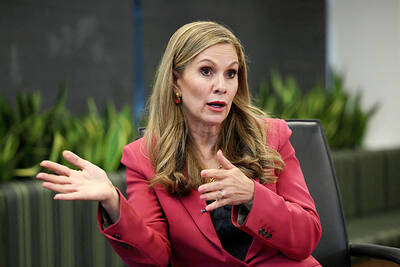
Australians were downloading virtual private networks (VPNs) in droves, while one of the world’s largest porn distributors said it was blocking users from its platforms as the country yesterday rolled out sweeping online age restriction. Australia in December became the first country to impose a nationwide ban on teenagers using social media. A separate law now requires artificial intelligence (AI)-powered chatbot services to keep certain content — including pornography, extreme violence and self-harm and eating disorder material — from minors or face fines of up to A$49.5 million (US$34.6 million). The country also joined Britain, France and dozens of US states requiring
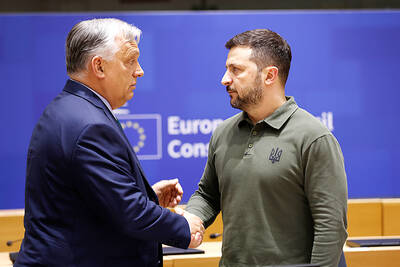
Hungarian authorities temporarily detained seven Ukrainian citizens and seized two armored cars carrying tens of millions of euros in cash across Hungary on suspicion of money laundering, officials said on Friday. The Ukrainians were released on Friday, following their detention on Thursday, but Hungarian officials held onto the cash, prompting Ukraine to accuse Hungary’s Russia-friendly government of illegally seizing the money. “We will not tolerate this state banditism,” Ukrainian Minister of Foreign Affairs Andrii Sybiha said. The seven detained Ukrainians were employees of the Ukrainian state-owned Oschadbank, who were traveling in the two armored cars that were carrying the money between Austria and
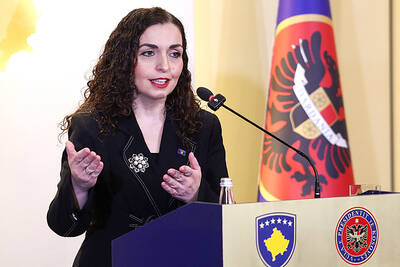
Kosovar President Vjosa Osmani on Friday after dissolving the Kosovar parliament said a snap election should be held as soon as possible to avoid another prolonged political crisis in the Balkan country at a time of global turmoil. Osmani said it is important for Kosovo to wrap up the upcoming election process and form functional institutions for political stability as the war rages in the Middle East. “Precisely because the geopolitical situation is that complex, it is important to finish this electoral process which is coming up,” she said. “It is very hard now to imagine what will happen next.” Kosovo, which declared

MORE BANS: Australia last year required sites to remove accounts held by under-16s, with a few countries pushing for similar action at an EU level and India considering its own ban Indonesia on Friday said it would ban social media access for children under 16, citing threats from online pornography, cyberbullying, online fraud and Internet addiction. “Accounts belonging to children under 16 on high-risk platforms will start to be deactivated, beginning with YouTube, TikTok, Facebook, Instagram, Threads, X, Bigo Live and Roblox,” Indonesian Minister of Communications and Digital Meutya Hafid said. “The government is stepping in so that parents no longer have to fight alone against the giants of the algorithm. Implementation will begin on March 28, 2026,” she said. The social media ban would be introduced in stages “until all platforms fulfill their


 RSS
RSS