


Mario Palma asked to be stationed in Taiwan because he wanted to be a matchmaker between Taipei and Rome.
“The potential for further cooperation between the two countries is huge,” said the head of the Italian Economic, Trade and Cultural Promotion Office.
He said that in spite of the absence of formal diplomatic ties since 1970, Taiwan and Italy share many interests and passions: fine art, design and even good food.
With a traditional Chinese redwood table juxtaposed against a contemporary plush sofa, even Palma’s office furniture exemplifies a kind of romance between Oriental and Occidental cultures.
It was Taiwan’s maturing democracy and historic transformations that had prompted his request for a posting in Taipei, Palma said.
“I asked to come here because I thought it would be the right moment to be in Taiwan,” he said. “It was just some months ahead of the legislative and the presidential elections. The mood was already that the Taiwanese political scene was about to have some historic changes. But what we could not have imagined was the dimension of the change.”
It was striking, he said, to witness how Taiwanese voters took the fate of the country into their hands.
“It was the voters that wanted the change and they got it,” he said.
Although Palma has been Italy’s representative for less than a year, he is not a stranger to the country. In 1996, Palma spent one month in Taipei studying traditional Chinese characters after mastering the spoken language in Beijing.
“At the time, I could not have imagined that I would come back to Taiwan as the representative,” Palma said, recalling fond memories of traveling with Amis Aborigines on an excursion to Hualien County, as well as a trip to Sun Moon Lake (日月潭).
Now, as the voice of the Italian government in Taiwan, Palma said his goal was to promote cultural, economic and trade relations and to help his countrymen gain a better understanding of the “vibrancy of Taiwanese society.”
Citing Gianfranco Lanci, the president of the Taiwanese computer giant Acer, as an example of a company successfully merging Italian-style management and Taiwanese innovation, Palma said the potential for closer collaboration and exchange between the two countries is immense.
Taiwan, he noted, has an advanced research and development sector that Italians can learn from. In the other direction, Taiwan can look to Italians for ideas in art and design.
In conjunction with the Xue Xue Institute, Palma’s office is a sponsor for “Italian Genius, Now,” a series of lectures by leading names in the fashion industry, including Sergio Fintoni, senior consultant at the Centro per l’Arte Contemporanea Luigi Pecci. The Italian trade and cultural office is also screening two movies at the upcoming European Film Festival in Taipei to highlight Italian cinematography, he said.
Palma said the innovations of Taiwanese artists and architects were gaining more acclaim.
For example, a display entitled “Taiwan: the Interbreeding Field,” organized by the National Taiwan Museum of Fine Arts, will be featured next month in Venice in the 11th International Architecture Exhibition’s main hall, instead of the side halls as in the past.
As Italians prepare to explore the work of Taiwanese architects, some are hoping Taiwanese will explore their wine.
Italian wine, Palma said, has a larger number of varieties than French wine because of the different types of grapes that are grown in Italy.
Barolo, Soave and Primitivo wines, to name just a few, have gained popularity among Taiwanese wine aficionados, Palma said, adding that Italian wine imports have increased by 80 percent since last year.
Palma said Rome is happy to see warming relations between Taiwan and China, adding that stability in the Taiwan Strait is in the interests of the EU, which adheres to the “one China” policy but supports Taiwan’s participation in international organizations.
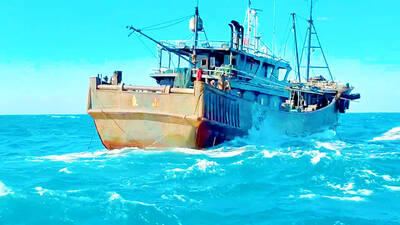
MAKING WAVES: China’s maritime militia could become a nontraditional threat in war, clogging up shipping lanes to prevent US or Japanese intervention, a report said About 1,900 Chinese ships flying flags of convenience and fishing vessels that participated in China’s military exercises around Taiwan last month and in January last year have been listed for monitoring, Coast Guard Administration (CGA) Deputy Director-General Hsieh Ching-chin (謝慶欽) said yesterday. Following amendments to the Commercial Port Act (商港法) and the Law of Ships (船舶法) last month, the CGA can designate possible berthing areas or deny ports of call for vessels suspected of loitering around areas where undersea cables can be accessed, Oceans Affairs Council Minister Kuan Bi-ling (管碧玲) said. The list of suspected ships, originally 300, had risen to about
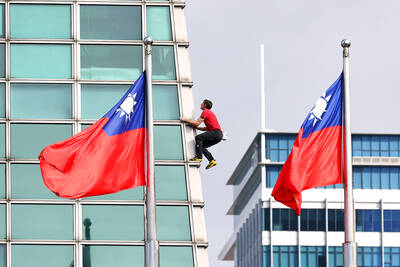
DAREDEVIL: Honnold said it had always been a dream of his to climb Taipei 101, while a Netflix producer said the skyscraper was ‘a real icon of this country’ US climber Alex Honnold yesterday took on Taiwan’s tallest building, becoming the first person to scale Taipei 101 without a rope, harness or safety net. Hundreds of spectators gathered at the base of the 101-story skyscraper to watch Honnold, 40, embark on his daredevil feat, which was also broadcast live on Netflix. Dressed in a red T-shirt and yellow custom-made climbing shoes, Honnold swiftly moved up the southeast face of the glass and steel building. At one point, he stepped onto a platform midway up to wave down at fans and onlookers who were taking photos. People watching from inside
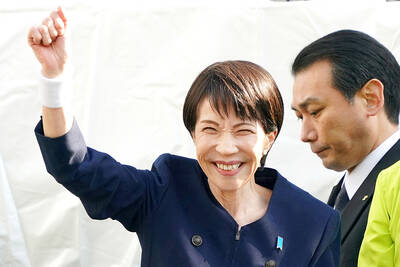
Japan’s strategic alliance with the US would collapse if Tokyo were to turn away from a conflict in Taiwan, Japanese Prime Minister Sanae Takaichi said yesterday, but distanced herself from previous comments that suggested a possible military response in such an event. Takaichi expressed her latest views on a nationally broadcast TV program late on Monday, where an opposition party leader criticized her for igniting tensions with China with the earlier remarks. Ties between Japan and China have sunk to the worst level in years after Takaichi said in November that a hypothetical Chinese attack on Taiwan could bring about a Japanese
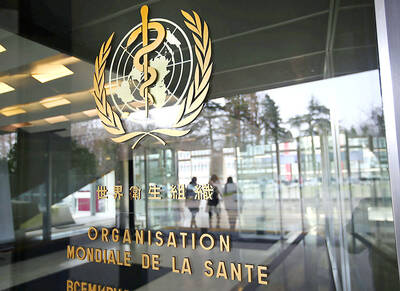
The WHO ignored early COVID-19 warnings from Taiwan, US Deputy Secretary of Health and Human Services Jim O’Neill said on Friday, as part of justification for Washington withdrawing from the global health body. US Secretary of State Marco Rubio on Thursday said that the US was pulling out of the UN agency, as it failed to fulfill its responsibilities during the COVID-19 pandemic. The WHO “ignored early COVID warnings from Taiwan in 2019 by pretending Taiwan did not exist, O’Neill wrote on X on Friday, Taiwan time. “It ignored rigorous science and promoted lockdowns.” The US will “continue international coordination on infectious


 RSS
RSS