


When Germany's Green Party first entered parliament 25 years ago, few imagined that the protest party -- with its penchant for beards, dungarees and sunflowers -- would one day become a sought-after ally for conservatives.
On Thursday night, though, Greens in Hamburg voted to launch talks with German Chancellor Angela Merkel's conservative Christian Democratic Union (CDU), on what would be their first state-level coalition. If successful, that tie-up could help set the scene for a national alliance.
The decision came two days after party leaders marked the anniversary of their arrival in the national parliament with organic wine and donning respectable suits -- reflecting a long journey to the political center for one of the continent's most successful ecology-based parties.
Today's Greens are a far cry from the 28 lawmakers who took their seats in Bonn in 1983 -- after marching through the West German capital with a tree felled to make way for an airport runway and a dead fir from the Black Forest.
"Back then, no one could have imagined our working together with the CDU," Renate Kuenast, the party's co-leader in parliament, said this week.
Now, she said, the Greens should be prepared to cooperate with conservatives "if they're intent on improving society."
"But they should understand that even though we no longer have the same clothes and beards ... we still have the same political visions," she said.
With Germany's coalitions in flux, trying out an alliance with the CDU could free the Greens from relying on their usual partnership with the center-left Social Democrats, the struggling party of former chancellor Gerhard Schroeder, with whom they governed Germany for seven years. And such an alliance could expand Merkel's options in the future.
On Thursday, Hamburg Greens endorsed the idea after lawmaker Krista Sager urged them to seize the opportunity.
"This is a historic chance now and we must try to get as much as possible out of this chance for people in our city," she said.
Still, these are insecure times for the party, which has struggled for direction since Schroeder's government lost power in 2005 and their de facto leader, former foreign minister Joschka Fischer, went into retirement.
Its current leaders will have to be careful about embracing new partners, given the risk of alienating grass-roots members who are often left-leaning and pacifist.
Earlier this week, top Greens decided to go into next year's national election with a leadership duo that reflects those tensions -- pairing Kuenast, a pragmatist who was Schroeder's agriculture minister, with Juergen Trittin, a former environment minister who is closer to the party's left wing.
Trittin and others have suggested the party could work with the new Left party -- a combination of former East German communists and former Social Democrats disgruntled by economic reform that has drained votes from the center-left and complicated efforts to build a coalition since it emerged in 2005.
In Hamburg, some Greens suggest speculation about a possible coalition with the CDU ahead of last month's state election contributed to a relatively poor vote tally for the party in a traditional stronghold. But they see opportunities too.
"We Greens have arrived in the middle of society and it's time to position ourselves anew," said Helmut Deecke, the party's treasurer in Hamburg.

In the sweltering streets of Jakarta, buskers carry towering, hollow puppets and pass around a bucket for donations. Now, they fear becoming outlaws. City authorities said they would crack down on use of the sacred ondel-ondel puppets, which can stand as tall as a truck, and they are drafting legislation to remove what they view as a street nuisance. Performances featuring the puppets — originally used by Jakarta’s Betawi people to ward off evil spirits — would be allowed only at set events. The ban could leave many ondel-ondel buskers in Jakarta jobless. “I am confused and anxious. I fear getting raided or even

Eleven people, including a former minister, were arrested in Serbia on Friday over a train station disaster in which 16 people died. The concrete canopy of the newly renovated station in the northern city of Novi Sad collapsed on Nov. 1, 2024 in a disaster widely blamed on corruption and poor oversight. It sparked a wave of student-led protests and led to the resignation of then-Serbian prime minister Milos Vucevic and the fall of his government. The public prosecutor’s office in Novi Sad opened an investigation into the accident and deaths. In February, the public prosecutor’s office for organized crime opened another probe into
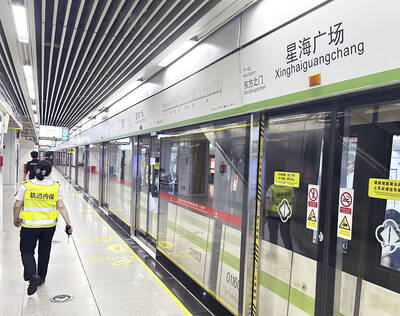
RISING RACISM: A Japanese group called on China to assure safety in the country, while the Chinese embassy in Tokyo urged action against a ‘surge in xenophobia’ A Japanese woman living in China was attacked and injured by a man in a subway station in Suzhou, China, Japanese media said, hours after two Chinese men were seriously injured in violence in Tokyo. The attacks on Thursday raised concern about xenophobic sentiment in China and Japan that have been blamed for assaults in both countries. It was the third attack involving Japanese living in China since last year. In the two previous cases in China, Chinese authorities have insisted they were isolated incidents. Japanese broadcaster NHK did not identify the woman injured in Suzhou by name, but, citing the Japanese

RESTRUCTURE: Myanmar’s military has ended emergency rule and announced plans for elections in December, but critics said the move aims to entrench junta control Myanmar’s military government announced on Thursday that it was ending the state of emergency declared after it seized power in 2021 and would restructure administrative bodies to prepare for the new election at the end of the year. However, the polls planned for an unspecified date in December face serious obstacles, including a civil war raging over most of the country and pledges by opponents of the military rule to derail the election because they believe it can be neither free nor fair. Under the restructuring, Myanmar’s junta chief Min Aung Hlaing is giving up two posts, but would stay at the


 RSS
RSS