

From blaring car horns to wedding parties, rising noise pollution in the 24-hour metropolis of Cairo has reached alarming levels, leading to hearing problems, irritability and even death.
Living in the city center, where noise levels reach an average of 90 decibels (dB) and never drop below 70dB, is like spending all day inside a factory, a study by the Egyptian National Research Center (NRC) last year said.
"What's striking about Cairo is that noise levels on different streets at different times of day are well over limits set by the environmental protection agency [EPA]," the NRC's Mustafa Ali Shafiye said.
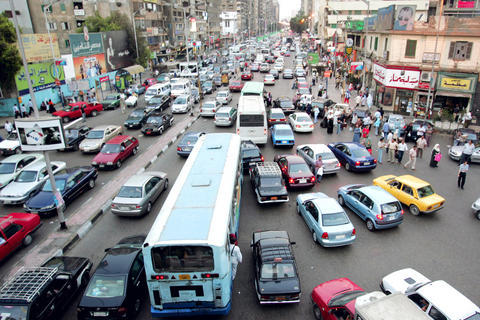
PHOTO: AFP
"In downtown, noise levels may attain 90dB at 7:30am, bearing in mind that the normally acceptable level set by the EPA is 35-55 dB," he said.
In December, the respected New Scientist magazine said that "noise kills in much the same way as chronic stress does."
It causes "an accumulation of stress hormones, inflammation and changes in body chemistry that eventually lead to problems such as impaired blood circulation and heart attacks," the magazine said.
Mohammed el-Shazly, an ear specialist at Cairo University, said: "The noise in Cairo is exceptional -- it cannot be compared to any other Arab city."
"What is special about Cairo is that industrial zones and residential areas are not separated. People like policemen who are permanently on the street can be severely affected," he said.
People start to lose their hearing gradually, he said, and once that happens the only cure is to get a hearing aid.
"Car horns, loud music, shouting, aging engines and the occasional party can lead to a series of health problems including hypertension, hearing loss, cardiovascular effects and general irritability" said Nagat Amer, an environmental health specialist at the NRC.
"Noise severely affects pregnant women who are permanently exposed to it. It causes retraction in blood vessels and they give birth to small babies," she said.
"The cost of this is enormous: We can count non-concentration at work, absenteeism, accidents, handicaps," she said. "Protecting ourselves from noise is much less expensive than what it may cost later."
The WHO, which considers noise pollution to be the world's third-worst after polluted air and water, has said that exposure for more than eight hours a day to sound in excess of 85db is potentially hazardous.
The ministries of health and environment are planning to establish a national network for monitoring noise levels in Egypt, but no date has yet been fixed for it to begin gathering data.
A 1994 law laying down legal ambient noise limits is largely ignored. Under this law, levels should not exceed 52db during the day, 37db at night and a very loud 90db in industrial areas such as factories.
With Cairo's population continually expanding and no official solution within earshot, tens of thousands of people are fleeing to quieter and less-polluted suburbs.
"I used to hear car horns, shops opening and closing, people shouting," said Dina Kozman, a housewife who left the city center three years ago for a residential compound. "Traffic makes noise and noise makes stress. It's a vicious circle."
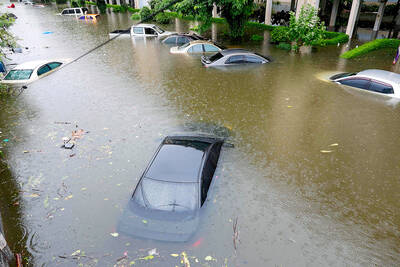
Several areas of Thailand’s capital city Bangkok were inundated by continuous rain from Thursday afternoon to yesterday morning that has disrupted traffic and forced some residents to evacuate. Major canals in Bangkok filled with accumulated rainfall exceeding 20cm, officials said yesterday. Floodwaters spread across the city, particularly in the central and eastern parts, blocking roads and stopping traffic. The Thai Meteorological Department warned that the heavy rain would continue in most parts of the country through today, citing a strong low-pressure system over the central region and strengthening southwest monsoon conditions. More than 84,000 people in 21 provinces nationwide were
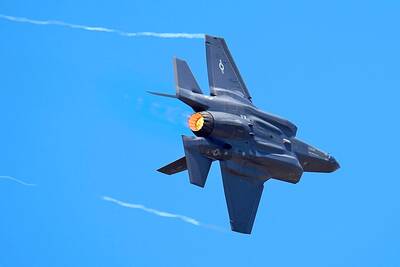
BAD TIMING: The disclosure of the incident, which is under investigation by at least two congressional committees, comes as Xi was to meet with Trump The Pentagon is investigating how parts of the US’ most advanced fighter jet ended up in Hong Kong, with a news outlet on Wednesday reporting that China has obtained the F-35 equipment. The F-35 Joint Program Office said in a statement that it and the US Department of Defense are aware of “a shipment issue” with F-35 components. “We are actively working with US authorities and industry partners to retrieve these components, investigate the incident and place safeguards to avoid a future occurrence,” the office said. UPS was shipping a cockpit canopy and weapons-bay door from an Australian military F-35 that was being

Yemen’s Saudi-led coalition early yesterday said it had intercepted two ballistic missiles and two drones launched by the Iran-backed Houthis toward the kingdom. The coalition said in posts on social media that the missiles were headed towards Khamis Mushait and the drones toward the capital, Riyadh, adding that it was monitoring the missile threat and drones launched at the kingdom, without providing further details. The Saudi Civil Defense had sent alerts overnight for Khamis Mushait and Abha, but not for Riyadh. The Houthis, who control the most populous parts of Yemen and much of the north, have been launching attacks

IN DEFENSE: Australia said it takes the protection of classified and export-controlled tech extremely seriously amid concerns over reverse engineering A US House of Representatives committee that oversees defense policy is investigating the diversion of potentially sensitive F-35 jet components this year from Australia to Hong Kong, a spokesperson said. “The committee is aware of this issue and we’ve received multiple briefings on it,” House Committee on Armed Services spokesperson Heather Vaughan said, adding that the group is “continuing to look into the incident and conduct oversight.” The Pentagon’s F-35 program office said in a statement that “we are aware of a shipment issue of unserviceable F-35 components and we are actively working with US authorities and industry partners to retrieve these


 RSS
RSS