


Afghanistan's president warned on Wednesday that world could suffer terribly from the "wildfire" of terrorism engulfing his region, thickening the gloom at a meeting of political and economic leaders already worried about the threat of global recession.
Formally opening this year's World Economic Forum, Hamid Karzai listed a sobering rundown of the attacks attributed to Islamist terrorists in recent months -- among them the December assassination of former Pakistani prime minister Benazir Bhutto and deadly bombings in Afghanistan and Pakistan that claimed dozens of victims, including many schoolchildren.
With terrorism still on the rise in the region six years after the ouster of the Taliban, "it seems like the mutant of extremism is dangerously unleashed across the region," Karzai said, warning that the trend "bodes terribly badly for the whole world."
Pakistani President Pervez Musharraf, a US ally in the fight against terrorism, is attending the conference in Davos as well, as part of a European tour seeking to reassure the West that he was still in control of his country after months of political instability. Both leaders held talks on Wednesday with US Secretary of State Condoleezza Rice, but there was no indication they would meet each other.
Musharraf spokesman Rashid Qureshi said that the meeting with Rice "went very well" adding that there was "total consonance and unanimity of views" on joint efforts to fight terrorism and a feeling that the sharing of intelligence between the two countries was "excellent."
How to stem terrorism is one of the themes at the Forum, along with climate change, pursuing a workable peace process in the Middle East and how technology is ushering in a new age of social networking that knows no borders.
Still, with many participants heavily exposed to the markets -- and sharing the realization that economic downturn can breed political turmoil -- the main focus on Wednesday was on the fear of world recession.
Rice, in a nod to the economic anxiety at the forum, told an audience of chief executives, politicians and others that the US economy was resilient and would remain an "engine of growth."
Rice also said the US would welcome foreign investment and free trade, "and our economy will remain a leading engine of global economic growth."
Many leading participants shared the view that the world could not escape the effects of the US' economic malaise, marked by the subprime crisis, loss of business confidence, poor company reports and a roiling stock market.
World markets remained volatile on Wednesday, with Asia closing up and Wall Street staging a stunning comeback but European stocks falling despite the US Federal Reserve's surprise interest rate cut the day before aimed at shoring up the sagging US economy. The fireworks added weight to fears at Davos that the world could be sliding into recession.
"We're in Round 1 or 2. This is a 15-round fight," declared Guillermo Ortiz, governor of the Central Bank of Mexico, suggesting the worst might yet be coming.
Billionaire George Soros called for a radical cure -- a massive injection of regulation and oversight over financial markets whose excessive freedoms have caused "not a normal crisis but the end of an era."
"Authorities ought to go in and examine the books" of financial institutions, Soros said -- and provide assurance that "they will rescue and even take over banks that become insolvent."
He blamed the US Federal Reserve for keeping interest rates too low for too long.
Meanwhile, former US vice president Al Gore and U2 frontman Bono offered measured praise yesterday for efforts in tackling climate change and global poverty, but warned the World Economic Forum that conditions were not improving as much as they could.
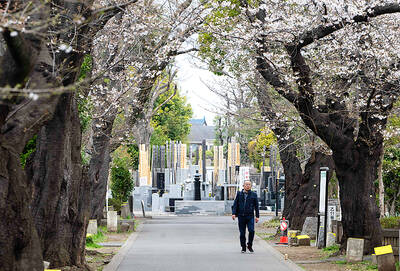
ROCKY RELATIONS: The figures on residents come as Chinese tourist numbers drop following Beijing’s warnings to avoid traveling to Japan The number of Chinese residents in Japan has continued to rise, even as ties between the two countries have become increasingly fractious, data released on Friday showed. As of the end of December last year, the number of Chinese residents had increased by 6.5 percent from the previous year to 930,428. Chinese people accounted for 22.6 percent of all foreign residents in Japan, making them by far the largest group, Japanese Ministry of Justice data showed. Beijing has criticized Tokyo in increasingly strident terms since Japanese Prime Minister Sanae Takaichi last year suggested that a military conflict around Taiwan could

A retired US colonel behind a privately financed rocket launch site in the Dominican Republic sees the project as a response to China’s dominance of the space race in Latin America. Florida-based Launch on Demand is slated to begin building a US$600 million facility in a remote region near the border with Haiti late this year. The project is designed to meet surging demand for the heavy-lift rockets needed to put clusters of satellites into orbit. It is also an answer to China’s growing presence in the region, said CEO Burton Catledge, a former commander of the US Air Force’s 45th Operations

Germany is considering Australia’s Ghost Bat robot fighter as it looks to select a combat drone to modernize its air force, German Minister of Defense Boris Pistorius said yesterday. Germany has said it wants to field hundreds of uncrewed fighter jets by 2029, and would make a decision soon as it considers a range of German, European and US projects developing so-called “collaborative combat aircraft.” Australia has said it will integrate the Ghost Bat, jointly developed by Boeing Australia and the Royal Australian Air Force, into its military after a successful weapons test last year. After inspecting the Ghost Bat in Queensland yesterday,
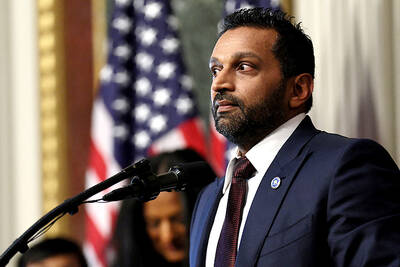
A pro-Iran hacking group claimed to breach FBI Director Kash Patel’s personal e-mail inbox and posted some of the contents online. The e-mails provided by the hacking group include travel details, correspondence with leasing agents in Washington and global entry, and loyalty account numbers. The e-mail address the hackers claim to have compromised has been previously tied to Patel’s personal details, and the leaked e-mails contain photos of Patel and others, in addition to correspondence with family members and colleagues. “The FBI is aware of malicious actors targeting Director Patel’s personal email information,” the agency said in a statement on


 RSS
RSS