


Airport security lines can annoy passengers, but there is no evidence that they make flying any safer, US researchers reported on Thursday.
A team at the Harvard School of Public Health could not find any studies showing whether the time-consuming process of X-raying carry-on luggage prevents attacks.
They also found no evidence to suggest that making passengers take off their shoes and confiscating items prevented any incidents.
The US Transportation Security Administration told research teams requesting information that their need for quick new security measures trumped the usefulness of evaluating them, Eleni Linos, Elizabeth Linos and Graham Colditz reported in the British Medical Journal.
"We noticed that new airport screening protocols were implemented immediately after news reports of terror threats," they wrote.
"Even without clear evidence of the accuracy of testing, the Transportation Security Administration defended its measures by reporting that more than 13 million prohibited items were intercepted in one year," the researchers said. "Most of these illegal items were lighters."
"We'd like airport security screening to be of value. As passengers and members of the public we'd like to know the evidence and the reasoning behind these measures," Linos said in an interview.
"Can you hide anything in your shoes that you cannot hide in your underwear?" they asked.
With US$5.6 billion spent globally on airport protection each year, the public should be encouraged to query some screening requirements -- such as forcing passengers to remove their shoes, the researchers said.
TSA spokesman Christopher White said the agency has pictures of shoe bombs on its Web site at www.tsa.gov and welcomes people to examine them.
"We encourage a legitimate public dialogue. We want passengers to understand why we do what we do," he said.
Meanwhile, In a victory for air travelers, a federal judge in Albany, New York, upheld on Thursday a state law that would penalize airlines that fail to provide adequate services to passengers trapped on the tarmac for more than three hours.
The decision, which the Air Transport Association, an airline industry group, opposed, paves the way for other states to write similar laws. It also means that beginning Jan. 1, airlines operating in New York can be fined up to US$1,000 a passenger if they do not supply water, fresh air, power and working restrooms during lengthy delays.

Australians were downloading virtual private networks (VPNs) in droves, while one of the world’s largest porn distributors said it was blocking users from its platforms as the country yesterday rolled out sweeping online age restriction. Australia in December became the first country to impose a nationwide ban on teenagers using social media. A separate law now requires artificial intelligence (AI)-powered chatbot services to keep certain content — including pornography, extreme violence and self-harm and eating disorder material — from minors or face fines of up to A$49.5 million (US$34.6 million). The country also joined Britain, France and dozens of US states requiring
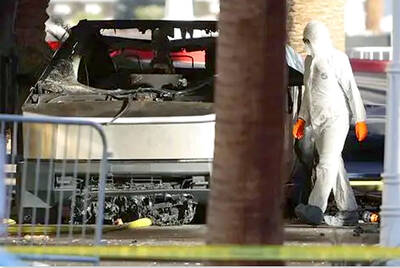
ACTIONABLE ADVICE: The majority of chatbots tested provided guidance on weapons, tactics and target selections, with Perplexity and Meta AI deemed to be the least safe From school shootings to synagogue bombings, leading artificial intelligence (AI) chatbots helped researchers plot violent attacks, according to a study published on Wednesday that highlighted the technology’s potential for real-world harm. Researchers from the nonprofit watchdog Center for Countering Digital Hate and CNN posed as 13-year-old boys in the US and Ireland to test 10 chatbots, including ChatGPT, Google Gemini, Perplexity, Deepseek and Meta AI. Eight of the chatbots assisted the make-believe attackers in more than half the responses, providing advice on “locations to target” and “weapons to use” in an attack, the study said. The chatbots had become a “powerful accelerant for
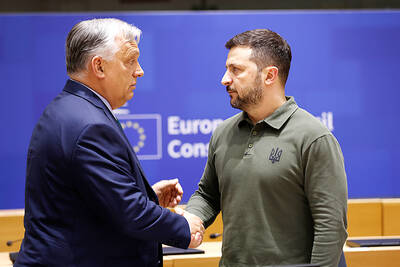
Hungarian authorities temporarily detained seven Ukrainian citizens and seized two armored cars carrying tens of millions of euros in cash across Hungary on suspicion of money laundering, officials said on Friday. The Ukrainians were released on Friday, following their detention on Thursday, but Hungarian officials held onto the cash, prompting Ukraine to accuse Hungary’s Russia-friendly government of illegally seizing the money. “We will not tolerate this state banditism,” Ukrainian Minister of Foreign Affairs Andrii Sybiha said. The seven detained Ukrainians were employees of the Ukrainian state-owned Oschadbank, who were traveling in the two armored cars that were carrying the money between Austria and
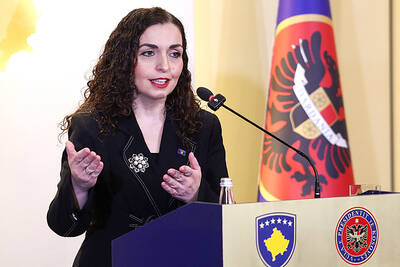
Kosovar President Vjosa Osmani on Friday after dissolving the Kosovar parliament said a snap election should be held as soon as possible to avoid another prolonged political crisis in the Balkan country at a time of global turmoil. Osmani said it is important for Kosovo to wrap up the upcoming election process and form functional institutions for political stability as the war rages in the Middle East. “Precisely because the geopolitical situation is that complex, it is important to finish this electoral process which is coming up,” she said. “It is very hard now to imagine what will happen next.” Kosovo, which declared


 RSS
RSS