


Georgian President Mikhail Saakashvili has repeated his pledge to lift a state of emergency as his allies met with opposition leaders to seek a way out of the country's worst political crisis in years.
The president's statement came on Saturday, after a European human rights body urged him to quickly end the restrictions, which include a ban on independent news broadcasts, and to guarantee a fair presidential election on Jan. 5.
"In the near future, the state of emergency in Georgia will be lifted," Saakashvili told a group of business leaders. "This will happen when the situation in the country normalizes and I am sure that our population is safe."
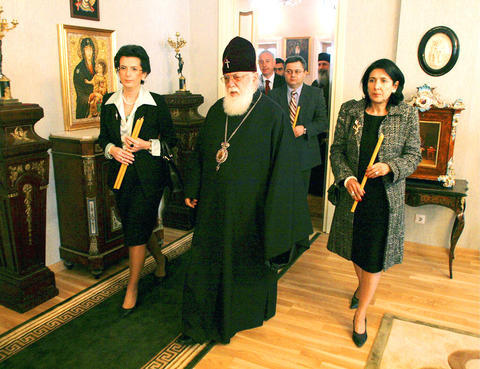
PHOTO: EPA
Saakashvili said he would make the decision on his own and not "on orders of a foreign minister of some country."
On Friday, ruling-party lawmakers voted to back Saakashvili's state of emergency order, a move that will keep independent TV news off the air for up to 15 days.
A day earlier, Saakashvili surprised opposition groups by announcing the early election as a way to defuse the crisis, which erupted in violence when riot police clashed with anti-government demonstrators.
Parliament speaker Nino Burdzhanadze, a key Saakashvili ally, met on Saturday with opposition groups for the first time since the state of emergency order was declared. The meeting at the residence of Georgia's Orthodox Patriarch Ilia II was a symbolic gesture in a country where the Orthodox Church plays a significant role in society.
"We are ready for negotiations, we have very serious suggestions and initiatives. Everything now depends on the other side," Burdzhanadze said. "I hope everybody will be reasonable and we will have consensus."
Opposition leader Salome Zurabishvili also stressed the need for dialogue.
"It is very important that after the tragedy that happened in this country that we start something new around the Patriarch," she said.
Saakashvili's emergency order drew sharp criticism from the West and warnings that it could harm efforts to integrate this small Caucasus nation into the EU and NATO.
Opposition groups have complained that the ban on independent TV news broadcasts will deny them media access when they already have little time to campaign.
Envoys from the Parliamentary Assembly of the Council of Europe (PACE) urged Saakashvili to allow broadcast media to resume operations.
"Georgia has to fully respect freedom of media and to restore normal functioning of all broadcasting media," PACE envoy Matyas Eorsi told a news conference in Tbilisi.
A senior US diplomat was scheduled to arrive on Saturday for meetings with Saakashvili and opposition groups, and to seek assurances that the vote would be fair.
Before his departure, US Deputy Assistant Secretary of State Matthew Bryza said that he would also express concern about the violence that forced independent television channels off the air.
"The reports that we are starting to get now are that things went beyond a textbook policing operation," he said. "We are hearing more and more reports that people were grabbed from stores or that passersby were beaten. Things got out of control."
Saakashvili's announcement of the early vote was seen by some as a shrewd move to defuse the worst political crisis he has faced since coming to power in 2003.
It got the opposition off the streets and allowed life in Tbilisi return to normal. It also kept two potential challengers out of the race, as they will be a few months shy of the minimum age of 35. The initial election date, late next year, would have allowed at least one of them to run.
Saakashvili's popularity has declined in recent years because of his failure to tackle poverty in a nation where the average monthly pension is around US$30.
Some troops were still patrolling downtown Tbilisi on Saturday, although far fewer than in the previous days, and television and radio programs on nongovernment stations remained off the air.
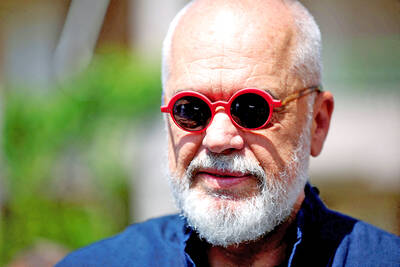
FRAUD ALLEGED: The leader of an opposition alliance made allegations of electoral irregularities and called for a protest in Tirana as European leaders are to meet Albanian Prime Minister Edi Rama’s Socialist Party scored a large victory in parliamentary elections, securing him his fourth term, official results showed late on Tuesday. The Socialist Party won 52.1 percent of the vote on Sunday compared with 34.2 percent for an alliance of opposition parties led by his main rival Sali Berisha, according to results released by the Albanian Central Election Commission. Diaspora votes have yet to be counted, but according to initial results, Rama was also leading there. According to projections, the Socialist Party could have more lawmakers than in 2021 elections. At the time, it won 74 seats in the
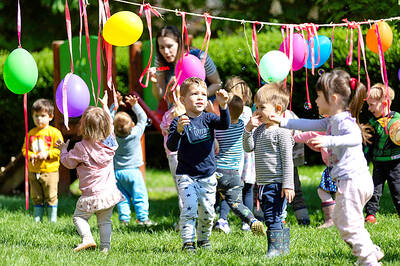
A Croatian town has come up with a novel solution to solve the issue of working parents when there are no public childcare spaces available: pay grandparents to do it. Samobor, near the capital, Zagreb, has become the first in the country to run a “Grandmother-Grandfather Service,” which pays 360 euros (US$400) a month per child. The scheme allows grandparents to top up their pension, but the authorities also hope it will boost family ties and tackle social isolation as the population ages. “The benefits are multiple,” Samobor Mayor Petra Skrobot told reporters. “Pensions are rather low and for parents it is sometimes

CONTROVERSY: During the performance of Israel’s entrant Yuval Raphael’s song ‘New Day Will Rise,’ loud whistles were heard and two people tried to get on stage Austria’s JJ yesterday won the Eurovision Song Contest, with his operatic song Wasted Love triumphing at the world’s biggest live music television event. After votes from national juries around Europe and viewers from across the continent and beyond, JJ gave Austria its first victory since bearded drag performer Conchita Wurst’s 2014 triumph. After the nail-biting drama as the votes were revealed running into yesterday morning, Austria finished with 436 points, ahead of Israel — whose participation drew protests — on 357 and Estonia on 356. “Thank you to you, Europe, for making my dreams come true,” 24-year-old countertenor JJ, whose
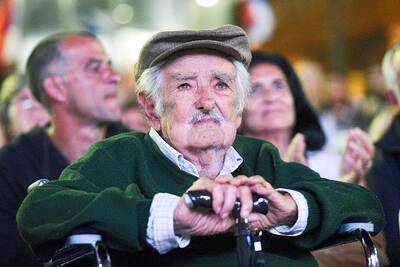
CANCER: Jose Mujica earned the moniker ‘world’s poorest president’ for giving away much of his salary and living a simple life on his farm, with his wife and dog Tributes poured in on Tuesday from across Latin America following the death of former Uruguayan president Jose “Pepe” Mujica, an ex-guerrilla fighter revered by the left for his humility and progressive politics. He was 89. Mujica, who spent a dozen years behind bars for revolutionary activity, lost his battle against cancer after announcing in January that the disease had spread and he would stop treatment. “With deep sorrow, we announce the passing of our comrade Pepe Mujica. President, activist, guide and leader. We will miss you greatly, old friend,” Uruguayan President Yamandu Orsi wrote on X. “Pepe, eternal,” a cyclist shouted out minutes later,


 RSS
RSS