


Liberia has lifted a self-imposed moratorium on the mining, sale and export of diamonds that had been in place for six years, officials said.
"As of Monday, people can start applying for mining, selling and broker licenses" for the stones, Deputy Minister of Lands, Mines and Energy Minister Kpandeh Fayia said on Saturday.
Liberia's diamonds came under UN sanctions in May 2001, when ex-president Charles Taylor's government was accused of using revenues from the stones to fuel war in Sierra Leone. In an effort to show compliance, the Liberian government placed a moratorium on all mining activities across the country.
The UN lifted the sanctions in late April, citing steps taken by the country's postwar government to ensure regulation.
Liberia's export industry traditionally has been overwhelmingly dominated by rubber and timber, with diamonds being a relatively minor component. Government officials estimated that, before the imposition of sanctions, about US$600,000 in gems were being smuggled out of the country annually, with very little going through legal export channels.
In early May, President Ellen Johnson Sirleaf formally opened 10 diamond screening and evaluation office in the country, marking the first step toward restarting the industry. The regional diamond offices are supposed to be responsible for recording any diamonds purchased under the new scheme, and for taxing the transactions.
Liberia was wracked by more than a decade of on-and-off fighting that ended in 2003 with Taylor's ouster in a several-year rebel war. As part of a peace deal, he went into exile in Nigeria.
Taylor is currently in jail facing war crimes charges at a UN-backed court in The Hague stemming from his alleged backing of Sierra Leone's rebels, who terrorized victims by chopping off their arms, legs, ears and lips.
His trial is being held in the Netherlands because of fears it could trigger renewed violence in Sierra Leone if it were held there.

ACTIONABLE ADVICE: The majority of chatbots tested provided guidance on weapons, tactics and target selections, with Perplexity and Meta AI deemed to be the least safe From school shootings to synagogue bombings, leading artificial intelligence (AI) chatbots helped researchers plot violent attacks, according to a study published on Wednesday that highlighted the technology’s potential for real-world harm. Researchers from the nonprofit watchdog Center for Countering Digital Hate and CNN posed as 13-year-old boys in the US and Ireland to test 10 chatbots, including ChatGPT, Google Gemini, Perplexity, Deepseek and Meta AI. Eight of the chatbots assisted the make-believe attackers in more than half the responses, providing advice on “locations to target” and “weapons to use” in an attack, the study said. The chatbots had become a “powerful accelerant for

Australians were downloading virtual private networks (VPNs) in droves, while one of the world’s largest porn distributors said it was blocking users from its platforms as the country yesterday rolled out sweeping online age restriction. Australia in December became the first country to impose a nationwide ban on teenagers using social media. A separate law now requires artificial intelligence (AI)-powered chatbot services to keep certain content — including pornography, extreme violence and self-harm and eating disorder material — from minors or face fines of up to A$49.5 million (US$34.6 million). The country also joined Britain, France and dozens of US states requiring
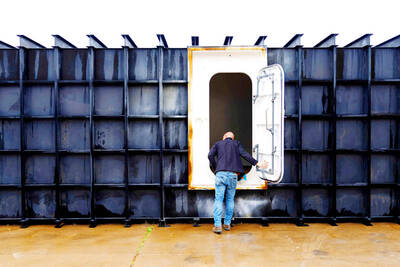
Since the war in the Middle East began nearly two weeks ago, the telephone at Ron Hubbard’s bomb shelter company in Texas has not stopped ringing. Foreign and US clients are rushing to buy his bunkers, seeking refuge in case of air raids, nuclear fallout or apocalypse. With the US and Israel pounding Iran, and Tehran retaliating with strikes across the region, Hubbard has seen demand for his product soar, mostly from Gulf nation customers in Bahrain, Qatar, Kuwait and the United Arab Emirates. “You can imagine how many people are thinking: ‘I wish I had a bomb shelter,’” Hubbard, 63, said in
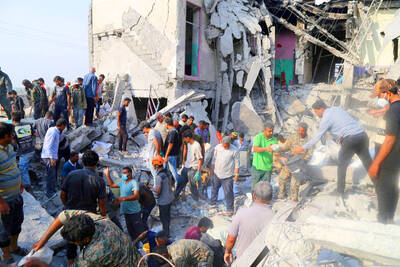
STILL IN POWER: US intelligence reports showed that the Iranian regime is not in danger of collapse and retains control of the public, casting doubt on Trump’s exit Nearly every US Senate Democrat on Wednesday signed a letter sent to US Secretary of Defense Pete Hegseth requesting a “swift investigation” of airstrikes on a girls’ school in Iran that killed scores of children and any other potential US military actions causing civilian harm. Reuters reported on Thursday last week that US military investigators believe it is likely that US forces were responsible for the Feb. 28 strike on the school, as US and Israeli forces launched attacks on Iran. “The results of this school attack are horrific. The majority of those killed in the strikes were girls between the ages


 RSS
RSS