


Nuclear weapons pose an increasing threat to world peace as more nations acquire them, New Zealand warned yesterday as it marked 20 years since outlawing them on its soil and in its waters.
The nation was celebrating the 20th anniversary of its Nuclear Weapon Free Zone, Disarmament and Arms Control Act, which bans nuclear weapons from its territory, including visits by nuclear-armed and nuclear-powered ships.
The 1987 law caused a rift between the small South Pacific nation and Western nuclear states including the US, which was denied the right to have its warships make port visits and punished its former ally by cutting most military ties.
New Zealand Disarmament Minister Phil Goff said the nuclear-free law remains as relevant now as when it was first passed. Complacency about nuclear weapons is threatening international arms control negotiations, Goff said.
He previously has spoken up over what he sees as serious delays by the major nuclear powers, particularly the US and Russia, in implementing terms of the Nuclear Nonproliferation Treaty and cutting back their own nuclear arsenals.
"The threat to the world of nuclear weapons grows as more countries acquire possession of them," he said.
With 27,000 nuclear warheads held in various arsenals, nations need to stay focused on stopping their spread and reducing their numbers through the Nuclear Nonproliferation Treaty.
"We need countries that will lead the way toward not only nonproliferation -- there's a variety of countries strongly pressing for nonproliferation -- but also for the other side of the bargain ... for the nuclear weapon states to carry out their unequivocal commitment from [the year] 2000 to work toward elimination of nuclear weapons," he told National Radio.
Several nations voiced concerns in the 1980s that more strategically important countries might follow New Zealand's lead and declare themselves nuclear free. None did.
Twenty years on, New Zealand still can only take part in joint military exercises with US forces if a presidential order permits. It remains cut out of some high-level intelligence links.
The move also strained bilateral diplomatic relations with the US for nearly two decades, with US Secretary of State Condoleezza Rice this year calling the policy "a rock in the road" -- but one the two nations "can work around."
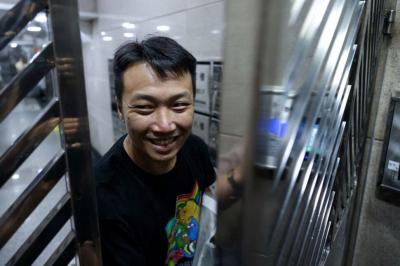
Four people jailed in the landmark Hong Kong national security trial of "47 democrats" accused of conspiracy to commit subversion were freed today after more than four years behind bars, the second group to be released in a month. Among those freed was long-time political and LGBTQ activist Jimmy Sham (岑子杰), who also led one of Hong Kong’s largest pro-democracy groups, the Civil Human Rights Front, which disbanded in 2021. "Let me spend some time with my family," Sham said after arriving at his home in the Kowloon district of Jordan. "I don’t know how to plan ahead because, to me, it feels

Polish presidential candidates offered different visions of Poland and its relations with Ukraine in a televised debate ahead of next week’s run-off, which remains on a knife-edge. During a head-to-head debate lasting two hours, centrist Warsaw Mayor Rafal Trzaskowski, from Polish Prime Minister Donald Tusk’s governing pro-European coalition, faced the Eurosceptic historian Karol Nawrocki, backed by the right-wing populist Law and Justice party (PiS). The two candidates, who qualified for the second round after coming in the top two places in the first vote on Sunday last week, clashed over Poland’s relations with Ukraine, EU policy and the track records of their

‘A THREAT’: Guyanese President Irfan Ali called on Venezuela to follow international court rulings over the region, whose border Guyana says was ratified back in 1899 Misael Zapara said he would vote in Venezuela’s first elections yesterday for the territory of Essequibo, despite living more than 100km away from the oil-rich Guyana-administered region. Both countries lay claim to Essequibo, which makes up two-thirds of Guyana’s territory and is home to 125,000 of its 800,000 citizens. Guyana has administered the region for decades. The centuries-old dispute has intensified since ExxonMobil discovered massive offshore oil deposits a decade ago, giving Guyana the largest crude oil reserves per capita in the world. Venezuela would elect a governor, eight National Assembly deputies and regional councilors in a newly created constituency for the 160,000
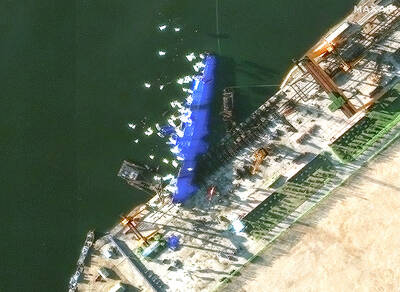
North Korea has detained another official over last week’s failed launch of a warship, which damaged the naval destroyer, state media reported yesterday. Pyongyang announced “a serious accident” at Wednesday last week’s launch ceremony, which crushed sections of the bottom of the new destroyer. North Korean leader Kim Jong-un called the mishap a “criminal act caused by absolute carelessness.” Ri Hyong-son, vice department director of the Munitions Industry Department of the Party Central Committee, was summoned and detained on Sunday, the Korean Central News Agency (KCNA) reported. He was “greatly responsible for the occurrence of the serious accident,” it said. Ri is the fourth person


 RSS
RSS