


With just over two weeks to go until presidential elections in Turkmenistan, the campaign is raising tantalizing hints of change coming to a country long ruled by one of the world's most bizarre authoritarian leaders.
Analysts suggest, however, that sweeping reforms are not in the works.
The Feb. 11 elections to fill the post held by the late president Saparmurat Niyazov for two decades until his Dec. 21 death are being watched with interest by both Russia and the West because of Turkmenistan's immense natural gas reserves and its status as a stable country in a troubled region, bordering both Iran and Afghanistan.
Six candidates are running, including the heavily favored acting president. They have been speaking to campaign meetings in packed halls, promising improvements in the country's quality of life, and their remarks are reported in detail on television and in newspapers.
But there the resemblance to elections in most countries ends. The campaign events are well-attended because authorities pressure people to go, Turkmens say.
The media reporting on the meetings are all under tight state control.
The candidates themselves all had to be approved by Turkmenistan's highest legislative body, and all pledge ultimate fealty to the principles of Niyazov, whom they call "Turkmenbashi" or "Father of All Turkmen." Not only are there no opposition candidates, but Turkmenistan doesn't allow opposition parties at all.
"There is little likelihood that it's going to be like a real election," said Sean Roberts, a Central Asian affairs fellow at Georgetown University. "But there is definitely much more discussion of real problems in Turkmenistan during this election campaign than anyone has seen in the past 10 years."
The Organization for Security and Cooperation in Europe (OSCE) aims to send a small team of experts to follow the election, but will not mount a full observation mission because of lack of time to prepare.
A report by the OSCE's Office of Democratic Institutions and Human Rights said that this would be Turkmenistan's first presidential election with more than one candidate.
"While these new developments are welcome indications of a recognition that the electoral process serves as the basis for democratic government, and merit support, they are no guarantee for a competitive election," the report said.
Niyazov led Turkmenistan during its last years as a Soviet republic. Once it became independent following the 1991 collapse of the Soviet Union, he kept the country largely isolated while establishing a pervasive cult of personality.
His philosophical writings are required reading in schools, and he claimed anyone who read them three times a day was guaranteed a place in heaven. He banned opera and ballet and denounced lip-synching.
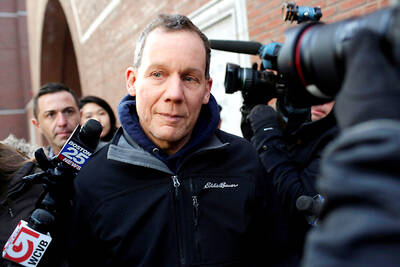
An American scientist convicted of lying to US authorities about payments from China while he was at Harvard University has rebuilt his research lab in Shenzhen, China, to pursue technology the Chinese government has identified as a national priority: embedding electronics into the human brain. Charles Lieber, 67, is among the world’s leading researchers in brain-computer interfaces. The technology has shown promise in treating conditions such as amyotrophic lateral sclerosis and restoring movement in paralyzed people. It also has potential military applications: Scientists at the Chinese People’s Liberation Army have investigated brain interfaces as a way to engineer super soldiers by boosting
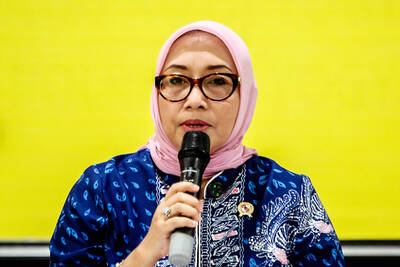
Indonesian police have arrested 13 people after shocking images of alleged abuse against small children at a daycare center went viral, sparking outrage across the nation, officials said on Monday. Police on Friday last week raided Little Aresha, a daycare center in Yogyakarta on Java island, following a report from a former employee. CCTV footage circulating on social media showed children, most younger than two, lying on the floor wearing only diapers, their hands and feet bound with rags. The police have confirmed that the footage is authentic. Police said they also found 20 children crammed into a room just 3m by 3m. “So
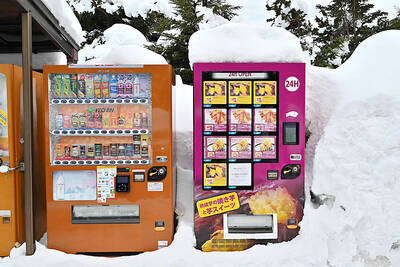
From post offices and parks to stations and even the summit of Mount Fuji, Japan’s vending machines are ubiquitous, but with the rapid pace of inflation cooling demand for their drinks, operators are being forced to rethink the business. Last month beverage giant DyDo Group Holdings announced it would remove about 20,000 vending machines — about 7 percent of their stock nationwide — by January next year, to “reconstruct a profitable network.” Pokka Sapporo Food & Beverage, based in Nagoya, also said last month it would sell its 40,000-machine operation to Osaka-based Lifedrink Co. “The strength of the vending machine

A grieving mother has ended her life at a clinic in Switzerland four years after the death of her only child. Wendy Duffy, 56, a physically healthy woman, died at the Pegasos clinic in Basel after struggling to cope with the death of her 23-year-old son, Marcus. The former care worker, from the West Midlands, England, had previously attempted to take her own life. The case comes as assisted dying would not become law in England and Wales after proposed legislation, branded “hopelessly flawed” by opponents, ran out of time. Ruedi Habegger, the founder of Pegasos, described Duffy’s death as


 RSS
RSS