


A Montreal woman who was brainwashed almost 50 years ago is demanding reparations on behalf of herself and hundreds of victims of CIA-backed mind control experiments during the Cold War.
Janine Huard asked a Canadian federal court this week to authorize a multi-million dollar class action suit against the Canadian government for its alleged complicity in the involuntary tests, her lawyer Alan Stein told reporters.
Ottawa partly funded the research, led by doctor Ewen Cameron at McGill University's Allan Memorial Institute in Montreal from 1950 to 1965, he said.
Huard was given "experimental drugs and electric shock treatments" and subjected to psychic-driving tests, using electroconvulsive therapy and psychedelic drugs such as LSD in an attempt at mind control, he said.
She was also left in a dark room and forced to listen to recorded messages saying she was a bad mother who neglected her children, for six or seven hours a day for a week.
The treatments were part of Cameron's "depatterning program," Stein said, given to Huard following her admission to the hospital for mild depression after giving birth.
"The idea was to erase her memories and re-forge her personality," Stein said.
Cameron, born in Scotland, pioneered the techniques.
He was recruited by the CIA in the 1950s to conduct mind control experiments, part of its notorious Project MK-Ultra, first revealed in the 1970s.
A US congressional investigation has revealed that some 30 universities and institutions were involved in the project.
The tests are believed to have produced little useful scientific data.
Much of the files produced during the experiments have since been destroyed.
Huard described the treatment inflicted on her as "torture."
She told Canadian reporters that she was unable to care for her children because of the brainwashing.
She was forced to rely entirely on her mother for a decade after the experiments, she said.
The Canadian government has denied culpability in the affair, yet offered 70 people who underwent the sadistic tests about US$100,000 each in the early 1990s on the grounds of compassion.
Another 250 people were refused indemnity because their injuries were not deemed serious enough, Stein said.
Huard received US$66,000 from the CIA, but has not received redress from the Canadian government.
In 2004, a Canadian court forced Ottawa to compensate one of the 250 neglected victims, inspiring Huard to step up her fight on behalf of all forlorn victims, Stein said.
Government attorneys insist that Huard's appeal has come too late, almost a decade after she was first denied reparations from Canada.
But Stein asked a federal court on Wednesday to extend the statute of limitations for restitution and to certify Huard's class action lawsuit.
The court's decision is still pending.
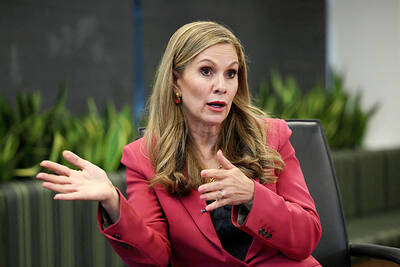
Australians were downloading virtual private networks (VPNs) in droves, while one of the world’s largest porn distributors said it was blocking users from its platforms as the country yesterday rolled out sweeping online age restriction. Australia in December became the first country to impose a nationwide ban on teenagers using social media. A separate law now requires artificial intelligence (AI)-powered chatbot services to keep certain content — including pornography, extreme violence and self-harm and eating disorder material — from minors or face fines of up to A$49.5 million (US$34.6 million). The country also joined Britain, France and dozens of US states requiring
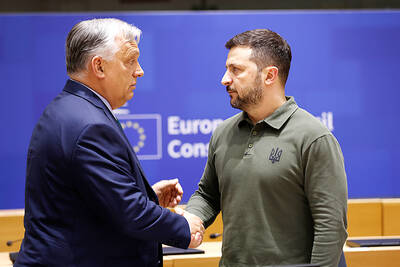
Hungarian authorities temporarily detained seven Ukrainian citizens and seized two armored cars carrying tens of millions of euros in cash across Hungary on suspicion of money laundering, officials said on Friday. The Ukrainians were released on Friday, following their detention on Thursday, but Hungarian officials held onto the cash, prompting Ukraine to accuse Hungary’s Russia-friendly government of illegally seizing the money. “We will not tolerate this state banditism,” Ukrainian Minister of Foreign Affairs Andrii Sybiha said. The seven detained Ukrainians were employees of the Ukrainian state-owned Oschadbank, who were traveling in the two armored cars that were carrying the money between Austria and
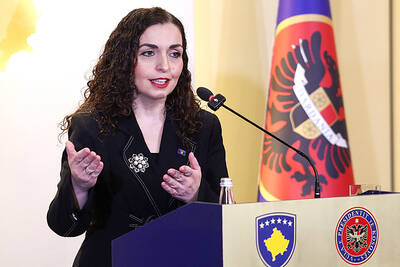
Kosovar President Vjosa Osmani on Friday after dissolving the Kosovar parliament said a snap election should be held as soon as possible to avoid another prolonged political crisis in the Balkan country at a time of global turmoil. Osmani said it is important for Kosovo to wrap up the upcoming election process and form functional institutions for political stability as the war rages in the Middle East. “Precisely because the geopolitical situation is that complex, it is important to finish this electoral process which is coming up,” she said. “It is very hard now to imagine what will happen next.” Kosovo, which declared

MORE BANS: Australia last year required sites to remove accounts held by under-16s, with a few countries pushing for similar action at an EU level and India considering its own ban Indonesia on Friday said it would ban social media access for children under 16, citing threats from online pornography, cyberbullying, online fraud and Internet addiction. “Accounts belonging to children under 16 on high-risk platforms will start to be deactivated, beginning with YouTube, TikTok, Facebook, Instagram, Threads, X, Bigo Live and Roblox,” Indonesian Minister of Communications and Digital Meutya Hafid said. “The government is stepping in so that parents no longer have to fight alone against the giants of the algorithm. Implementation will begin on March 28, 2026,” she said. The social media ban would be introduced in stages “until all platforms fulfill their


 RSS
RSS