


Thailand's post-coup leaders regained some momentum yesterday after a series of embarrassing setbacks, seeing the Constitution Drafting Council (CDC) they created elect a chairman and vow speedy progress.
Lawyer and political professor Noranit Setabutr, 65-year-old favorite for the post, promised to have a new constitution ready to put to a referendum within six months.
```The new constitution must bring about democracy, help resolve the political crisis, be acceptable to the people and bring the country back to normalcy,'' Noranit said.
Noranit is widely regarded as a neutral figure without leaning toward any political party. He was long time dean of the law faculty at Bangkok's Thammasat University and former secretary-general of the King Prachadhipok Institute.
It will probably be another two weeks before the council actually gets down to debating a new constitution as King Bhumibol Adulyadej must first approve Noranit's appointment. But that is considered a formality, and settling the leadership of the committee is a major step forward.
Producing a constitution will be a critical milestone for the military, which ousted prime minister Thaksin Shinawatra on Sept. 19 in the country's first coup in 15 years.
The Council for National Security, as the coup leaders call themselves, promised to hold a general election under a new constitution within a year after acting to end what they called rampant corruption under Thaksin.
They won applause from the urban middle class for ending a months-long political crisis which included big street protests accusing Thaksin of undermining the constitution and amassing excessive personal power.
But almost four months after the coup, the military-appointed government's standing with an increasingly restive public had diminished with little concrete progress discernible.
Promised corruption charges against Thaksin and his allies has yet to emerge from investigations, and progress towards a new constitution appeared to be moving at a snail's pace.
The military and government were then severely undermined on New Year's Eve by a spate of small bombs in Bangkok which killed three people, wounded 38 and left the city in shock.
Army-picked Prime Minister Surayud Chulanont, whose government undermined investor confidence last month by imposing sudden currency controls which sent the stock market down 15 percent in a day, told people to brace for more such attacks.
Rumors of a counter coup last week proved unfounded, but that did little to calm the city, where two opinion polls conducted by universities showed the government's popularity down from 90 percent to 50 percent.
also see story:
Bangkok to unveil new rules for foreign investment
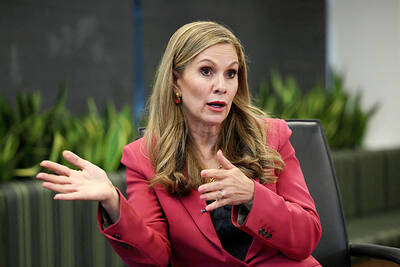
Australians were downloading virtual private networks (VPNs) in droves, while one of the world’s largest porn distributors said it was blocking users from its platforms as the country yesterday rolled out sweeping online age restriction. Australia in December became the first country to impose a nationwide ban on teenagers using social media. A separate law now requires artificial intelligence (AI)-powered chatbot services to keep certain content — including pornography, extreme violence and self-harm and eating disorder material — from minors or face fines of up to A$49.5 million (US$34.6 million). The country also joined Britain, France and dozens of US states requiring

Hungarian authorities temporarily detained seven Ukrainian citizens and seized two armored cars carrying tens of millions of euros in cash across Hungary on suspicion of money laundering, officials said on Friday. The Ukrainians were released on Friday, following their detention on Thursday, but Hungarian officials held onto the cash, prompting Ukraine to accuse Hungary’s Russia-friendly government of illegally seizing the money. “We will not tolerate this state banditism,” Ukrainian Minister of Foreign Affairs Andrii Sybiha said. The seven detained Ukrainians were employees of the Ukrainian state-owned Oschadbank, who were traveling in the two armored cars that were carrying the money between Austria and
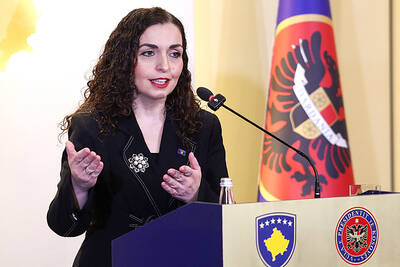
Kosovar President Vjosa Osmani on Friday after dissolving the Kosovar parliament said a snap election should be held as soon as possible to avoid another prolonged political crisis in the Balkan country at a time of global turmoil. Osmani said it is important for Kosovo to wrap up the upcoming election process and form functional institutions for political stability as the war rages in the Middle East. “Precisely because the geopolitical situation is that complex, it is important to finish this electoral process which is coming up,” she said. “It is very hard now to imagine what will happen next.” Kosovo, which declared

MORE BANS: Australia last year required sites to remove accounts held by under-16s, with a few countries pushing for similar action at an EU level and India considering its own ban Indonesia on Friday said it would ban social media access for children under 16, citing threats from online pornography, cyberbullying, online fraud and Internet addiction. “Accounts belonging to children under 16 on high-risk platforms will start to be deactivated, beginning with YouTube, TikTok, Facebook, Instagram, Threads, X, Bigo Live and Roblox,” Indonesian Minister of Communications and Digital Meutya Hafid said. “The government is stepping in so that parents no longer have to fight alone against the giants of the algorithm. Implementation will begin on March 28, 2026,” she said. The social media ban would be introduced in stages “until all platforms fulfill their


 RSS
RSS