


A man accused of receiving funds from al-Qaeda in Pakistan has become the first Australian to have his movements restricted under tough new anti-terrorism laws, a government official said yesterday.
Joseph Thomas, a 32-year-old Muslim convert nicknamed "Jihad Jack" by Australian media, was convicted in the Victorian state Supreme Court in February of accepting US$3,500 and a plane ticket to Australia from an al-Qaeda agent in Pakistan and having a false passport. He was sentenced to five years in prison.
But he was freed this month when an appeal court ruled that a jury shouldn't have heard evidence that helped convict him.
Thomas yesterday became the first person subjected to a control order under new terror laws, restricting his movements because he is deemed a terrorist threat, the federal attorney-general's spokesman Michael Pelly said.
"It is an interim order until there is a court hearing on Sept. 1," Pelly said.
Thomas' lawyer Rob Stary said his client would challenge the order in court.
The order subjects Thomas to a curfew between 5pm and 9am and requires that he stay in the state capital Melbourne, his brother Les Thomas said.
Joseph Thomas was taking a beach vacation in eastern Victoria with his young family when police served the order, his brother said.
"He was slapped with a court order and told to get back to Melbourne immediately," said Les Thomas, who described the order as persecution.
"He was trying to spend some time getting to know his wife and kids," Les Thomas said. "He has a long way to go before he gets over what he has been put through in Australia and Pakistan."
"We just didn't expect them to stoop this low," Les Thomas added.
The order was made possible by a raft of new laws condemned by civil libertarians that came into effect in December designed to reduce the risk of homegrown terrorism following the London transport bombing in July last year.
Courts can order such restrictions, including that suspected extremists be monitored with tracking bracelets for up to a year, if a magistrate finds that they are necessary to protect the public from a terrorist attack or that the suspect has been trained by a terrorist group.
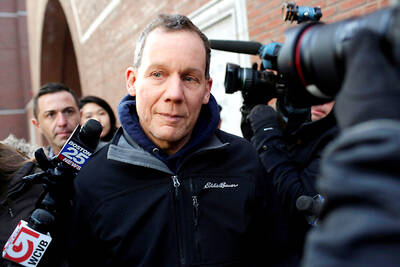
An American scientist convicted of lying to US authorities about payments from China while he was at Harvard University has rebuilt his research lab in Shenzhen, China, to pursue technology the Chinese government has identified as a national priority: embedding electronics into the human brain. Charles Lieber, 67, is among the world’s leading researchers in brain-computer interfaces. The technology has shown promise in treating conditions such as amyotrophic lateral sclerosis and restoring movement in paralyzed people. It also has potential military applications: Scientists at the Chinese People’s Liberation Army have investigated brain interfaces as a way to engineer super soldiers by boosting
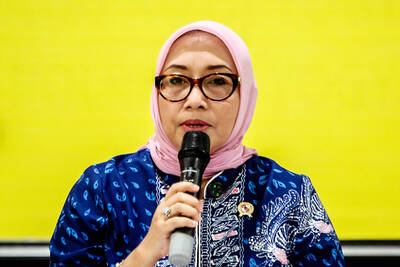
Indonesian police have arrested 13 people after shocking images of alleged abuse against small children at a daycare center went viral, sparking outrage across the nation, officials said on Monday. Police on Friday last week raided Little Aresha, a daycare center in Yogyakarta on Java island, following a report from a former employee. CCTV footage circulating on social media showed children, most younger than two, lying on the floor wearing only diapers, their hands and feet bound with rags. The police have confirmed that the footage is authentic. Police said they also found 20 children crammed into a room just 3m by 3m. “So
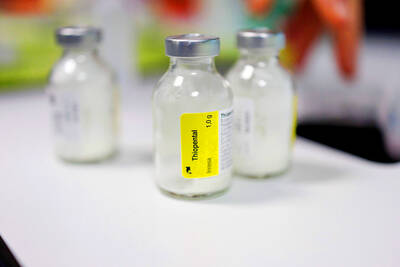
A grieving mother has ended her life at a clinic in Switzerland four years after the death of her only child. Wendy Duffy, 56, a physically healthy woman, died at the Pegasos clinic in Basel after struggling to cope with the death of her 23-year-old son, Marcus. The former care worker, from the West Midlands, England, had previously attempted to take her own life. The case comes as assisted dying would not become law in England and Wales after proposed legislation, branded “hopelessly flawed” by opponents, ran out of time. Ruedi Habegger, the founder of Pegasos, described Duffy’s death as
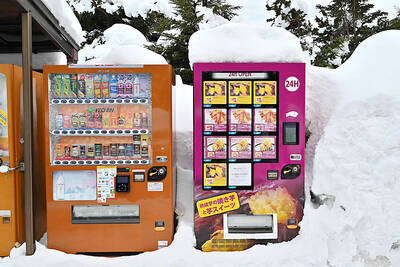
From post offices and parks to stations and even the summit of Mount Fuji, Japan’s vending machines are ubiquitous, but with the rapid pace of inflation cooling demand for their drinks, operators are being forced to rethink the business. Last month beverage giant DyDo Group Holdings announced it would remove about 20,000 vending machines — about 7 percent of their stock nationwide — by January next year, to “reconstruct a profitable network.” Pokka Sapporo Food & Beverage, based in Nagoya, also said last month it would sell its 40,000-machine operation to Osaka-based Lifedrink Co. “The strength of the vending machine


 RSS
RSS