


In US politics, where money can mean the difference between winning and losing, Democratic Senator Hillary Clinton is in a fundraising class of her own. The former First Lady, current New York senator and 2008 presidential hopeful has amassed a huge war chest for a tilt at the White House.
The money, as much as the Clinton name, gives her unrivalled front-runner status for the Democratic nomination and has allowed her to spread a web of influence throughout the party, despite the fact that many believe she cannot beat any Republican rival for the presidency.
Figures released last week show that Clinton raised US$21.4 million last year alone and few observers doubt that she wants to be the US' first woman President.
Clinton's financial heft and high profile are unrivalled in her party.
"She is a gravitational power within the party. Donors are just pulled into her orbit in a way no other potential candidate can compete with," said one senior party official.
Clinton's power comes not just from her ability to raise more money than any other Democratic figure, but also because her star quality allows her to boost the campaign coffers of potential supporters.
Since 2001 she has raised a staggering US$50 million for other Democratic candidates, by appearing at their fundraisers or lending her name to their mailshots. Her brief appearance can net more donations than many weeks of traditional campaigning by struggling candidates.
This ability wins a lot of loyalty and explains why Clinton's lock on the political establishment of the Democratic Party is so strong, despite polls showing that many voters doubt whether she is capable of winning the White House.
A CNN poll showed that 51 percent of Americans refuse to vote for Clinton, under any circumstances. In another poll, 49 percent of New York voters told the Marist College's Institute for Public Opinion that they believed Clinton should not run for President.
Clinton's power is also explained by a tight-knit group of Democratic officials across the party who have longstanding ties back to the Bill Clinton White House. They include John Podesta, Bill Clinton's former chief of staff who is now head of the powerful Center for American Progress, and various former aides at the Democracy Alliance, a powerful group of wealthy Democratic donors.
It is this network that has helped Clinton craft a steady strategy of moving to the right to woo independent and Republican voters. She has held joint press conferences with former enemies such as Newt Gingrich and right-wing Christian conservatives on a host of social issues.
She has also softened her position on abortion and become a leading hawk on the Iraq war.
Many observers outside the party establishment believe that choosing Clinton will doom the Democrats to defeat in 2008. They believe she carries too much baggage from her years in the White House and will be too easily attacked by the Republicans.
They also point to the failure of John Kerry's campaign as a lesson in not running a senator from the north-east when the last two Democratic presidents were Southern governors.
The Democrats have struggled to capitalize on the sea of troubles that swamped US President George W. Bush's administration last year.
With the US due for crucial congressional elections this November, Democrats are facing a battle to make any significant gains against a Republican Party controlling the White House and both houses of Congress.
A recent poll by Zogby International showed the Democrats scoring just a single-seat net gain in the Senate.
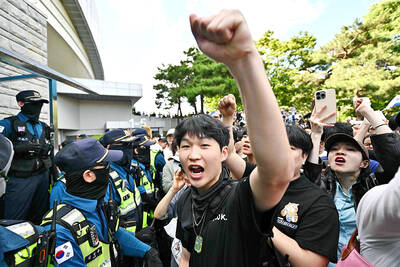
‘ABSURD MISTAKE’: The election commission said that there had been a failure to anticipate turnout after 14 polling stations ran short of ballot papers South Korean riot police yesterday cleared protesters from a Seoul polling station after a 35-hour blockade sparked by a shortage of ballot papers during local elections earlier this week. Wednesday’s election was the first nationwide vote since South Korean President Lee Jae-myung took office following the ouster of Yoon Suk-yeol over his short-lived martial law declaration. Lee’s ruling Democratic Party swept most races, but failed to flip the crucial Seoul mayoral seat. The South Korean National Election Commission apologized, blaming a failure to anticipate turnout after 14 polling stations in Seoul ran short of ballot papers. Some polling stations stayed open until 10pm to

France experienced its hottest spring on record, the French weather service said on Tuesday, after an exceptional early heat wave that also broke highs for the season in England and Wales. Meteo-France said the average nationwide temperature over March to May was 13.8°C — about 1.7°C above the norm, and surpassing records set in 2011 and 2020. “The warmest spring since records began in 1900,” it said in a bulletin. All three months were warmer than average, but the onset of an “unprecedented heatwave” late last month pushed the mercury to highs typically seen at the height of the summer. “Our country had never

A Sherpa guide was found crawling to base camp on Mount Everest a week after he went missing and was reunited with his family, who had given up hope he would return. Dawa Sherpa was last seen on Friday last week descending the mountain, but he did not reach base camp even though his client did. The pair were among the last climbers on the mountain as the climbing season came to an end and the route was dismantled. Dawa was located by a cleaning crew on Thursday morning as he was crawling down the snowy slopes around the Khumbu Icefall, just above
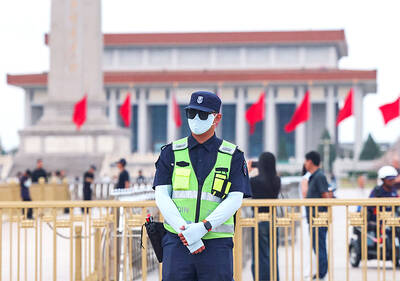
Chinese authorities are snuffing out any remembrance of the deadly 1989 military crackdown on student-led pro-democracy protests in Tiananmen Square, which happened 37 years ago yesterday, in a further tightening of a years-long campaign to erase what happened from public memory. Police told relatives of the victims they would not be allowed to visit a cemetery in Beijing on the anniversary of the crackdown, a person with knowledge of the matter said. Relatives of the victims visited the cemetery on the anniversary for more than 30 years to read memorial statements with police keeping watch, Amnesty International said. Hundreds of people,


 RSS
RSS