


Demands for details from the White House and Congress were building on Thursday over a US military program whose multi-million dollar contracts include money for paying Iraqi newspapers and journalists to plant favorable stories about the war and reconstruction.
Citing increasing misgivings about the matter, the Senate Armed Services Committee summoned Defense Department officials to Capitol Hill for a briefing yesterday.
"I am concerned about any actions that may undermine the credibility of the United States as we help the Iraqi people stand up a democracy," said Committee Chairman John Warner of Virginia.
He said he has no information to confirm or rebut the reports.
"A free and independent press is critical to the functioning of a democracy, and I am concerned about any actions which may erode the independence of the Iraqi media," Warner said.
Defense Department officials in Baghdad continued to defend the program, saying it is a necessary tool to provide factual information to the Iraqi people.
One company involved, the Washington-based Lincoln Group, has at least two contracts with the military to provide media and public relations services. One, for US$6 million, was for public relations and advertising work in Iraq and involved planting favorable stories in the Iraqi media, according to a document.
The other Lincoln contract, with the Special Operations Command, is worth up to US$100 million over five years for media operations with video, print and Web-based products. That contract is not related to the controversy over propaganda and was not for services in Iraq, according to Special Operations spokesman Ken McGraw.
The Lincoln Group shares that Special Operations contract with two other firms, SYColeman, a division of L-3 Communications; and Science Applications International Corp, a California-based defense contractor.
The program came to light as US President George W. Bush released his "Strategy for Victory in Iraq," which includes the need to support a "free, independent and responsible Iraqi media" and a vow to help the Iraqi government communicate in a "professional, effective and open manner."
Across the government on Thursday, officials said they were going after more information about the Iraq program.
"We're very concerned," said Bush's spokesman Scott McClellan. "We are seeking more information from the Pentagon."
Senator Edward Kennedy, of Massachusetts attacked the program as a devious scheme that "speaks volumes about the president's credibility gap. If Americans were truly welcomed in Iraq as liberators, we wouldn't have to doctor the news for the Iraqi people."
At the Pentagon, spokesman Bryan Whitman said, as he did a day earlier in response to inquiries about the reports, that he was seeking details from US military officials in Baghdad.
"I have very few facts," Whitman said, adding that he would not confirm the essence of the story until he had learned more from Baghdad.
"It's certainly an issue that's easy to get emotional about, and we need to understand the facts, and when we do I'll provide you as much information as I can," Whitman said.
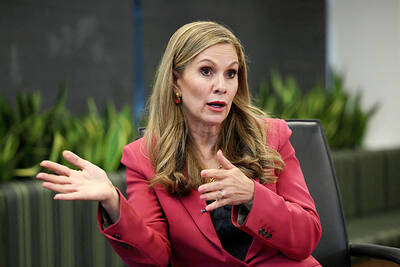
Australians were downloading virtual private networks (VPNs) in droves, while one of the world’s largest porn distributors said it was blocking users from its platforms as the country yesterday rolled out sweeping online age restriction. Australia in December became the first country to impose a nationwide ban on teenagers using social media. A separate law now requires artificial intelligence (AI)-powered chatbot services to keep certain content — including pornography, extreme violence and self-harm and eating disorder material — from minors or face fines of up to A$49.5 million (US$34.6 million). The country also joined Britain, France and dozens of US states requiring
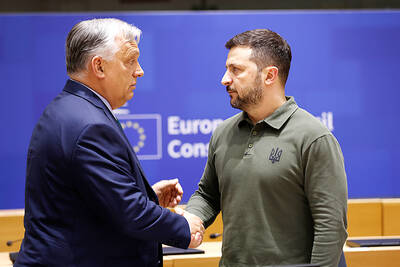
Hungarian authorities temporarily detained seven Ukrainian citizens and seized two armored cars carrying tens of millions of euros in cash across Hungary on suspicion of money laundering, officials said on Friday. The Ukrainians were released on Friday, following their detention on Thursday, but Hungarian officials held onto the cash, prompting Ukraine to accuse Hungary’s Russia-friendly government of illegally seizing the money. “We will not tolerate this state banditism,” Ukrainian Minister of Foreign Affairs Andrii Sybiha said. The seven detained Ukrainians were employees of the Ukrainian state-owned Oschadbank, who were traveling in the two armored cars that were carrying the money between Austria and
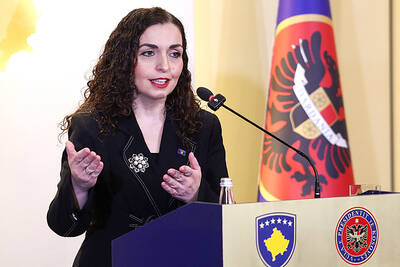
Kosovar President Vjosa Osmani on Friday after dissolving the Kosovar parliament said a snap election should be held as soon as possible to avoid another prolonged political crisis in the Balkan country at a time of global turmoil. Osmani said it is important for Kosovo to wrap up the upcoming election process and form functional institutions for political stability as the war rages in the Middle East. “Precisely because the geopolitical situation is that complex, it is important to finish this electoral process which is coming up,” she said. “It is very hard now to imagine what will happen next.” Kosovo, which declared

MORE BANS: Australia last year required sites to remove accounts held by under-16s, with a few countries pushing for similar action at an EU level and India considering its own ban Indonesia on Friday said it would ban social media access for children under 16, citing threats from online pornography, cyberbullying, online fraud and Internet addiction. “Accounts belonging to children under 16 on high-risk platforms will start to be deactivated, beginning with YouTube, TikTok, Facebook, Instagram, Threads, X, Bigo Live and Roblox,” Indonesian Minister of Communications and Digital Meutya Hafid said. “The government is stepping in so that parents no longer have to fight alone against the giants of the algorithm. Implementation will begin on March 28, 2026,” she said. The social media ban would be introduced in stages “until all platforms fulfill their


 RSS
RSS