


The US Transportation Security Administration will announce later this week that passengers will again be able to carry small tools and scissors aboard commercial airplanes, as it tries to focus its security efforts on more serious threats, like explosives, two Homeland Security officials said on Tuesday.
The announcement, which is expected to be made tomorrow in a speech by Kip Hawley, the assistant secretary for transportation security, will lift a ban that had been imposed on metal scissors with pointed tips of 10cm or less and on screw drivers, wrenches and other tools that are 17.5cm or less, the two officials said.
Improvements
They said the relaxation of the rules, first reported on Tuesday by the Washington Post, is possible because of improvements made since the September 2001 attacks, including more secure cockpit doors, an increase in the number of air marshals flying on flights and, most important, improvements in screening of passengers and all their checked, unaccompanied luggage at major airports.
The officials spoke only if granted anonymity because the official announcement will not be made until tomorrow and details of the speech are still being approved.
Lara Uselding, a spokeswoman for the Transportation Security Agency, confirmed that Hawley intended to announce rule changes but said she was not able to discuss the specifics.
`Puffer' machines
In recent weeks, the agency has expanded its use of newly unveiled so-called "puffer" machines that use a burst of air to check passengers for traces of explosives.
Eliminating the delays caused by passengers who are in most cases inadvertently carrying scissors or tools in their luggage or on their person could free more time for the puffer machines, which are still being rolled out at major airports across the US.
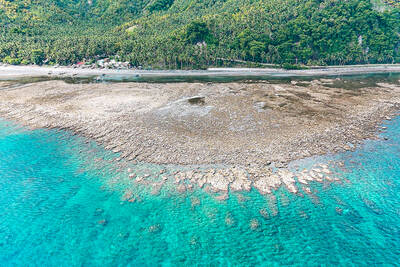
Arsenio Butil Jr fell to his knees and began to pray when last week’s deadly magnitude 7.8 earthquake began shaking his home on the coast of the southern Philippines. When he opened his eyes, he saw a once-familiar shoreline changing in real time, with swathes of previously submerged coral suddenly pushing above the waterline. The June 8 quake, driven by a shifting of the nearby Cotabato Trench, toppled buildings, triggered landslides and killed at least 76 people on the southern island of Mindanao. The tectonic forces at work also thrust chunks of the island’s coastline upward in a phenomenon known as “coastal uplift,”
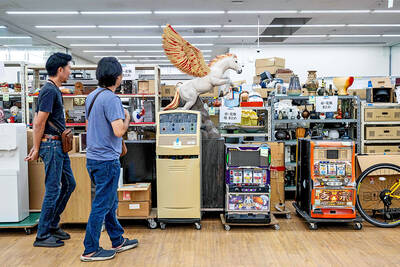
YUCK OR YUM? While it is difficult to sell second-hand goods that are more than seven years old in Japan, they are still popular in foreign markets, an executive said Under a scorching sun in a Bangkok suburb, a whistle blew, and shouts filled the air as dozens of shoppers rushed into a warehouse bearing the sign “Japanese Second-Hand Store.” From bags and bicycles to surfboards and suitcases, the Japanese second-hand market is booming, with quality-conscious buyers in other Asian countries increasingly tapping into the circular economy trend. “What is considered garbage for them can still be useful in Thailand,” said 36-year-old Lookpoo Sathitpanyapon, who runs an online store selling toy keychains. “That bag, that bag,” one shopper shouted while racing through the warehouse, filled with everything from colorful toys
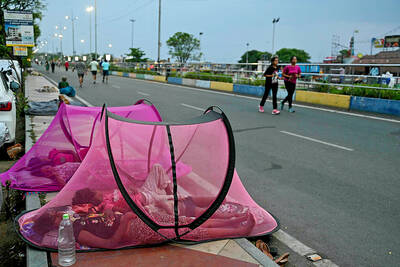
Growing up in Tahiti, Anna-Bella Failloux saw first-hand the threat posed by mosquitoes: Nearly one-third of adults on the picturesque island once had swollen limbs from elephantiasis caused by their bites. She has since dedicated her life to studying mosquitoes and the diseases they transmit — a concern that looms ever larger as climate change expands the area where the insects roam. “You have to accept being bitten by a mosquito from time to time,” the 63-year-old entomologist at France’s Pasteur Institute said. “But we have to avoid too many people getting sick and dying from the infections,” Failloux said, as she observed
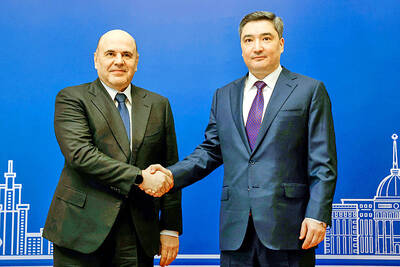
Kazakhstan signed accords with the start-up Firebird Inc on computing projects involving Nvidia Corp that could bring as much as US$10 billion in investment, as the Central Asian energy producer looks to position itself as an artificial intelligence (AI) hub. The pacts include a strategic cooperation agreement on developing AI infrastructure and terms for a planned large-scale project known as Data Center Valley in the country’s northeast, the Kazakh Ministry of Artificial Intelligence and Digital Development said in a statement. The plan envisages US$5 billion in investments in phase one — including US$1 billion provided by state-run Kazakhtelecom — with commercial operations


 RSS
RSS