


Images of children acting the role of victims of the Nazis have won the settlers few friends in the rest of Israel.
A few weeks ago the traffic jams of Tel Aviv were a sea of orange ribbons, a symbol of support for the settlers, and it was impossible to drive through a major junction without settler children rushing to tie a ribbon to the car.
Israelis find it hard to believe it is the same children who are now screaming insults at police and soldiers in Gaza.
The settlers' use of images of the Holocaust, such as children leaving their homes with their hands up or wearing Star of David badges, has also surprised many who see no correlation between the actions of their government and the Nazis in World War II.
According to Alex Meitlis, 48, an architect, the use of Nazi imagery is indicative of the simplicity of the settlers' world view.
"It's not surprising that they invoke the Holocaust because for them that was the best time in Jewish history because everything was black and white. They think that everything is black and white now, that their cause is the only right one, when in reality things are much more complicated," he said.
Although opinion polls say that 60 percent of Israelis support the government's withdrawal, the settlers and their supporters have often had a greater impact.
Yoram Peri, a professor of politics at Tel Aviv University, said that according to opinion polls, Israelis were disengaging from the disengagement process.
"Only about a third of Israelis are watching the news or finding out about the disengagement on the Internet," he said. "They support the government but they are not involved emotionally, mentally or intellectually. Everyone is too busy going to the beach and enjoying their summer holiday."
The amount of tears shed on television has also tried the patience of many Israelis. Yael Gwurtz wrote in the Israeli daily Yedioth Ahronoth that there was a difference between the often quiet tears seen at a funeral and the cacophony of wailing that accompanies the departure from each house in Gush Katif.
"Instead of quiet tears that fall in silence, we have rivers of wailing -- the tears become transparent. Instead of a national and serious mission which is being put to the supreme test of wisdom and the restraint of the evacuators and the evacuees, disengagement seems gradually to be turning into a hybrid between a reality show and Yiddish theater [known for its melodrama]."
Even Amnon Dankner, the editor of the newspaper Ma'ariv, who claims to be a great friend of the settlers, said he was tired of the dramatization of their plight.

PHISHING: The con might appear convincing, as the scam e-mails can coincide with genuine messages from Apple saying you have run out of storage For a while you have been getting messages from Apple saying “your iCloud storage is full.” They say you have exceeded your storage plan, so documents are no longer being backed up, and photos you take are not being uploaded. You have been resisting Apple’s efforts to get you to pay a minimum of £0.99 (US$1.33) a month for more storage, but it seems that you cannot keep putting off the inevitable: You have received an e-mail which says your iCloud account has been blocked, and your photos and videos would be deleted very soon. To keep them you need

For two decades, researchers observed members of the Ngogo chimpanzee group of Kibale National Park in Uganda spend their days eating fruits and leaves, resting, traveling and grooming in their tropical rainforest abode, but this stable community then fractured and descended into years of deadly violence. The researchers are now describing the first clearly documented example of a group of wild chimpanzees splitting into two separate factions, with one launching a series of coordinated attacks against the other. Adult males and infants were targeted, with 28 deaths. “Biting, pounding the victim with their hands, dragging them, kicking them — mostly adult males,
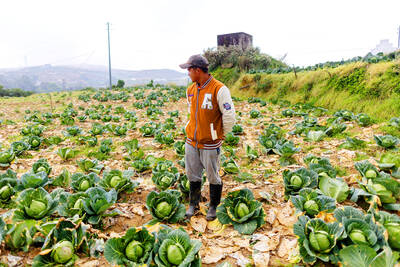
Filipino farmers like Romeo Wagayan have been left with little choice but to let their vegetables rot in the field rather than sell them at a loss, as rising oil prices linked to the Iran war drive up the cost of harvesting, labor and transport. “There’s nothing we can do,” said Wagayan, a 57-year old vegetable farmer in the northern Philippine province of Benguet. “If we harvest it, our losses only increase because of labor, transportation and packing costs. We don’t earn anything from it. That’s why we decided not to harvest at all,” he said. Soaring costs caused by the Middle East
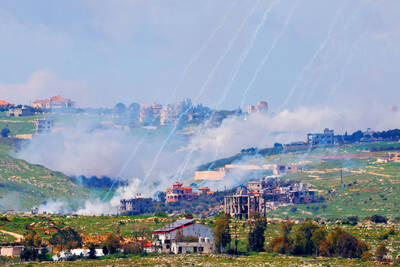
The Israeli military has demolished entire villages as part of its invasion of south Lebanon, rigging homes with explosives and razing them to the ground in massive remote detonations. The Guardian reviewed three videos posted by the Israeli military and on social media, which showed Israel carrying out mass detonations in the villages of Taybeh, Naqoura and Deir Seryan along the Israel-Lebanon border. Lebanese media has reported more mass detonations in other border villages, but satellite imagery was not readily available to verify these claims. The demolitions came after Israeli Minister of Defense Israel Katz called for the destruction of


 RSS
RSS