


Turkey signed an accord extending its customs union with the EU to Cyprus and other new EU members -- a key step toward opening membership talks with the bloc -- but said its signature was not recognition of the Cypriot government.
Britain, which holds the EU presidency, sought to downplay Ankara's non-recognition.
The agreement "is not about recognition [of Cyprus]. It is about signing a customs accord," said an anonymous British diplomat.
It was signed Friday by the British and Turkish envoys to the EU.
In a separate declaration, Turkey noted that the central obstacle to recognition -- the three-decade division of Cyprus into a Greek Cypriot controlled south and a Turkish occupied north -- did not exist when Turkey first signed its customs union with the EU some 40 years ago.
The statement said today's Cypriot government speaks only for the island's Greek Cypriot south, not the Turkish Cypriots who live in a republic established by Ankara and which no other country in the world recognizes.
For its part, Britain, speaking on behalf of all 25 EU nations, simply noted that Turkey reiterated "its long-standing policy on Cyprus," and it welcomed Ankara's commitment to continue to help in the search for end to the island's division. To begin those negotiations, which are expected to last many years, Turkey had to first extend its long-standing customs union with the EU to 10 countries -- including Cyprus -- that joined the bloc just over a year ago.
But its refusal to recognize the government in Nicosia has become a contentious issue in its bid to join the EU.

PHISHING: The con might appear convincing, as the scam e-mails can coincide with genuine messages from Apple saying you have run out of storage For a while you have been getting messages from Apple saying “your iCloud storage is full.” They say you have exceeded your storage plan, so documents are no longer being backed up, and photos you take are not being uploaded. You have been resisting Apple’s efforts to get you to pay a minimum of £0.99 (US$1.33) a month for more storage, but it seems that you cannot keep putting off the inevitable: You have received an e-mail which says your iCloud account has been blocked, and your photos and videos would be deleted very soon. To keep them you need
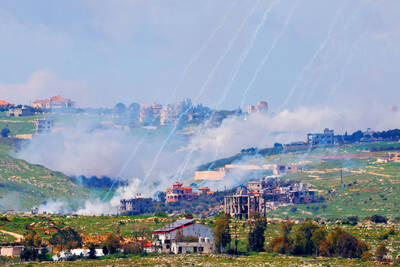
The Israeli military has demolished entire villages as part of its invasion of south Lebanon, rigging homes with explosives and razing them to the ground in massive remote detonations. The Guardian reviewed three videos posted by the Israeli military and on social media, which showed Israel carrying out mass detonations in the villages of Taybeh, Naqoura and Deir Seryan along the Israel-Lebanon border. Lebanese media has reported more mass detonations in other border villages, but satellite imagery was not readily available to verify these claims. The demolitions came after Israeli Minister of Defense Israel Katz called for the destruction of

A US YouTuber who caused outrage for filming himself kissing a statue commemorating Korean wartime sex slaves has been sentenced to six months in prison, a court in Seoul said yesterday. Johnny Somali, 25, gained notoriety several years ago for recording himself doing a series of provocative stunts in South Korea and Japan, and streaming them on platforms such as YouTube and Twitch. South Korean authorities indicted Somali — whose real name is Ramsey Khalid Ismael — in 2024 on public order violations and obstruction of business, and banned him from leaving the country. “The court has sentenced him to six months in
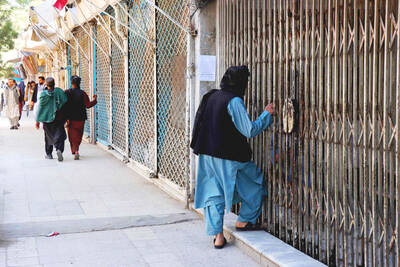
The death toll from a shooting in western Afghanistan rose to 11 on Saturday, after gunmen targeted civilians at a picnic spot in Herat, the provincial authority said. Bullet marks were visible on a wall of the Sayed Mohammad Agha Shia shrine, while bloodstains marked a blanket abandoned at the scene. “Eleven people have been recorded dead and eight others wounded from Friday’s incident, with the condition of two of the wounded reported as critical,” Herat’s information office said in a statement. The update raises a toll of seven killed provided on Friday by the Afghan Ministry of Interior Affairs


 RSS
RSS