


The strongest rainfall ever recorded in India shut down the financial center of Mumbai, snapped communication lines, closed airports and forced thousands of people to sleep in their offices or walk home during the night, officials reported yesterday.
Troops were deployed after the sudden rains -- measuring up to 944mm in one day in some areas of Mumbai, the capital of Maharashtra state -- stranded tens of thousands of people.
As the crisis raged, there was no word on some 130 people feared trapped in mudslides in two villages in the state.
"Most places in India don't receive this kind of rainfall in a year. This is the highest ever recorded in India's history," said R.V. Sharma, director of the meteorological department.
"We have to compare it with world records to find out if this was the highest in the world," he said.
At least 62 people died in Maharashtra and southern Kerala state in weather-related tragedies on Tuesday.
The state-run All India Radio reported about 150,000 people were stranded in railway stations across Mumbai, India's main financial center.
Early yesterday, Chief Minister Vilasrao Deshmukh, the state's top elected official, deployed the army, navy and home guard to assist with the relief effort.
"Inflatable rafts will be used to reach stranded people. Please try to stay where you are and don't leave your homes," he said.
Tens of thousands of people were stranded for hours on roads in Mumbai, and its airport -- one of the busiest in the country -- was shut on Tuesday evening.
All incoming flights were diverted to New Delhi and other airports.
India's previous heaviest rainfall, recorded at Cherrapunji in the northeastern Meghalaya state, one of the wettest places on Earth, was 838.2mm on July 12, 1910, Sharma said.

PHISHING: The con might appear convincing, as the scam e-mails can coincide with genuine messages from Apple saying you have run out of storage For a while you have been getting messages from Apple saying “your iCloud storage is full.” They say you have exceeded your storage plan, so documents are no longer being backed up, and photos you take are not being uploaded. You have been resisting Apple’s efforts to get you to pay a minimum of £0.99 (US$1.33) a month for more storage, but it seems that you cannot keep putting off the inevitable: You have received an e-mail which says your iCloud account has been blocked, and your photos and videos would be deleted very soon. To keep them you need
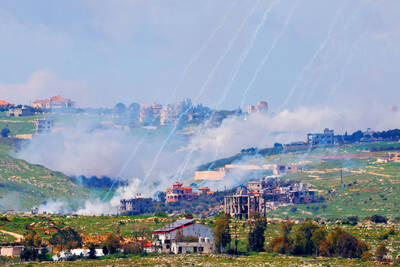
The Israeli military has demolished entire villages as part of its invasion of south Lebanon, rigging homes with explosives and razing them to the ground in massive remote detonations. The Guardian reviewed three videos posted by the Israeli military and on social media, which showed Israel carrying out mass detonations in the villages of Taybeh, Naqoura and Deir Seryan along the Israel-Lebanon border. Lebanese media has reported more mass detonations in other border villages, but satellite imagery was not readily available to verify these claims. The demolitions came after Israeli Minister of Defense Israel Katz called for the destruction of

A US YouTuber who caused outrage for filming himself kissing a statue commemorating Korean wartime sex slaves has been sentenced to six months in prison, a court in Seoul said yesterday. Johnny Somali, 25, gained notoriety several years ago for recording himself doing a series of provocative stunts in South Korea and Japan, and streaming them on platforms such as YouTube and Twitch. South Korean authorities indicted Somali — whose real name is Ramsey Khalid Ismael — in 2024 on public order violations and obstruction of business, and banned him from leaving the country. “The court has sentenced him to six months in
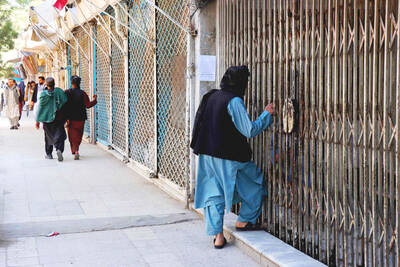
The death toll from a shooting in western Afghanistan rose to 11 on Saturday, after gunmen targeted civilians at a picnic spot in Herat, the provincial authority said. Bullet marks were visible on a wall of the Sayed Mohammad Agha Shia shrine, while bloodstains marked a blanket abandoned at the scene. “Eleven people have been recorded dead and eight others wounded from Friday’s incident, with the condition of two of the wounded reported as critical,” Herat’s information office said in a statement. The update raises a toll of seven killed provided on Friday by the Afghan Ministry of Interior Affairs


 RSS
RSS