

Japan will discuss the fate of Japanese citizens abducted to North Korea at nuclear disarmament talks this week but should not endanger the weapons negotiations by pushing the abduction issue too far, a Japanese official said Sunday.
"I think Japan will bring up this issue," Taku Yamasaki, former vice president of the ruling Liberal Democratic Party, said on TV Asahi's < The fate of several Japanese kidnapped to North Korea decades ago has been a sticking point as the countries prepare for six-nation talks in Beijing aimed at eliminating North Korea's nuclear weapons program. Pyongyang -- brought to the negotiating table through months of delicate diplomacy -- has objected to discussing anything outside the nuclear agenda and says the abduction issue has already been resolved. North Korea, which kidnapped the Japanese decades ago to use as language teachers for spies, said Wednesday it would not deal with Japan at all during the next round and blamed Tokyo for "trying to change the direction and atmosphere of the six-party talks." Yu Kameoka, a spokesman for Prime Minister Junichiro Koizumi said afterward that Japan still intends to pursue the issue and "hear what North Korea thinks." Ahead of the nuclear talks, which resume tomorrow after a 13-month hiatus, Tokyo reportedly dispatched a diplomat to revive negotiations over the kidnappings. China has offered to provide a venue for bilateral talks between Japan and North Korea during the six-nation nuclear talks, Kyodo News agency reported. North Korea has admitted kidnapping 13 Japanese in the 1970s and 80s. It allowed five of them to return to Japan, saying the other eight died. Japan is demanding proof of the deaths, as well as information on other cases of missing Japanese.

A Chinese artificial intelligence (AI) cybersecurity tool called ARTEX was used in a spate of recent hacks of Japanese companies, the subsidiary of a major Tokyo-based Internet company yesterday. Dozens of Japanese companies, from restaurant chains to a car hire operator, have disclosed unauthorized access or data breaches in the past weeks — potentially impacting millions of customers. The information security arm of GMO Internet Group Inc said it had “confirmed ARTEX was used” having investigated the attacks in collaboration with external organizations. “It also became clear ... the attacks were almost exclusively targeting Japan,” GMO cybersecurity center director Daiki

China’s first fully artificial intelligence (AI)-generated feature film opened in cinemas yesterday in what promised to be a tough box-office test for the country’s booming tech industry as advance ticket sales lag. More than 10,000 screenings of the sci-fi thriller Sanxingdui: Future Past were scheduled yesterday, according to ticketing platform Maoyan. However, public reception has been less than enthusiastic. Presale revenue as of yesterday morning was 80,000 yuan (US$11,992), while total box-office takings were forecast to remain below 150,000 yuan, only a fraction of the reported production cost, Maoyan said. Ticket prices range from 20 to 90 yuan, bringing the number sold to a
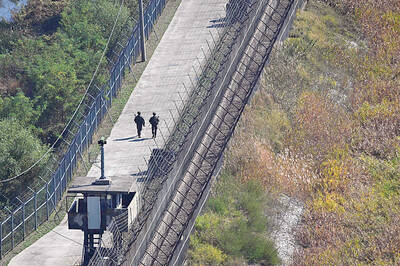
A STEP UP: The moving of small military positions forward should be taken seriously amid the North’s recent demonstrations of its firepower, an analyst said North Korea has moved new units into “firing positions,” the sister of leader Kim Jong-un said yesterday, days after Pyongyang warned it was considering deploying additional strike means to its border with South Korea. Tensions between Seoul and Pyongyang have soared since the South last month blamed an explosion inside the heavily fortified demilitarized zone (DMZ) separating the two countries on landmines laid by North Korea, an accusation it has rejected. “Our military leadership underlined the need to make those rogues aware that our new firepower units have taken their firing positions,” state media cited Kim Yo-jong as saying. Her statement came a
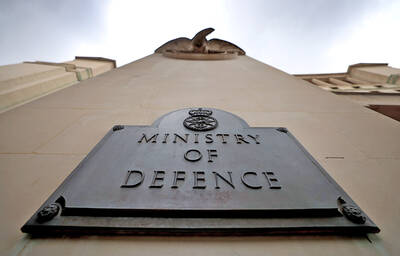
Thousands of British and French troops have taken part in a military training exercise that included one of Britain’s largest airborne operations in two decades, the British government said yesterday. The war game is designed to show how NATO countries could be defended against a modern-day attack and comes during fears about Russian aggression in Europe amid Moscow’s war against Ukraine. About 2,500 troops were involved in the seven-week exercise, in which 600 British and French paratroopers dropped from four RAF A400M Atlas transport aircraft over Germany. The exercise called Rhino Titan, held at the Sennelager military training center in


 RSS
RSS