


Two suspected leaders of the al-Qaeda network in Saudi Arabia have been killed in clashes with security forces that have been raging for two days, al-Arabiya television reported from the Saudi capital.
Citing Saudi security forces, the Dubai-based station identified the two leaders of the Saudi al-Qaeda cell as Saudi national Saud al-Otaibi and Moroccan Abdel Karim al-Mojati, who were on the kingdom's list of 26 most-wanted Islamist militants.
The gunbattle began early Sunday when security forces deployed in al-Rass in the al-Qassim region, 320km north of the Saudi capital Riyadh, to track down a group of suspects who had taken refuge in a residential building and then came under fire from automatic weapons.
Eight militants have been killed in the clashes and one surrendered, the television station reported. On Monday the Saudi officials put the toll at seven dead with one militant in hospital in critical condition.
Several members of the Saudi security forces have been injured in the fighting, the interior ministry said Monday.
"The operation is continuing. The security forces have surrounded them. There is still gunfire from the besieged building," interior ministry spokesman Brigadier Mansur al-Turki said Monday.
One witness in al-Rass said: "Shooting and explosions intensified when night fell [Monday], underlining the ferocity of the clashes."
He said the trapped men seemed to be "looking for a way to break the siege that the security forces have tightened around them after their refusal to surrender."
Residents said security forces deployed in large numbers at the site as helicopters hovered overhead and gunfire and loud blasts were heard. The clash started at around 8am Sunday.
If the deaths of Otaibi and Mojati are confirmed, only four of Saudi Arabia's 26 most-wanted Islamic militants remain on the run. The others have been killed or arrested.
A campaign of bombings and shootings blamed on al-Qaeda has killed 90 civilians in Saudi Arabia since May 2003, according to official figures.
Thirty-nine members of the security forces and 99 militants have also been killed, including the seven in the latest battle according to the official toll.
Al-Qaeda leader Osama bin Laden is Saudi-born and 15 of the 19 hijackers involved in the September 11, 2001 attacks in the US were Saudis.
The unrest in the world's top oil exporter has raised fears about the security of the West's supplies but Saudi authorities insist that the oilfields, concentrated in the east of the kingdom, are well protected.
King Fahd on Monday reiterated pledges repeatedly made by Saudi officials to defeat the extremists.
The Saudi government was determined to "eradicate terrorism and fight the deviant group," he told a weekly cabinet session, according to an official statement.
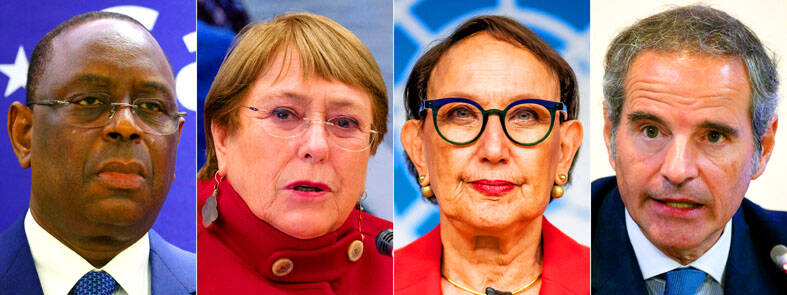
Four contenders are squaring up to succeed Antonio Guterres as secretary-general of the UN, which faces unprecedented global instability, wars and its own crushing budget crisis. Chile’s Michelle Bachelet, Argentina’s Rafael Grossi, Costa Rica’s Rebeca Grynspan and Senegal’s Macky Sall are each to face grillings by 193 member states and non-governmental organizations for three hours today and tomorrow. It is only the second time the UN has held a public question-and-answer, a format created in 2016 to boost transparency. Ultimately the five permanent members of the UN’s top body, the Security Council, hold the power, wielding vetoes over who leads the
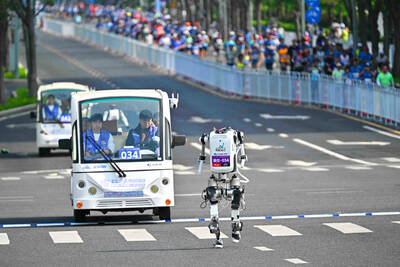
A humanoid robot that won a half-marathon race for robots in Beijing on Sunday ran faster than the human world record in a show of China’s technological leaps. The winner from Honor, a Chinese smartphone maker, completed the 21km race in 50 minutes and 26 seconds, said a WeChat post by the Beijing Economic-Technological Development Area, also known as Beijing E-Town, where the race began. That was faster than the human world record holder, Ugandan Jacob Kiplimo, who finished the same distance in about 57 minutes in March at the Lisbon road race. The performance by the robot marked a significant step forward

An earthquake registering a preliminary magnitude of 7.7 off northern Japan on Monday prompted a short-lived tsunami alert and the advisory of a higher risk of a possible mega-quake for coastal areas there. The Cabinet Office and the Japan Meteorological Agency said there was a 1% chance for a mega-quake, compared to a 0.1% chance during normal times, in the next week or so following the powerful quake near the Chishima and Japan trenches. Officials said the advisory was not a quake prediction but urged residents in 182 towns along the northeastern coasts to raise their preparedness while continuing their daily lives. Prime
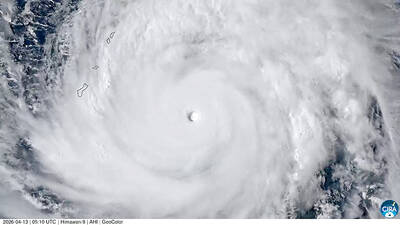
HAZARDOUS CONDITION: The typhoon’s sheer size, with winds extending 443km from its center, slowed down the ability of responders to help communities, an official said The US Coast Guard was searching for six people after losing contact with their disabled boat off the coast of Guam following Typhoon Sinlaku. The crew of the 44m dry cargo vessel, the US-registered Mariana, on Wednesday notified the coast guard that the boat had lost its starboard engine and needed assistance, Petty Officer 3rd Class Avery Tibbets said yesterday. The coast guard set up a one-hour communication schedule with the vessel, but lost contact on Thursday. A Coast Guard HC-130 Hercules aircraft was launched to search for the six people on board, but it had to return to Guam because of


 RSS
RSS