


US President George W. Bush's previously faithful and proud European allies are gradually withdrawing their support for his cause in Iraq.
In the space of just a few months, Bush's more faithful allies in central and eastern Europe have one by one begun a complete or partial withdrawal of their troops from Iraq.
Yet, only two years ago, the heads of former communist bloc countries were prepared to brave the irritation of France and Germany, standing firmly at the US' side.
Recognizing the role played by Washington in helping fall of communism, they were sympathetic to the Bush crusade for freedom.
But the Bush administration has remained largely ungrateful for their efforts.
So now even Bulgaria, which orchestrated eastern Europe's support for the campaign against Saddam Hussein, announced on Thursday that it would reduce its presence in Iraq by 100 soldiers at the end of June.
Bulgarian Defense Minister Nicolas Svinarov said his government would examine the question of the withdrawal before the end of March.
The Baltic former Soviet republic of Latvia already reduced its small contingent in November, Hungary has withdrawn all its 300 troops and Poland cut its troops at the time of the Iraqi parliamentary elections on Jan. 30, from 2,400 soldiers to 1,700.
Poland, which controls a zone to the south of Baghdad, predicts that it will recall several hundred more troops from July.
East European governments have played down their decisions.
"This is not a political decision, the contingent's reduction was dictated by practical reasons," Latvia's Defense Minister Atis Slakteris said.
And Polish President Aleksander Kwasniewski used the Iraqi elections to claim that a new era had begun for the country.
Anxious to hold on to one of its better allies in Europe, US Secretary of State Condoleezza Rice quietly accepted Poland's arguments. Less diplomatic was her Danish counterpart Per Stig Moeller, who harshly criticized Poland.
"I think it's simply absurd to say that now that democracy is in place we can leave," said Moeller.
In Hungary the reasons for withdrawal are clear. Socialist Prime Minister Ferenc Gyurcsany could not secure a two-thirds parliamentary majority to extend the mandate.
The conservative opposition refused to give its support, arguing that the large majority of Hungarians opposed the country's presence in Iraq.
And across most of the region opinions have only slightly changed over the past two years in their opposition to a military presence in Iraq.
In Hungary, before the parliamentary vote, 54 percent of people asked supported withdrawing troops compared to just 19 percent who wanted to maintain the troops.
In Poland more than two-thirds of citizens oppose deployment of their soldiers in Iraq against less than 30 percent who are in favor.
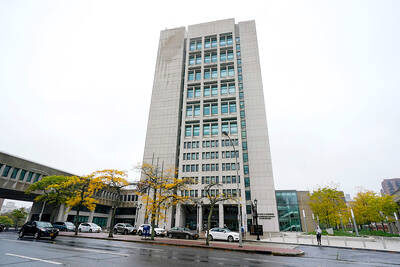
A coalition of civil rights groups on Tuesday asked a New York State judge to order one of its largest suburban counties to stop its deployment of nearly 600 license plate readers, calling it a warrantless and “indiscriminate surveillance system” that violates the state constitution. The class action lawsuit also alleged that Westchester County never got proper authorization to launch the program, which has amassed a database of 1.6 billion plate scans that has been shared with more than 50 outside law enforcement agencies. The complaint said the network “records the long-term travel patterns, daily habits, and intimate information of millions of

Pope Leo XIV on Wednesday blessed a giant new tower at Barcelona’s famed Sagrada Familia Basilica after celebrating mass inside what is now the world’s tallest church. A fireworks and light show illuminated the exterior of the temple at the end of the ceremony, bathing the unfinished basilica in shifting colours that highlighted its towering spires. A choir of 600 singers performed at the service which lasted around 90 minutes and was attended by Spanish Prime Minister Pedro Sanchez as well as King Felipe VI and Queen Letizia. The stained-glass windows in various colours shone brightly in between the tree-like

Scientists have discovered communities of marine life — including jellyfish, tubeworms and brittle stars — thriving on a whale graveyard. The graveyards form when whale carcasses fall to the sea floor, becoming a sustaining snack for nearby critters. This one, which is up to 7km below the surface of the southeastern Indian Ocean, spans the largest area, and is so far the deepest found. A whale’s sheer size and the unique chemistry of its bones are the keys to forming these unique underwater neighborhoods, said Song Xikun (宋希坤), a biologist with the Chinese Academy of Sciences’ Institute of Deep-sea Science and Engineering

Voters in Switzerland yesterday cast their ballots on an initiative championed by the top right-wing party to cap the Alpine country’s population at 10 million. As of press time last night, early results showed that Swiss voters were leaning against it. The populist Swiss People’s Party, which has the most seats in parliament, has stirred up and fostered anti-migration sentiment over the years, notably about an influx of workers from the neighboring EU. Critics called the bid a self-inflicted wound, saying the boom in migration over the past generation has brought foreign labor and skills to sectors such as healthcare, finance, pharmaceuticals


 RSS
RSS