


Best-selling author Colleen McCullough said six men found guilty of a string of sex attacks on Pitcairn Island were following a Polynesian custom of having sex with young girls and called their convictions "an absolute disgrace," a newspaper reported yesterday.
McCullough, the author of the 1977 international best seller The Thorn Birds, lives on Australia's Norfolk Island, a former penal colony that is home to a number of Pitcairn Island descendants.
Late last month, six Pitcairn men were convicted of rapes and sex attacks dating back as far as 40 years on the remote island, which is located midway between New Zealand and South America and is home to descendants of the Bounty mutineers and their Polynesian wives.
"They are as much Polynesian as anything else," McCullough told The Sydney Morning Herald newspaper. "It's Polynesian to break your girls in at 12."
McCullough said the UK-led rape trials were "an absolute disgrace" and should not have interfered with local customs.
"These are indigenous customs and should not be touched," she said. "It's hypocritical too. Does anybody object when Muslims follow their customs? Nobody's afraid of 50 Polynesians, but they are very afraid of a million Muslims," McCullough said.
But Karen Willis, a rape crisis counselor, said child rape is not an accepted practice in any culture.
"This is just one of those myths," she said. "It's not a cultural thing. It's about patriarchy and male power."
Willis said some societies do initiate children into sexual relations at a young age, but celebration and ritual are key.
"In Pitcairn it was done in secrecy, and that's one of the main differences between sexual assault and normal sexual relations," she said.
Children who experience sexual assault often develop depression, phobias, flashbacks and panic attacks as adults, Willis said.

School bullies in Singapore are to face caning under new guidelines, but the education minister on Tuesday said it would be meted out only as a last resort with strict safeguards. Human rights groups regularly criticize Singapore for the use of corporal punishment, which remains part of the school and criminal justice systems, but authorities have defended it as a deterrent to crime and serious misconduct. Caning was discussed in the parliament after legislators asked how it would be used in relation to bullying in schools. The debate followed stricter guidelines on serious student misconduct, including bullying, unveiled by the Singaporean Ministry of

As evening falls in Fiji’s capital, a steady stream of people approaches a makeshift clinic that is a first line of defense against one of the world’s fastest-growing HIV epidemics. In the South Pacific nation — a popular tourist destination of just under a million people — more than 2,000 new HIV cases were recorded last year, a 26 percent increase from 2024. The government has declared an HIV outbreak and described it as a national crisis. “It’s spreading like wildfire,” said Siteri Dinawai, 46, who came to be tested. The Moonlight Clinic, a converted minibus parked in a suburban cul-de-sac in Suva, is

A MESSAGE: Japan’s participation in the Balikatan drills is a clear deterrence signal to China not to attack Taiwan while the US is busy in the Middle East, an analyst said The Japan Self-Defense Forces yesterday fired a Type 88 anti-ship missile during a joint maritime exercise with US, Australian and Philippine forces, hitting a decommissioned Philippine Navy ship in waters facing the disputed South China Sea, in drills that underscore Tokyo’s rising willingness to project military power on China’s doorstep. The drill took place as Manila and Tokyo began talks on a potential defense equipment transfer, made possible by Japan’s decision to scrap restrictions on military exports. The discussions include the possible early transfer of Abukuma-class destroyers and TC-90 aircraft to the Philippines, Japanese Minister of Defense Shinjiro Koizumi said. Philippine Secretary of
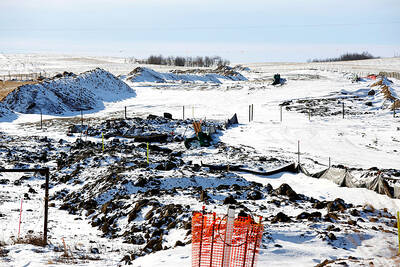
Separatists in Alberta are preparing to submit a petition tomorrow that they said has enough signatures to force a referendum on independence for the oil-rich Canadian province. Polls indicate the pro-independence camp remains a minority among Alberta’s 5 million people, but has hit a historic high of roughly 30 percent. Alberta separatists are also closer than ever to forcing a referendum, riding momentum fueled by intensifying grievances over Ottawa’s control of the provincial oil industry. They have also undeniably gotten a boost from the return to power of US President Donald Trump. After launching a petition in January, Stay Free Alberta, the group


 RSS
RSS