


Citizens in Russia's strife-torn republic of Chechnya go to the polls on Sunday to vote for a new president in the second election of its kind within a year.
Former president Akhmat Kadyrov, who had been elected in October last year, was assassinated during a WWII Victory Day parade in the Chechen capital Grozny on May 9.
His death and the contiuing daily violence in Chechnya prove that the Caucasian republic is still far from returning to a state of normalcy, as claimed by the Russian government in Moscow.
Moscow human rights activists have described the situation as "neither war nor peace."
It is unlikely that the presidential election will have much effect on this situation. With some interruptions, the Russian military's fight against the Chechen rebels has been going on for ten years.
Even though Russian President Vladimir Putin is keen to contain the conflict within Chechnya, all of Russia continues to be affected by it, too.
In February, 40 people were killed in a bomb attack on Moscow's subway. In Chechnya's neighboring Russian republic, Ingushetia, more than 90 police and justice department officials were shot dead by Chechen and local rebels in June.
As was the case at Kadyrov's election, whose 80.9 percent win was considered a sham by many Chechens and international observers, Moscow is again doing its utmost to push through its favored candidate at the upcoming poll.
Six out of the seven contestants are regarded as nominal candidates. Designated to win and heavily promoted by the Kremlin is former Chechen Interior Minister Alu Alkhanov.
The former police general has also made it clear that his succession would not trigger any change of policy in Chechnya: "There will be no fundamental difference to the policy of Akhmat-Haji Kadyrov," he declared.
The power in the republic is expected to remain with Kadyrov's clan anyway. Following his father's death, the family is now run by his 27-year-old son Ramzan, Kadyrov's former chief bodyguard and deputy head of government.
Ramzan commands a militia force of several thousand men which fights against the rebels. According to human rights groups it is also involved in kidnappings and economic crimes, and said to be terrorizing political opponents and business competitors.
Russia and the Russian-backed leadership in Chechnya hope that the election will isolate the rebels around former president Aslan Mashadov and field commander Shamil Basayev, who has been blamed as the mastermind of numerous terrorist attacks.
The estimated 1,500 fighters have suffered many casualties over recent years but are still capable of dealing heavy blows in the area, as recently in Ingushetia.
Meanwhile, the international community's once outspoken criticisms of Russian human rights violations in the area have also died down in recent years, especially since the Sept. 11, 2001 terror attacks in the US.
Putin is due to welcome German Chancellor Gerhard Schroeder and French President Jacques Chirac in his holiday destination Sochi one day after the scheduled elections.
If Schroeder's earlier meetings with Putin are anything to go by, the Kremlin chief will have no reason to fear any admonitions on Chechnya.
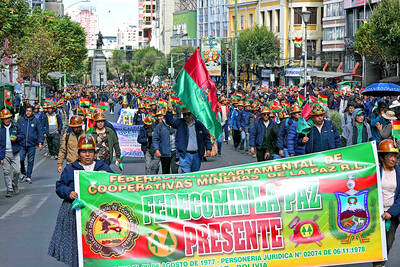
The Bolivian government on Friday struck a deal with protesting miners, but was still grappling with blockades and demonstrations by other workers across La Paz. Other groups are still blocking access roads into the city, which is also the seat of the government. Police on Thursday prevented the miners from entering the main square by using tear gas, while the demonstrators hurled stones and explosives with slingshots. Protests against the policies of Bolivian President Rodrigo Paz have convulsed the Andean nation since early this month, and roadblocks were choking routes into La Paz throughout Friday, the national road authority said. Miners demanded that Paz
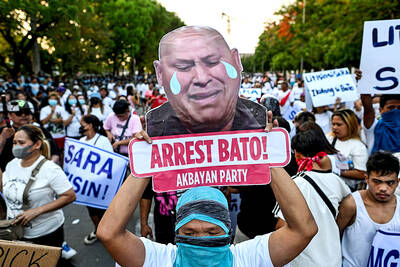
The Philippines said it has asked the country’s Supreme Court to allow it to arrest former Philippine president Rodrigo Duterte’s chief drug war enforcer to stand trial in an international tribunal. The International Criminal Court (ICC) last week unsealed an arrest warrant against Philippine Senator Ronald dela Rosa, accusing him along with Duterte and other “coperpetrators” of the “crime against humanity of murder.” Dela Rosa briefly sought refuge in the Philippine Senate last week while asking the Philippine Supreme Court to stop an ongoing attempt by government agents to arrest him. “By his own conduct, he has placed himself outside the protection of
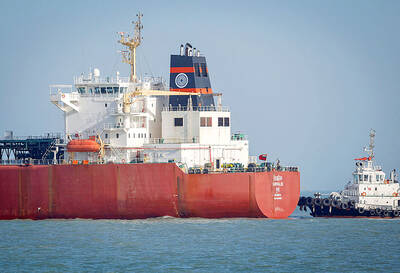
A ship anchored off the United Arab Emirates (UAE) was seized and taken toward Iran and another — a cargo ship near Oman — sank after being attacked, authorities said on Thursday, as tensions escalated near the Strait of Hormuz. It was not immediately clear who was behind these incidents, but they happened as a senior Iranian official reiterated his country’s claim of control over the waterway and another said it had a right to seize oil tankers connected to the US. The turmoil in the strait has been a sticking point for weeks in talks between the US and Iran to
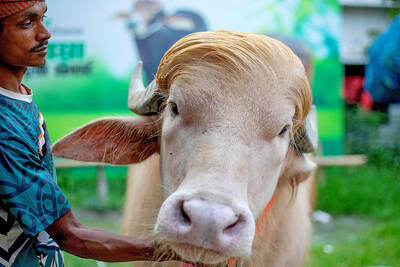
Crowds in Bangladesh are flocking to snap photographs with an unlikely social media star — an albino buffalo with flowing blond hair nicknamed “Donald Trump” that is due to be sacrificed within days. Owner Zia Uddin Mridha, 38, said his brother named the 700kg bull over its flowing helmet of hair resembling the signature look of the US president. “My younger brother picked this name because of the buffalo’s extraordinary hair,” he said at his farm in Narayanganj, just outside the capital, Dhaka. Mridha said that a constant stream of curious visitors — social media fans, onlookers and children — have come throughout


 RSS
RSS