


The US space agency NASA is drawing up plans to launch a US$1 billion rescue mission for the ailing Hubble space telescope, considered by many to be the most important telescope ever built.
In what amounts to a U-turn, Sean O'Keefe, who heads the agency, has instructed engineers at Goddard Space Flight Center, in Maryland, to prepare a mission to fix the orbiting telescope in time for a 2007 launch.
The move represents a sudden change of heart by NASA. Shaken by last year's loss of the shuttle Columbia and its seven crew, NASA recently scrubbed a long-planned shuttle mission to the telescope on the grounds that it was too risky.
Hubble is badly in need of replacement batteries and new gyroscopes. Rather than fix it, NASA had been considering plans to de-orbit the telescope and ditch it in the sea. Now engineers hope to send a Canadian robot called Dextre to carry out the repairs.
"Everybody says: `We want to save the Hubble' -- well, let's go save the Hubble," O'Keefe said.
"Rather than just sitting there and talking about how we think we're going to do it, we've got an option we're ready to go with."
Dextre -- the informal name for the Canadian Space Agency's special purpose dextrous manipulator -- is a gangly looking machine with two 3 meter arms that pivot around a robotic torso. NASA engineers have nine months to test Dextre and find out if it is capable of carrying out the complex tasks required to service Hubble. Only then will NASA decide whether to commit to a mission expected to cost between US$1 billion.
If the mission is successful, it could extend Hubble's expected life by five years, taking it beyond the planned launch date for its successor, the James Webb telescope in 2011.
Hubble has revolutionized astronomers' view of the universe. This year, the telescope captured beautiful images of a star in its death-throes and delivered the best-ever snapshot of the early universe, revealing 10,000 fledgling galaxies. The telescope is credited with discovering up to 100 new planets orbiting stars outside our solar system.
"Hubble is without a hint of exaggeration the biggest success NASA has had since they put Neil Armstrong on the moon. Scientifically, it's right up there with Galileo's telescope in terms of the impact it has had," said Gerry Gilmore, deputy director of the Institute of Astronomy at Cambridge University, England.
Privately, scientists raise doubts over whether a robot can perform the repairs.
"If the robot mission succeeds in repairing Hubble, it'll be a triumph. But if they try and fail, they've got a good case for sending up astronauts," said Professor Gilmore.

‘ABSURD MISTAKE’: The election commission said that there had been a failure to anticipate turnout after 14 polling stations ran short of ballot papers South Korean riot police yesterday cleared protesters from a Seoul polling station after a 35-hour blockade sparked by a shortage of ballot papers during local elections earlier this week. Wednesday’s election was the first nationwide vote since South Korean President Lee Jae-myung took office following the ouster of Yoon Suk-yeol over his short-lived martial law declaration. Lee’s ruling Democratic Party swept most races, but failed to flip the crucial Seoul mayoral seat. The South Korean National Election Commission apologized, blaming a failure to anticipate turnout after 14 polling stations in Seoul ran short of ballot papers. Some polling stations stayed open until 10pm to

France experienced its hottest spring on record, the French weather service said on Tuesday, after an exceptional early heat wave that also broke highs for the season in England and Wales. Meteo-France said the average nationwide temperature over March to May was 13.8°C — about 1.7°C above the norm, and surpassing records set in 2011 and 2020. “The warmest spring since records began in 1900,” it said in a bulletin. All three months were warmer than average, but the onset of an “unprecedented heatwave” late last month pushed the mercury to highs typically seen at the height of the summer. “Our country had never
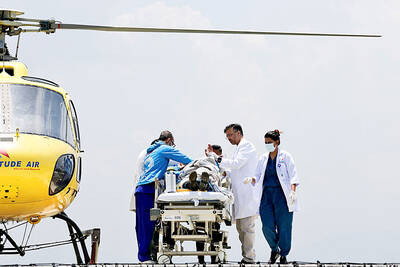
A Sherpa guide was found crawling to base camp on Mount Everest a week after he went missing and was reunited with his family, who had given up hope he would return. Dawa Sherpa was last seen on Friday last week descending the mountain, but he did not reach base camp even though his client did. The pair were among the last climbers on the mountain as the climbing season came to an end and the route was dismantled. Dawa was located by a cleaning crew on Thursday morning as he was crawling down the snowy slopes around the Khumbu Icefall, just above
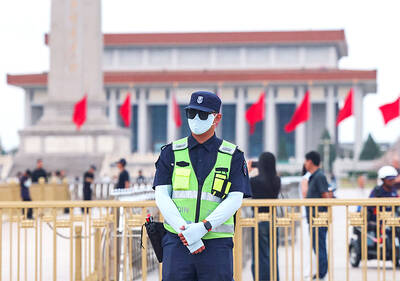
Chinese authorities are snuffing out any remembrance of the deadly 1989 military crackdown on student-led pro-democracy protests in Tiananmen Square, which happened 37 years ago yesterday, in a further tightening of a years-long campaign to erase what happened from public memory. Police told relatives of the victims they would not be allowed to visit a cemetery in Beijing on the anniversary of the crackdown, a person with knowledge of the matter said. Relatives of the victims visited the cemetery on the anniversary for more than 30 years to read memorial statements with police keeping watch, Amnesty International said. Hundreds of people,


 RSS
RSS