


It's not about sex and all about the touchy-feely experience of snuggling up to perfect strangers wearing pyjamas.
The grab fests are called cuddle parties, and since they started in New York in February, hundreds of people have paid US$30 each to touch and embrace others in intimate gatherings.
Everyone needs to be cuddled, especially in lonely New York, say creators Reid Mihalko and Marcia Baczynski who add that it's a good way to meet new and interesting people.
But the rules are clear. The PJs stay on the whole time and participants are reminded of Rule No. 7: "No dry humping."
In case things get too steamy, a small chime is kept on hand. Before the cuddling begins, it is struck several times so everyone gets the message.
"We've never used it," said Mihalko, who said sexual arousal does occur, and that participants shouldn't be turned off or scared by erections. "They happen," he said.
The idea for cuddle parties loosely came about after Mihalko, a masseur, began giving massages to other masseurs who never got the chance to receive them.
Signs that people need to be touched were brought home one day when Mihalko said he noticed a woman bawling from the emotional release that a massage provided her at an outdoor stand in midtown Manhattan.
"It started out as a joke," said Baczynski. "Now we talk about cuddling all the time. It's just been amazing."
Curiosity is a big driver for people who attend cuddle parties, and it is a better way to meet people than going to a bar, getting drunk and spending the night with someone just because of the need for some affection, she said.
A cuddle party is really about communication and not therapy, say the organizers.
Before any touching begins, participants gather in a circle to hear the rules and voice any questions or concerns. The first rule is that the event is not clothing optional, pyjamas must stay on and sex is not permitted.
Participants team up into pairs and to ensure the boundaries of what is permissible are clear, they practice saying "no" to the question, "May I kiss you?"
An introduction to cuddling ensues, first by hugging three people. People then get in a circle on their hands and knees, rub shoulders and moo like cows. After a bit of swaying, everyone falls to their side, which puts them into an easy cuddling position.
Cuddle parties are intended for people who are emotionally sound. People in therapy or who are seeing a mental health professional are asked to consult their doctor before signing up for a party and to tell the organizers of their situation.
One group on an overcast Sunday drew a mix of mostly single people in their 30s and a smattering of older people.
A repeat customer who called herself a born-again Christian said it was good to cuddle up to another person, albeit a perfect stranger, after a hectic week.
"I felt good. I had a particularly stressful week," said the woman, who did not wish to be named.
Friends had warned her that the parties would be nothing more than thinly disguised preludes to sex, but she dismissed those worries as alarmist and unfounded, saying :"It's not about sex".
Like others, the chance to meet someone was a consideration in attending a cuddle party.
"People in a way are looking for a connection," said Fernando. "It's weird, but not unusual."
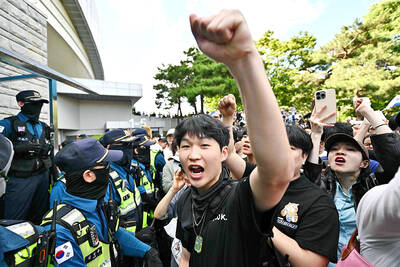
‘ABSURD MISTAKE’: The election commission said that there had been a failure to anticipate turnout after 14 polling stations ran short of ballot papers South Korean riot police yesterday cleared protesters from a Seoul polling station after a 35-hour blockade sparked by a shortage of ballot papers during local elections earlier this week. Wednesday’s election was the first nationwide vote since South Korean President Lee Jae-myung took office following the ouster of Yoon Suk-yeol over his short-lived martial law declaration. Lee’s ruling Democratic Party swept most races, but failed to flip the crucial Seoul mayoral seat. The South Korean National Election Commission apologized, blaming a failure to anticipate turnout after 14 polling stations in Seoul ran short of ballot papers. Some polling stations stayed open until 10pm to

France experienced its hottest spring on record, the French weather service said on Tuesday, after an exceptional early heat wave that also broke highs for the season in England and Wales. Meteo-France said the average nationwide temperature over March to May was 13.8°C — about 1.7°C above the norm, and surpassing records set in 2011 and 2020. “The warmest spring since records began in 1900,” it said in a bulletin. All three months were warmer than average, but the onset of an “unprecedented heatwave” late last month pushed the mercury to highs typically seen at the height of the summer. “Our country had never

A Sherpa guide was found crawling to base camp on Mount Everest a week after he went missing and was reunited with his family, who had given up hope he would return. Dawa Sherpa was last seen on Friday last week descending the mountain, but he did not reach base camp even though his client did. The pair were among the last climbers on the mountain as the climbing season came to an end and the route was dismantled. Dawa was located by a cleaning crew on Thursday morning as he was crawling down the snowy slopes around the Khumbu Icefall, just above
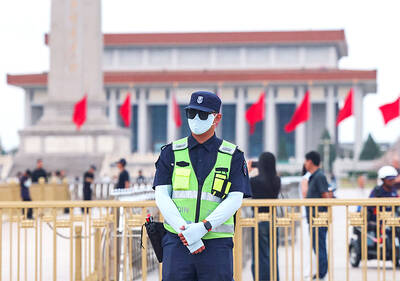
Chinese authorities are snuffing out any remembrance of the deadly 1989 military crackdown on student-led pro-democracy protests in Tiananmen Square, which happened 37 years ago yesterday, in a further tightening of a years-long campaign to erase what happened from public memory. Police told relatives of the victims they would not be allowed to visit a cemetery in Beijing on the anniversary of the crackdown, a person with knowledge of the matter said. Relatives of the victims visited the cemetery on the anniversary for more than 30 years to read memorial statements with police keeping watch, Amnesty International said. Hundreds of people,


 RSS
RSS