


Two separate storms charged through the Caribbean on Wednesday, one poised to strike the Florida Panhandle and the stronger Hurricane Charley drenching Jamaica with heavy rain.
Millions of people in the region were on alert as the hurricane and Tropical Storm Bonnie churned on paths that weather forecasters said could deliver a double whammy to parts of Florida.
Charley had sustained winds of 121 kph, just at the threshold for hurricane status, as it headed on a course that would take its eye just south of Jamaica, the US National Hurricane Center said.
Forecasters expected the system to sweep over the Cayman Islands, a British colony and offshore finance center, then Cuba, home to about 11 million people, yesterday before hitting the lower Florida Keys early today.
Jamaican businesses were shuttered, universities suspended exams and hospitals sent patients home as people rushed to shops and gas stations to stock up on emergency supplies.
Emergency management officials said there were no immediate reports of damage or deaths in Jamaica but scores of emergency shelters opened across the island of 2.7 million people.
Bonnie was hampering Gulf oil and gas operations and was poised to strike the Florida Panhandle within a day, prompting authorities to issue a hurricane warning for the area.
It was growing stronger as it moved closer to the coast. It had sustained winds of 105 kph and could become a hurricane on Wednesday night or this morning.
Energy companies evacuated workers from 108 production platforms and 37 rigs in the Gulf of Mexico.
Florida Governor Jeb Bush declared a state of emergency as the storms approached, setting the wheels in motion for emergency shelters to open. Around 8,000 National Guard personnel were on alert.
Charley forced Air Jamaica, British Airways, American Airlines and BWIA to cancel flights and a cruise ship was diverted from a stop in Montego Bay. A caller to a radio station said there were mudslides along Jamaica's eastern coast and the Yallahs River in the eastern parish of St Thomas.
Authorities in the Florida Keys issued a mandatory evacuation order to visitors, telling them to pack up and leave immediately. It can take days to completely evacuate the 160 km chain of islands and many tourists were unable to book flights, hotel managers said.
In Key West, restaurants and bars were urged to close early yesterday. City-operated buildings were already shuttered on Wednesday but most private shops and homes were not. Duval Street, popular with tourists, was bustling.
"Que sera, que sera (What will be, will be)," said Arthur Murphy of Fort Myers, Florida, celebrating his 72nd birthday at the popular Sloppy Joe's bar, which was frequented by Ernest Hemingway.
At 5pm EDT (5am yesterday in Taiwan) Wednesday, Charley's center was 135 km southwest of Kingston, at latitude 17 North and longitude 77.5 West, the hurricane center said.
It was expected to carry 7.5 to 15 cm of rain and and large waves to Jamaica and the Caymans.
Bonnie's center at 5pm EDT (5am yesterday in Taiwan) Wednesday was about 270 km south of the mouth of the Mississippi River at latitude 26.7 north and longitude 89.3 west. It was moving to the northeast at about 19 kph and was expected to hit land between Pensacola and Panama City early today, possibly as a hurricane.
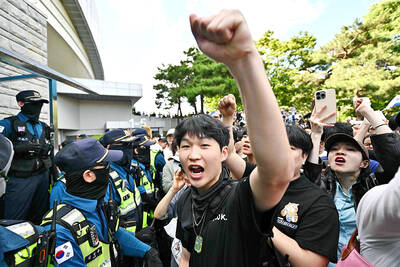
‘ABSURD MISTAKE’: The election commission said that there had been a failure to anticipate turnout after 14 polling stations ran short of ballot papers South Korean riot police yesterday cleared protesters from a Seoul polling station after a 35-hour blockade sparked by a shortage of ballot papers during local elections earlier this week. Wednesday’s election was the first nationwide vote since South Korean President Lee Jae-myung took office following the ouster of Yoon Suk-yeol over his short-lived martial law declaration. Lee’s ruling Democratic Party swept most races, but failed to flip the crucial Seoul mayoral seat. The South Korean National Election Commission apologized, blaming a failure to anticipate turnout after 14 polling stations in Seoul ran short of ballot papers. Some polling stations stayed open until 10pm to

France experienced its hottest spring on record, the French weather service said on Tuesday, after an exceptional early heat wave that also broke highs for the season in England and Wales. Meteo-France said the average nationwide temperature over March to May was 13.8°C — about 1.7°C above the norm, and surpassing records set in 2011 and 2020. “The warmest spring since records began in 1900,” it said in a bulletin. All three months were warmer than average, but the onset of an “unprecedented heatwave” late last month pushed the mercury to highs typically seen at the height of the summer. “Our country had never

A Sherpa guide was found crawling to base camp on Mount Everest a week after he went missing and was reunited with his family, who had given up hope he would return. Dawa Sherpa was last seen on Friday last week descending the mountain, but he did not reach base camp even though his client did. The pair were among the last climbers on the mountain as the climbing season came to an end and the route was dismantled. Dawa was located by a cleaning crew on Thursday morning as he was crawling down the snowy slopes around the Khumbu Icefall, just above
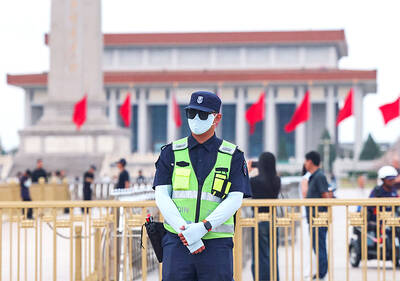
Chinese authorities are snuffing out any remembrance of the deadly 1989 military crackdown on student-led pro-democracy protests in Tiananmen Square, which happened 37 years ago yesterday, in a further tightening of a years-long campaign to erase what happened from public memory. Police told relatives of the victims they would not be allowed to visit a cemetery in Beijing on the anniversary of the crackdown, a person with knowledge of the matter said. Relatives of the victims visited the cemetery on the anniversary for more than 30 years to read memorial statements with police keeping watch, Amnesty International said. Hundreds of people,


 RSS
RSS