


A raid on an Indian police post by Nepal's Maoist rebels and arrests of their comrades on Indian soil could be indications that a bloody revolt in that country could be spilling over.
A group of armed men, including some Nepalis, overran the post and took away weapons last month in thick forests in the eastern Indian state of Bihar, which shares a long border with Nepal, the head of a special Indian police unit said.
The attack on the police post came shortly after 12 Maoists, including some middle-level operatives, were arrested from a house in Patna, Bihar's capital, along with a huge haul of explosives, ammunition and Marxist literature.
"This is the first organized attack of its kind near the border and the most serious threat ever," said Deputy Inspector General Vinay Kumar Singh, the head of a unit whose task is to put down left-wing extremism in Bihar.
"We are simply not prepared to face the Maoists of Nepal," he said late on Wednesday.
More than 10,000 people have died in Nepal since the rebels began a campaign in 1996 to replace the constitutional monarchy with communist rule.
Bihar, one of India's poorest and most lawless states, has its own clutch of outlawed radical-left guerrilla groups who have helped the rebels with training, shelter, medical facilities and arms.
But the Nepali Marxists are not known to have carried out strikes on Indian soil before.
"The day they start full scale operations into Indian territory, we will find ourselves very inadequate," Singh said. "We don't have enough police stations, we don't have enough weapons to tackle them."
Analysts have long warned that an unstable Nepal, sand-wiched between India and China, would turn into a security nightmare for both Asian giants.
With the Maoists controlling a vast swath of mountainous Nepal, there is also concern that the desperately poor nation could become a haven for international militant groups.
Nepal and India share a long and open border which thousands of people cross each day. Kathmandu has repeatedly urged New Delhi to increase surveillance along the border and to crack down on rebel hideouts.
Singh said the Maoists caught in Patna told their landlord they were students. The landlord later said he had little reason to doubt them because Nepalis are rep-resented in almost every walk of life in India.
Since 2001, police in Bihar have arrested 42 Nepali Maoists, including some who had come for treatment of wounds sustained in the fighting in the mountain kingdom. Others made the trip to deepen ties with left-wing groups, including in southern India.
Singh said guerrilla leaders in Nepal and India had often spoken of a "red corridor," stretching from the Himalayan kingdom to large swaths of the Indian states of Bihar, Jharkhand and Andhra Pradesh.
"We all laughed 10 years ago at the red corridor. Nobody is laughing anymore," he said.

‘ABSURD MISTAKE’: The election commission said that there had been a failure to anticipate turnout after 14 polling stations ran short of ballot papers South Korean riot police yesterday cleared protesters from a Seoul polling station after a 35-hour blockade sparked by a shortage of ballot papers during local elections earlier this week. Wednesday’s election was the first nationwide vote since South Korean President Lee Jae-myung took office following the ouster of Yoon Suk-yeol over his short-lived martial law declaration. Lee’s ruling Democratic Party swept most races, but failed to flip the crucial Seoul mayoral seat. The South Korean National Election Commission apologized, blaming a failure to anticipate turnout after 14 polling stations in Seoul ran short of ballot papers. Some polling stations stayed open until 10pm to

France experienced its hottest spring on record, the French weather service said on Tuesday, after an exceptional early heat wave that also broke highs for the season in England and Wales. Meteo-France said the average nationwide temperature over March to May was 13.8°C — about 1.7°C above the norm, and surpassing records set in 2011 and 2020. “The warmest spring since records began in 1900,” it said in a bulletin. All three months were warmer than average, but the onset of an “unprecedented heatwave” late last month pushed the mercury to highs typically seen at the height of the summer. “Our country had never

A Sherpa guide was found crawling to base camp on Mount Everest a week after he went missing and was reunited with his family, who had given up hope he would return. Dawa Sherpa was last seen on Friday last week descending the mountain, but he did not reach base camp even though his client did. The pair were among the last climbers on the mountain as the climbing season came to an end and the route was dismantled. Dawa was located by a cleaning crew on Thursday morning as he was crawling down the snowy slopes around the Khumbu Icefall, just above
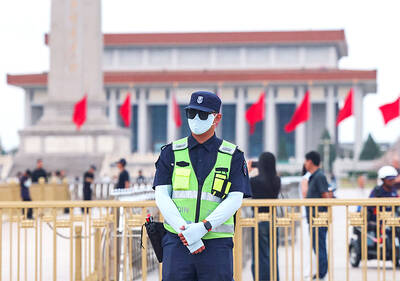
Chinese authorities are snuffing out any remembrance of the deadly 1989 military crackdown on student-led pro-democracy protests in Tiananmen Square, which happened 37 years ago yesterday, in a further tightening of a years-long campaign to erase what happened from public memory. Police told relatives of the victims they would not be allowed to visit a cemetery in Beijing on the anniversary of the crackdown, a person with knowledge of the matter said. Relatives of the victims visited the cemetery on the anniversary for more than 30 years to read memorial statements with police keeping watch, Amnesty International said. Hundreds of people,


 RSS
RSS